Losing a tooth can change more than the appearance of your smile. It may affect how you chew food, pronounce certain words, and feel about your overall appearance. Even a single missing tooth can create difficulties in everyday life, especially when the gap becomes noticeable while talking or smiling.
Fortunately, modern dentistry offers several ways to replace missing teeth. One popular option is a dental bridge, which fills the space left by a missing tooth and helps restore the natural appearance of your smile.
However, choosing the right treatment requires more than simply placing an artificial tooth in an empty space. A Dental Bridge Specialist carefully examines your teeth, evaluates your oral health, and recommends a solution that suits your needs. At SmileOn, understanding your dental concerns is an important part of making informed decisions about restorative treatment.
Dental Bridges and Their Purpose
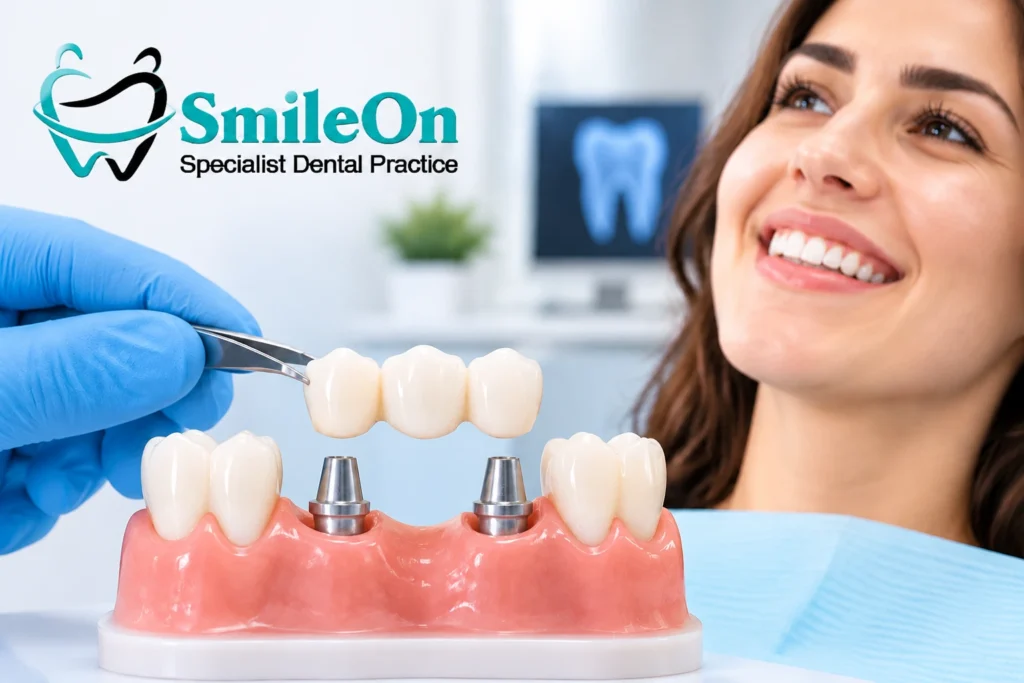
A dental bridge is a fixed restoration designed to replace one or more missing teeth. It consists of artificial teeth that occupy the empty space and receive support from neighboring natural teeth or dental implants. The main purpose of a bridge is to restore the appearance and function of your teeth. It can also help prevent nearby teeth from moving into the space created by tooth loss.
For many patients, a dental bridge offers a practical alternative to removable dentures. Once properly placed, it stays in position and becomes part of the patient’s everyday dental function.
A dental bridge may help you:
- Restore the appearance of a complete smile.
- Improve chewing and biting ability.
- Make speaking more comfortable.
- Maintain the position of surrounding teeth.
- Reduce the discomfort associated with missing teeth.
- Support a more balanced dental appearance.
The suitability of this treatment depends on the location of the missing tooth and the condition of the surrounding teeth and gums.
Why Professional Guidance Matters When Replacing Missing Teeth
Every patient’s dental condition is different. Some people lose teeth because of severe decay, while others experience tooth loss following an accident, gum disease, or an extraction. These differences matter when planning restorative treatment. A dental professional does not simply look at the missing tooth. They also examine the supporting teeth, gum health, bite alignment, and available space. This assessment helps determine whether a dental bridge is a suitable choice.
Here are some important ways a specialist contributes to the treatment process.
1. Examining Your Teeth Before Treatment
The first step is understanding why the tooth is missing and whether the surrounding teeth can support a bridge. During the examination, the dentist checks the condition of neighboring teeth and looks for problems such as cavities, damaged enamel, or gum inflammation. Dental X-rays may also be required to assess the supporting structures.
This stage is important because placing a bridge over unhealthy supporting teeth can create complications later. If any underlying dental issues are identified, the dentist may recommend treating them before proceeding with the restoration.
2. Choosing a Suitable Dental Bridge
A dental bridge can be an effective option for replacing one or more missing teeth, helping restore both the appearance of your smile and your ability to chew comfortably. However, not every patient is a suitable candidate, and the choice of restoration depends on several important factors.
Your dentist will assess the number and location of missing teeth, the condition of the neighbouring teeth, and the health of your gums and supporting bone. The strength of the supporting teeth and the way your upper and lower teeth meet are also important considerations, as they can influence the stability and longevity of the bridge.
The choice of material, such as zirconia or porcelain-fused-to-metal (PFM), depends on the location of the bridge, the amount of biting pressure it needs to withstand, and your aesthetic preferences. Each material has its own advantages and limitations, which your dentist will explain before treatment.
Following a thorough examination, your dentist will recommend a suitable treatment option and explain the procedure, any preparation required, expected benefits, and potential limitations. Alternative treatments, such as dental implants or removable dentures, may also be discussed to help you make an informed decision.
3. Restoring Your Ability to Chew Comfortably
Missing teeth can make eating certain foods difficult. You may find yourself chewing on one side of your mouth or avoiding foods that require more biting pressure. A properly fitted bridge replaces the missing chewing surface and helps distribute biting forces more evenly.
The dentist also checks how the restoration meets the opposing teeth. If the bridge is too high or does not fit correctly, it may cause discomfort when biting. Proper adjustment helps create a comfortable bite and makes everyday eating easier.
4. Protecting the Position of Nearby Teeth
Natural teeth help maintain the arrangement of your dental arch. When a tooth is lost, the surrounding teeth may gradually shift toward the empty space. This movement can affect your bite and make certain areas harder to clean. It may also create unwanted spaces between teeth.
A dental bridge fills the gap and helps maintain the available space. This is one reason dentists may recommend discussing tooth replacement rather than leaving a missing tooth untreated.
5. Creating a Natural-Looking Smile
The appearance of a dental restoration is just as important to many patients as its function. Modern dental bridges are designed to resemble natural teeth. Their shape, size, and shade are selected to blend with the surrounding teeth. For example, replacing a front tooth requires careful attention to its color and shape because it is easily visible when speaking or smiling.
An appropriately designed restoration can help patients feel more comfortable about their appearance without making the replacement tooth look noticeably different.
What Happens During Dental Bridge Treatment?
Many patients feel more confident about treatment when they understand what to expect. Although the exact procedure varies according to the selected bridge, a traditional dental bridge generally involves the following stages.
Initial Dental Consultation
Your dentist begins by examining your mouth and discussing your concerns. They evaluate the missing tooth area, surrounding teeth, gum condition, and bite. Based on the findings, they explain the available treatment options and whether a dental bridge is appropriate.
Preparing the Supporting Teeth
For a traditional bridge, the supporting teeth are carefully reshaped to make room for dental crowns. Local anesthesia is generally used to keep the procedure comfortable. The amount of tooth preparation depends on the condition and design of the restoration.
Taking Impressions or Digital Scans
Once the teeth are prepared, the dentist takes dental impressions or digital scans. These records provide the measurements needed to create a bridge that fits your mouth. A temporary restoration may be provided while the permanent bridge is being prepared.
Fitting the Permanent Bridge
When the permanent bridge is ready, the dentist checks its fit, appearance, and alignment. The restoration is adjusted if necessary before being permanently secured. The dentist also checks your bite to make sure the new teeth do not interfere with normal chewing.
Follow-Up and Maintenance
After placement, you receive instructions about cleaning and caring for your new bridge. Regular dental visits are important because they allow the dentist to monitor the restoration and check the health of the supporting teeth and gums.
How Long Can You Expect a Dental Bridge to Last?
A dental bridge is designed to provide long-term tooth replacement, but its lifespan depends heavily on maintenance and oral health. Many dental bridges last approximately 5 to 15 years, although some may remain functional for longer with proper care. Your daily habits play an important role in protecting the restoration.
Here are a few practical ways to maintain it:
- Brush your teeth twice a day with fluoride toothpaste.
- Clean underneath the bridge using a floss threader or specialized cleaning tool.
- Avoid biting extremely hard objects such as ice.
- Limit sugary foods and drinks to reduce the risk of tooth decay.
- Maintain regular dental checkups.
- Contact your dentist if the bridge becomes loose or causes discomfort.
One important point is that a dental bridge itself cannot develop cavities, but the natural teeth supporting it can. Therefore, cleaning around the restoration is essential.
Dental Bridge or Dental Implant: Which Should You Choose?
Patients often compare dental bridges with dental implants when looking for a permanent solution to missing teeth. Both treatments can restore a smile, but their procedures and requirements are different.
A dental bridge uses neighboring teeth or implants for support, while a dental implant is placed in the jawbone to support a replacement tooth. A bridge may be a suitable option for someone who wants a fixed restoration and has appropriate supporting teeth. An implant may be preferable for patients who want to replace a missing tooth without preparing neighboring natural teeth.
However, implants require surgery and sufficient bone support. They may also involve a longer treatment period. Neither option is automatically better for every patient. Your dental condition, treatment expectations, budget, and overall oral health should guide the decision.
Signs That You May Need a Dental Bridge
Not everyone with a missing tooth needs the same type of restoration. However, certain situations may indicate that it is time to discuss replacement options with a dentist.
You may benefit from a consultation if:
- You have one or more missing teeth.
- Eating has become uncomfortable because of an empty space.
- You notice nearby teeth moving toward the gap.
- You feel uncomfortable smiling because of visible missing teeth.
- You want a fixed alternative to removable dentures.
- You have difficulty speaking clearly following tooth loss.
It is better to have the area examined rather than waiting for additional problems to develop.
Restore Your Smile with the Right Dental Care at SmileOn
Missing teeth can affect your confidence, eating habits, and everyday comfort. Fortunately, restorative dentistry offers several ways to address these concerns.
At SmileOn, patients can explore dental treatments according to their individual oral health needs. Whether you are considering a dental bridge, comparing tooth replacement options, or looking for guidance about restorative dentistry, a professional consultation is a helpful starting point.
The goal should not simply be to fill an empty space. It should be to restore comfortable function, maintain healthy surrounding teeth, and achieve a smile that feels natural.
If you have been living with missing teeth, consider discussing your options with a dental professional. The right treatment plan can help you move toward a healthier and more confident smile.
Frequently Asked Questions
1. Can a dental bridge replace a single missing tooth?
Yes. A dental bridge can replace one missing tooth by using the neighboring teeth for support. The dentist first checks whether these supporting teeth are healthy and strong enough for the restoration.
2. Is a dental bridge a permanent solution?
A dental bridge is a fixed restoration, meaning it is not designed to be removed daily. However, it is not permanent for life. With proper maintenance, many bridges last 5 to 15 years or longer.
3. Can I get a dental bridge if I have gum disease?
Gum disease should generally be treated before dental bridge placement. Healthy gums provide better support for the surrounding teeth and help reduce the risk of future complications.
4. How soon can I eat after getting a dental bridge?
Your dentist will provide specific instructions depending on the type of bridge and how it was secured. After a traditional permanent bridge is cemented, patients can generally return to eating gradually, starting with softer foods.
5. Does a dental bridge require special cleaning?
Yes. Regular brushing and cleaning underneath the artificial tooth are important. Floss threaders, bridge floss, and interdental brushes can help remove food particles and plaque from difficult-to-reach areas.
6. Can a dental bridge improve my facial appearance?
Replacing missing teeth can help restore dental support and improve the appearance of your smile. However, the effect on facial appearance depends on how many teeth are missing and the overall condition of the mouth.
7. What happens if I leave a missing tooth untreated?
Depending on the location of the missing tooth, nearby teeth may shift, chewing patterns may change, and bite alignment can be affected. A dental examination helps determine whether replacement is advisable.
Final Thoughts
Replacing missing teeth is an important step toward maintaining a healthy and confident smile. Although a missing tooth may not seem like a serious concern at first, it can gradually affect chewing, speaking, and the position of surrounding teeth. A dental bridge offers a practical way to fill these gaps while restoring the appearance and function of your smile.
Choosing the right treatment requires proper dental evaluation and professional guidance. An experienced dental professional can assess your oral health, explain suitable bridge options, and help you understand what to expect throughout the procedure. Proper cleaning and regular dental checkups are equally important for maintaining your restoration over time.
At SmileOn, patients can explore restorative dental care according to their individual needs and smile goals. If you are dealing with missing teeth, consider scheduling a consultation to discuss whether a dental bridge is the right solution. Taking the right steps today can help you enjoy better oral function and greater confidence in your smile.