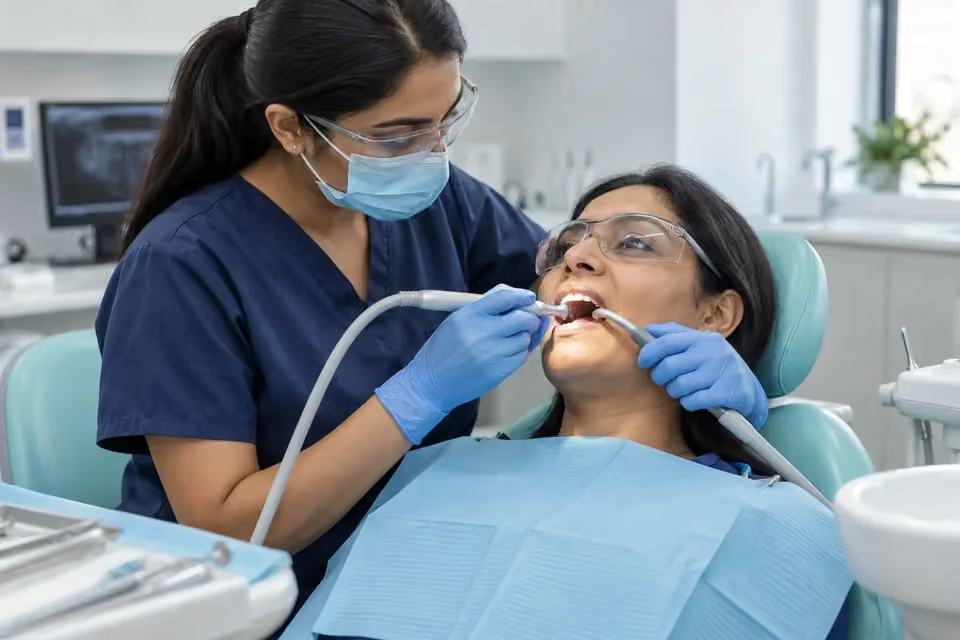

Spot Concerns Early
Identify early signs of decay, gum disease and other dental problems.
SmileOn · Johar Town, Lahore
Visit us for a routine check-up or to discuss any dental concerns. Your dentist will examine your teeth and gums, perform X-rays if needed, and explain any treatment priorities.

Understand the treatment
We review your health history, examine your teeth, gums and soft tissues, and discuss your concerns. X-rays are recommended only when they add useful diagnostic information.
Why regular check-ups matter
Identify early signs of decay, gum disease and other dental problems.

Explore suitable treatments and make informed decisions about your dental care.

Get personalised advice for cleaning, risk factors and the timing of your next review.
From planning to follow-up

Tell your dentist about any pain, sensitivity or other changes, as well as your medicines and dental history. We then check your teeth and gums.

Your dentist explains what the examination and any X-rays show, along with your options and their limitations.

Your dentist explains the proposed treatment, the expected costs and follow-up visits.
Plan your visits
A complex plan may need more scans, a specialist's advice or another discussion before you decide on treatment.
These are usual estimates. Your dentist will confirm your visits and timings after a check-up.
DURING & AFTER CARE
Use fluoride toothpaste.
Clean between your teeth every day using floss or interdental brushes.
Follow the advice given at your visit.
Contact us if pain, swelling or a new concern develops.
Attend your recommended review visits.
Know what needs attention, what can be monitored and when to return.
KEY CONSIDERATIONS
Discuss priorities, alternatives, expected visits and costs before deciding.
Sometimes X-rays, additional tests or a specialist opinion are needed before confirming a plan.
Your dentist will recommend your next check-up based on your needs.
An examination does not always mean you need treatment or new X-rays.
Your dentist recommends an interval based on your oral health and risk. Some people need closer monitoring; others can wait longer. New symptoms should be checked sooner.
Not necessarily. Your dentist considers your examination, symptoms and previous images. X-rays are used when they provide information needed to diagnose or plan care.
Yes, problems such as early decay or gum disease may have few symptoms. Routine reviews help identify concerns and guide prevention.
Bring available records or X-rays and a list of medicines. These can help the dentist understand your history and decide what further information is needed.
Tell the dentist about all your concerns. The assessment helps identify priorities and whether additional appointments are needed for a detailed plan.
The SmileOn approach

Our team brings together general and cosmetic dentists, implantologists, endodontists, periodontists and oral & maxillofacial surgeons. If your care needs more than one clinician, we coordinate your treatment at one Lahore clinic, reducing the need to travel between clinics.
Explore Our SpecialtiesExplore related care