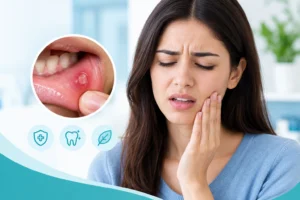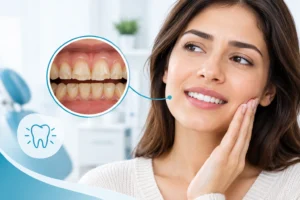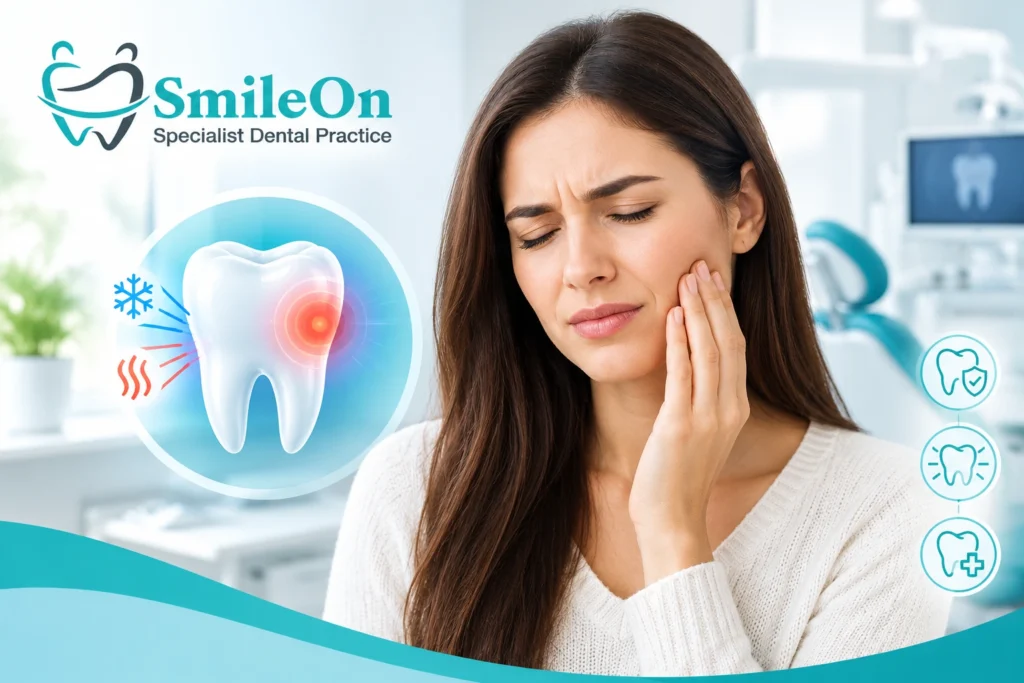
Have you ever taken a sip of hot tea or enjoyed a cold drink, only to feel a sudden sharp pain in your teeth? Tooth sensitivity can make simple daily activities uncomfortable, especially when eating or drinking something hot, cold, sweet, or acidic.
Many people experience this problem at some point. Sometimes, the discomfort lasts only a few seconds, while in other cases, it can become frequent and interfere with everyday life. The good news is that the right teeth sensitivity treatment can help reduce discomfort and address the underlying cause.
At SmileOn Dental, we believe that understanding your dental symptoms is an important step toward maintaining a healthy smile. In this guide, we explain why teeth become sensitive, what you can do at home, and when it is time to visit a dentist.
What Causes Teeth Sensitivity?
To understand how to stop tooth sensitivity, it helps to know what happens inside your teeth. Each tooth has a hard outer layer called enamel. Underneath the enamel is dentin, which contains tiny channels that connect toward the inner part of the tooth. When enamel becomes worn down or gums recede, these channels may become exposed. Hot, cold, sweet, or acidic substances can then trigger discomfort.
Several factors can contribute to sensitive teeth.
1. Worn Tooth Enamel
Enamel protects your teeth from everyday pressure, temperature changes, and exposure to food and drinks. However, frequent consumption of acidic foods, brushing too hard, and teeth grinding can gradually wear it down.
Once the enamel becomes thinner, the underlying dentin may be more easily affected by temperature changes.
2. Gum Recession
Healthy gums help protect the roots of your teeth. When gums recede, they expose areas of the tooth root that do not have the same protective enamel covering as the crown.
This can make your teeth particularly sensitive when drinking cold water, eating ice cream, or brushing near the gumline.
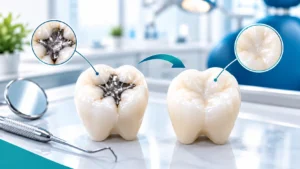
3. Tooth Decay and Cavities
A cavity can cause sensitivity when damage reaches the deeper layers of a tooth. You may notice discomfort when eating sweets, drinking cold beverages, or chewing food. If sensitivity is caused by tooth decay, using a desensitizing toothpaste alone may not solve the problem. The cavity may require professional dental treatment.
4. Cracked or Damaged Teeth
A cracked tooth can cause sharp pain when you bite down or release pressure. It may also react to hot or cold foods. Even a small crack can be difficult to identify without a dental examination, so persistent pain should not be ignored.
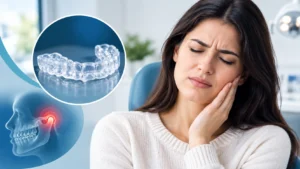
5. Teeth Grinding
Grinding or clenching your teeth, particularly during sleep, can gradually wear down enamel and place excessive pressure on your teeth. People who grind their teeth may also experience jaw discomfort, headaches, or increased sensitivity.
6. Recent Dental Procedures
Some people experience temporary sensitivity after professional teeth whitening, fillings, crowns, or other dental procedures. This discomfort often improves over time, but severe, worsening, or persistent pain should be assessed by a dentist.
How to Stop Teeth Sensitivity When Eating Hot or Cold Foods
If hot coffee, cold water, or ice cream makes your teeth hurt, a few simple changes may help reduce discomfort while you arrange appropriate care.
1. Use Toothpaste for Sensitive Teeth
One of the easiest ways to manage mild tooth sensitivity is to use a toothpaste specifically designed for sensitive teeth.
These toothpastes contain ingredients such as potassium nitrate or stannous fluoride, which can help reduce sensitivity through different mechanisms. Some work by calming the nerves inside the teeth, while others help block the pathways through which external stimuli trigger discomfort.
For the best results:
- Brush twice daily with a sensitive-teeth toothpaste.
- Follow the product instructions and use it consistently.
- Avoid switching products too frequently.
- Ask your dentist which toothpaste is suitable for your needs.
Relief may take several applications or days to become noticeable. However, toothpaste cannot repair a cavity or fix a cracked tooth.
2. Brush Gently With a Soft-Bristled Toothbrush
Brushing harder does not make your teeth cleaner. In fact, aggressive brushing can contribute to gum recession and enamel wear, making sensitivity worse. Choose a soft-bristled toothbrush and use gentle, controlled movements. Pay attention to the gumline without scrubbing forcefully. An electric toothbrush with a pressure sensor may also help if you tend to brush too hard.
3. Avoid Extremely Hot and Cold Foods Temporarily
If your teeth are already sensitive, sudden temperature changes may trigger pain. Try allowing hot drinks and foods to cool slightly before consuming them. Avoid chewing ice and take a break from very cold foods if they consistently cause discomfort.
You do not necessarily need to eliminate all your favourite foods. The goal is to avoid triggers while addressing the reason for your sensitivity.
4. Reduce Acidic Foods and Drinks
Frequent exposure to acids can soften enamel and increase the risk of tooth erosion. Common sources include citrus fruits, fizzy drinks, sports drinks, vinegar-based foods, and certain fruit juices.
You can protect your teeth by limiting frequent acidic drinks, having acidic foods with meals rather than sipping acidic beverages throughout the day, and rinsing your mouth with water afterward.
Wait approximately 30–60 minutes after consuming acidic foods or drinks before brushing. This gives softened enamel time to recover its hardness.
5. Consider Fluoride-Based Dental Products
Fluoride helps strengthen tooth enamel and supports its resistance to acid attacks. Depending on the cause and severity of your sensitivity, your dentist may recommend fluoride toothpaste, a professional fluoride application, or another suitable product.
Professional treatment may be especially helpful when sensitivity is associated with enamel erosion, exposed dentin, or other dental concerns.
6. Address Teeth Grinding
If you grind your teeth while sleeping, the repeated pressure can gradually damage enamel and contribute to sensitivity.
A dentist can check for signs of grinding and determine whether a custom night guard may help protect your teeth. Managing stress and maintaining a relaxing bedtime routine may also be beneficial, although these measures do not replace dental treatment when tooth damage is present.
What Is the Best Teeth Sensitivity Treatment?
The best teeth sensitivity treatment depends on what is causing the pain. A dentist will examine your teeth and gums and may recommend additional tests to identify the source of the problem.
Here are some common treatment options.
Desensitizing Treatments
For sensitivity caused by exposed dentin, a dentist may recommend desensitizing products or apply a protective agent to the affected tooth surface. These treatments can help reduce the transmission of sensations that trigger discomfort.
Fluoride Applications
Professional fluoride treatment may help strengthen tooth surfaces and reduce sensitivity in suitable cases. Your dentist will determine whether this approach is appropriate based on your dental condition.
Dental Fillings
If a cavity is causing sensitivity, the dentist may remove the damaged portion of the tooth and restore it with a filling. Treating the cavity helps prevent further damage and may relieve symptoms when decay is the underlying cause.
Bonding or Root Coverage
When sensitivity results from exposed dentin or receding gums, a dentist may recommend bonding material to cover vulnerable areas.
In selected cases of gum recession, a periodontal procedure may be considered to cover exposed roots and protect the affected area.
Root Canal Treatment
If the inner pulp of a tooth becomes irreversibly inflamed or infected, root canal treatment may be necessary. Ordinary temperature sensitivity does not automatically mean you need a root canal. The decision depends on the symptoms, examination findings, and condition of the tooth.
Treatment for Cracked Teeth
A cracked tooth may require a filling, crown, or another restorative procedure, depending on the location and severity of the damage. Early assessment is important because untreated cracks can worsen and may eventually threaten the tooth.
Home Remedies for Sensitive Teeth: What Actually Helps?
Some simple habits can help you manage sensitivity at home, but it is important to understand their limitations.
Helpful measures include:
- Using toothpaste formulated for sensitive teeth.
- Brushing gently with a soft-bristled toothbrush.
- Rinsing with plain water after acidic foods or drinks.
- Avoiding foods and beverages that consistently trigger pain.
- Maintaining regular brushing and flossing habits.
- Drinking water regularly to help keep your mouth comfortable.
Avoid placing aspirin directly on your teeth or gums, as it can damage oral tissues. Also, avoid applying undiluted essential oils, acidic substances, or abrasive powders to sensitive teeth.
Home care may reduce symptoms, but it cannot treat every underlying dental problem. If the pain continues, professional assessment is the safest next step.
When Should You Visit a Dentist for Tooth Sensitivity?
Occasional sensitivity may improve with better oral hygiene and appropriate toothpaste. However, frequent or severe discomfort can indicate a problem that needs professional attention.
Schedule a dental appointment if:
- Your teeth hurt every time you eat or drink something hot or cold.
- Sensitivity continues despite using toothpaste for sensitive teeth.
- One particular tooth is much more sensitive than the others.
- You experience pain while biting or chewing.
- Your gums are receding or bleeding.
- You notice a visible crack, cavity, or damaged filling.
- The pain is becoming more frequent or intense.
Seek prompt dental care if you develop severe or spontaneous tooth pain, swelling, fever, or other signs of infection. Facial swelling accompanied by difficulty breathing or swallowing requires emergency medical attention. A dentist can identify whether the discomfort comes from enamel wear, gum recession, decay, a damaged tooth, or another condition and recommend an appropriate treatment plan.
How to Prevent Teeth Sensitivity in the Future
Although not every case of sensitivity can be prevented, consistent oral care can lower your risk.
Maintain a Gentle Brushing Routine
Brush twice a day using fluoride toothpaste and a soft-bristled toothbrush. Clean between your teeth daily with floss or another suitable interdental cleaner.
Be Careful With Whitening Products
Some whitening products can cause temporary sensitivity. If your teeth already hurt when exposed to hot or cold temperatures, consult your dentist before starting a whitening treatment.
Limit Frequent Acid Exposure
Reduce frequent consumption of acidic drinks and avoid brushing immediately after an acidic meal or beverage.
Keep Up With Dental Checkups
Regular dental visits can help identify early signs of cavities, gum recession, enamel wear, and other problems before they become more serious.
Protect Your Teeth From Grinding
If you clench or grind your teeth, ask your dentist about suitable protective options.
Final Thoughts
Tooth sensitivity can make eating and drinking uncomfortable, but you do not have to live with the problem. Using toothpaste for sensitive teeth, brushing gently, reducing acid exposure, and avoiding extreme temperatures may help manage mild symptoms. However, the right teeth sensitivity treatment starts with understanding the cause. Cavities, gum recession, enamel erosion, cracked teeth, and other dental conditions may require different approaches.
If your teeth continue to hurt when you eat or drink something hot or cold, consult a dental professional rather than relying on home remedies alone.
At SmileOn Dental, we encourage patients to take tooth sensitivity seriously and seek guidance when discomfort persists. With an appropriate dental examination and personalised care, you can work toward a healthier, more comfortable smile.
Frequently Asked Questions
1. How can I stop tooth sensitivity immediately?
Avoid the food or drink that triggers the pain, rinse your mouth with plain water, and use toothpaste formulated for sensitive teeth as directed. These steps may help with mild sensitivity, but persistent or severe pain needs dental assessment.
2. Which toothpaste is best for sensitive teeth?
A fluoride toothpaste formulated for sensitivity is a good starting point. Products containing potassium nitrate or stannous fluoride may help reduce discomfort. Your dentist can recommend a suitable option based on your symptoms.
3. Why do my teeth hurt when I drink cold water?
Cold water can trigger pain when dentin or tooth roots become exposed. Possible causes include enamel wear, gum recession, cavities, cracks, or recent dental treatment. A dental examination can help determine the exact cause.
4. Can sensitive teeth return to normal?
Yes, sensitivity may improve when the underlying cause is managed. For example, desensitizing toothpaste may help with exposed dentin, while treating a cavity can address sensitivity caused by decay. The outcome depends on the condition of the tooth and the treatment required.
5. Is tooth sensitivity a sign of a cavity?
Not always. Sensitivity can result from enamel erosion, gum recession, grinding, or recent dental procedures. However, cavities are another possible cause, especially when pain affects a particular tooth or occurs with sweet foods.
6. How long does teeth sensitivity treatment take to work?
The time varies depending on the cause and treatment. Desensitizing toothpaste may take several days or longer to provide noticeable relief, while dental procedures may resolve symptoms on a different timeline. Persistent symptoms should be reassessed by your dentist.
7. Can I ignore tooth sensitivity if the pain lasts only a few seconds?
Brief sensitivity is not always a sign of a serious problem, but repeated discomfort should not be ignored. If the pain becomes more frequent, affects one tooth, or occurs alongside other symptoms, arrange a dental appointment.