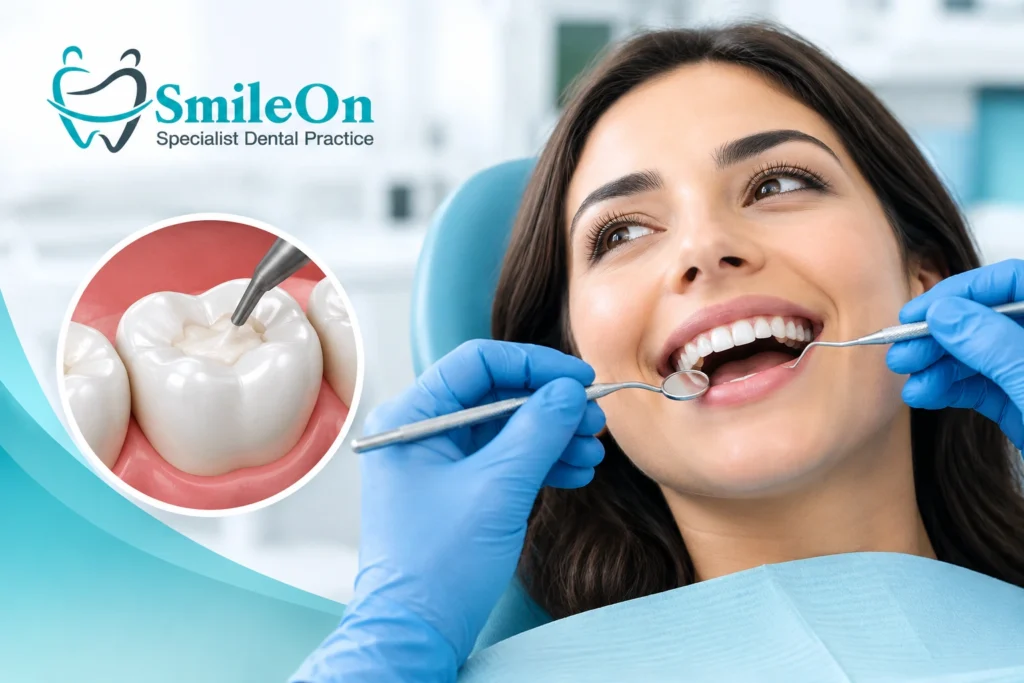
Tooth decay can start with a small cavity, but leaving it untreated may lead to toothache, infection, and more complicated dental problems. A dental filling is one of the most common treatments used to repair a damaged tooth, restore its function, and help protect the remaining natural structure.
However, many patients have questions before undergoing treatment. Is teeth filling safe? Does the procedure hurt? Which filling material is best, and how should you care for your teeth afterward?
In most cases, dental fillings are a safe and effective way to treat cavities when performed by a qualified dental professional. The right treatment depends on the extent of the decay, the location of the affected tooth, and the patient’s dental health.
At SmileOn Dental, patients can receive professional guidance about tooth restoration and preventive dental care. Understanding the procedure, its benefits, and the possible risks can help you make informed decisions about your oral health.
What is a Teeth Filling and Why Is It Needed?
A dental filling is a restorative treatment used to repair a tooth affected by cavities, minor fractures, or certain types of wear. When bacteria in dental plaque produce acids, they gradually damage the tooth’s protective enamel. If this process continues, a cavity may develop.
During treatment, the dentist removes the decayed portion of the tooth, cleans the affected area, and fills the space with appropriate dental material. This restores the tooth’s shape and helps it function normally.
A dentist may recommend a filling if you have:
- A cavity caused by tooth decay.
- A small area of tooth damage.
- A minor fracture that can be repaired with a filling.
- An existing filling that needs repair or replacement.
Early treatment is important because a small cavity is generally easier to manage than decay that has reached the inner pulp of the tooth. More advanced damage may require additional treatment, such as root canal therapy or a dental crown.
Is Teeth Filling Safe for Your Oral Health?
Yes, dental fillings are generally considered safe when the dentist selects an appropriate material and performs the procedure correctly. They have been used for many years to restore damaged teeth and help patients maintain normal chewing function. Before treatment, your dentist evaluates the affected tooth to determine the extent of the damage and the most suitable restorative option.
For most patients, the procedure is straightforward. Local anesthesia may be used to minimize discomfort while the dentist removes decay and places the filling. Some temporary sensitivity can occur after treatment, especially when the cavity is deep. This usually improves with time. However, severe pain, swelling, or symptoms that persist or worsen should be assessed by a dentist.
The safety of treatment also depends on choosing a suitable filling material, maintaining good oral hygiene, and attending regular dental checkups.
5 Benefits of Dental Fillings
Dental fillings do more than cover a cavity. When used appropriately, they help restore the tooth and reduce the risk of further complications.
1. Helps Stop the Progression of Tooth Decay
A dentist removes the decayed tissue before placing the filling. This eliminates the damaged portion that can no longer be restored naturally and allows the remaining tooth to be repaired. A filling does not make the entire mouth immune to cavities, so daily oral hygiene remains important.
2. Restores Normal Chewing Function
Cavities can make biting and chewing uncomfortable, particularly when food puts pressure on the affected tooth. A properly placed filling restores the tooth’s shape and helps distribute chewing forces more normally. This allows many patients to return to their usual eating habits after the dentist’s recommended recovery period.
3. Preserves Natural Tooth Structure
Treating decay early may allow the dentist to retain more of the natural tooth. This can reduce the need for more extensive restorative procedures. The goal is to remove damaged tissue while preserving as much healthy tooth structure as possible.
4. Improves the Appearance of Damaged Teeth
Tooth-coloured composite fillings can blend with surrounding teeth, making them a popular choice for patients who want a natural-looking restoration.
The final appearance depends on the tooth’s condition, the location of the cavity, and the material selected.
5. Can Help Prevent More Extensive Treatment
When decay is treated before it reaches the inner pulp, a filling may be enough to restore the tooth. If the problem is ignored, the damage may become more severe and require a root canal or crown. Early diagnosis does not guarantee that further treatment will never be needed, but it can help reduce the risk of avoidable complications.
What are the Different Types of Dental Filling Materials?
Choosing the right material is an important part of treatment. Each option has different advantages, and the most suitable choice depends on the cavity’s location, size, appearance requirements, and the patient’s needs.
Composite Resin Fillings
Composite resin is a tooth-coloured material commonly used to repair cavities. It can be matched to the natural shade of the teeth, making it a popular option for visible areas.
Main advantages:
- Natural-looking appearance.
- Bonds directly to the tooth structure.
- Suitable for many small and moderate cavities.
Composite fillings may wear or chip over time, particularly in teeth exposed to heavy chewing pressure.
Dental Amalgam Fillings
Amalgam is a metal-based filling material that has traditionally been used for restoring back teeth. It is durable, but its silver colour makes it more noticeable than tooth-coloured alternatives.
Amalgam contains mercury in an alloy. Its suitability should be discussed with a dentist, particularly for patients in groups for whom certain health authorities recommend avoiding new amalgam fillings when appropriate alternatives are available.
Glass Ionomer Fillings
Glass ionomer is another restorative material that can release fluoride. Dentists may use it in selected cases, including some cavities near the gumline and certain restorations in children. It is not as resistant to heavy chewing forces as some other materials, so its use depends on the location and demands of the restoration.
Which filling is best? There is no single option that is ideal for everyone. Your dentist can explain the benefits, limitations, and expected lifespan of each suitable material before treatment.
Are There Any Risks or Side Effects of Teeth Filling?
Although fillings are generally safe, some patients may experience temporary side effects or complications. Knowing what to expect can help you identify when professional advice is needed.
Temporary Sensitivity After Treatment
A treated tooth may feel sensitive to hot, cold, sweet, or acidic foods and drinks. Mild sensitivity can occur as the tooth settles after the procedure. If it becomes severe, lasts longer than expected, or gets worse, contact your dentist for an examination.
Pain When Biting
If a filling is slightly too high, it may interfere with the way your teeth meet when you close your mouth. This can cause pain while biting or chewing. A dentist can assess your bite and make an adjustment if necessary.
Cracked, Loose, or Worn Fillings
Dental fillings can wear down, chip, or become loose over time. This may happen because of normal chewing forces, teeth grinding, or damage to the restoration. Routine dental examinations can help identify problems early and determine whether repair or replacement is needed.
Allergic Reactions to Materials
Allergic reactions to filling materials are uncommon but possible. Tell your dentist about known allergies or previous reactions to dental materials before treatment.
Problems Caused by Deep Tooth Decay
When decay extends close to or into the pulp, the tooth may remain painful even after a filling. Depending on the condition, the dentist may recommend further treatment. This is why an examination before treatment is important: not every damaged tooth can be treated successfully with a filling alone.
What Happens During a Dental Filling Procedure?
Understanding each stage of the procedure can help patients feel more comfortable before their appointment.
Examination and diagnosis
The dentist examines the affected tooth and may take X-rays when necessary to assess the extent of decay.
Preparing the tooth
Local anesthesia may be used to keep the procedure comfortable. The dentist then removes the decayed tissue and cleans the affected area.
Placing the filling material
The selected material is placed into the prepared space. Composite resin is usually applied in layers and hardened with a special curing light.
Shaping and polishing
The dentist shapes the restoration to match the natural contours of the tooth and polishes the surface.
Checking your bite
Finally, the dentist checks how your teeth come together and makes any necessary adjustments to help ensure comfortable chewing.
Many routine fillings can be completed in a single appointment, although the time required depends on the size and location of the cavity.
Essential Aftercare Tips for Dental Fillings
Proper aftercare helps you remain comfortable after treatment and protects your restored tooth.
1. Avoid Chewing While Your Mouth Is Numb
If you received local anesthesia, wait until the numbness has completely worn off before chewing. This helps prevent accidental injuries to your tongue, lips, or cheeks.
2. Choose Comfortable Foods if You Have Sensitivity
If your tooth feels sensitive, choose softer foods and avoid very hot or cold items temporarily. Follow your dentist’s instructions about eating after treatment.
3. Brush Twice Daily
Use fluoride toothpaste and a soft-bristled toothbrush to clean your teeth twice a day. Brush gently around the restored tooth to remove plaque without irritating the surrounding gums.
4. Clean Between Your Teeth Daily
Flossing or using an appropriate interdental cleaner helps remove food particles and plaque from areas a toothbrush cannot easily reach. This is especially important around existing restorations, where new decay can develop if plaque is allowed to accumulate.
5. Avoid Biting Hard Objects
Avoid chewing ice, biting hard objects, or using your teeth to open packaging. These habits can damage both natural teeth and fillings. If you grind or clench your teeth, ask your dentist whether a night guard could help protect your restoration.
6. Monitor Sensitivity and Discomfort
Mild sensitivity may improve gradually, but persistent pain or discomfort when biting should not be ignored. Your dentist can determine whether the tooth needs a bite adjustment or further evaluation.
7. Schedule Regular Dental Checkups
Routine examinations help your dentist monitor existing fillings, identify new cavities, and recommend treatment before a small problem becomes more serious.
How Long Does a Dental Filling Last?
The lifespan of a filling varies according to the material, the size of the restoration, the location of the tooth, and the patient’s oral habits.
Some restorations last several years, while others remain functional for a decade or longer. Fillings in teeth exposed to heavy chewing forces may experience more wear than those in less demanding areas.
You can help extend the useful life of a filling by:
- Brushing with fluoride toothpaste.
- Cleaning between your teeth daily.
- Limiting frequent sugary snacks and drinks.
- Avoiding habits that put excessive pressure on your teeth.
- Attending regular dental checkups.
A filling does not always need to be replaced after a fixed number of years. Your dentist can assess its condition and recommend repair or replacement if there are signs of damage or decay.
When Should You Visit a Dentist for a Filling?
Do not wait until a tooth becomes severely painful before arranging a dental examination. Cavities can develop without obvious symptoms, particularly in their early stages.
Consider scheduling an appointment if you notice:
- Sensitivity to hot, cold, or sweet foods.
- Pain when biting or chewing.
- A visible hole or dark area on a tooth.
- Food repeatedly gets trapped in one place.
- A chipped tooth or damaged existing filling.
- Toothache that returns or gradually becomes worse.
These symptoms do not always mean that you need a filling. A dentist must examine the tooth to determine the cause and recommend the appropriate treatment. Seek prompt dental care if you experience severe or worsening pain. Facial swelling, fever, or difficulty swallowing or breathing can indicate a serious infection and require urgent medical attention.
Why Choose SmileOn Dental for Your Dental Care?
Maintaining healthy teeth requires more than treating cavities when they appear. Regular dental examinations, preventive care, and appropriate treatment help protect your natural teeth over time.
SmileOn Dental focuses on patient-centered dental care, helping patients understand their oral health concerns and available treatment options. A professional assessment can determine the extent of tooth decay and whether a filling or another restorative procedure is necessary.
If you are experiencing tooth sensitivity, suspect a cavity, or have concerns about an existing restoration, arrange a dental consultation to discuss the next steps.The earlier a dental problem is identified, the greater the opportunity to manage it before more extensive damage occurs.
Frequently Asked Questions About Teeth Filling
1. Is dental filling safe for adults and children?
Dental fillings are generally safe for adults and children when an appropriate material is selected and treatment is performed correctly. The dentist considers the patient’s age, dental condition, cavity location, and other relevant factors before recommending a restoration.
2. Does getting a dental filling hurt?
The procedure is usually comfortable, and local anesthesia can be used to minimize pain. Some sensitivity may occur afterward, but severe or persistent discomfort should be assessed by a dentist.
3. How long does it take to recover after a filling?
Many patients return to normal activities on the same day. Temporary sensitivity may last for several days or occasionally longer, depending on the depth of the cavity and the condition of the tooth.
4. Can I eat after getting a tooth filling?
In many cases, you can eat once the numbness has worn off and your dentist confirms it is appropriate. If the tooth feels sensitive, choose softer foods and avoid extreme temperatures until you feel comfortable.
5. Which dental filling material is best?
Composite resin, amalgam, and glass ionomer each have different uses and limitations. The best option depends on the size and location of the cavity, durability requirements, appearance preferences, and clinical considerations.
6. Can a cavity return after a filling?
Yes. New decay can develop around a filling or elsewhere in the mouth. Maintaining good oral hygiene, using fluoride toothpaste, and attending dental checkups help reduce this risk.
7. When should a filling be replaced?
A dentist may recommend replacement if a filling is cracked, loose, significantly worn, or affected by new decay. A damaged filling should be evaluated promptly to prevent further problems.
Conclusion
Dental fillings are a widely used and generally safe treatment for repairing cavities and restoring damaged teeth. They help maintain chewing function, preserve natural tooth structure, and may reduce the need for more extensive treatment when decay is detected early.
However, successful treatment depends on choosing the right material, placing the restoration correctly, and maintaining good oral hygiene afterward. Persistent pain, unusual sensitivity, or a damaged filling should always be checked by a dental professional.
If you suspect a cavity or want to learn more about restorative dental treatment, SmileOn Dental can help you explore suitable options for your oral health needs. Schedule a dental assessment to address concerns early and take a positive step toward maintaining a healthy smile.