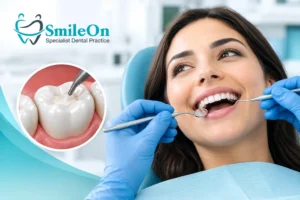
Key takeaway: Cavities in baby teeth should not be ignored just because these teeth will eventually fall out. Depending on the severity of decay, a child may need fluoride treatment, a filling, a crown, pulp treatment, or extraction.
Many parents wonder, “Do cavities in baby teeth need fillings?” The answer depends on the size and location of the cavity, the child’s age, symptoms, and how long the tooth is expected to remain in the mouth.
Baby teeth are temporary, but they play an important role in your child’s health and development. Some baby teeth, particularly the back molars, remain in place until around 10 to 12 years of age. If a cavity is left untreated, decay can become deeper and may eventually cause pain or infection.
Early dental care can help prevent a small cavity from becoming a more complicated problem. Parents should have any suspected cavity examined by a qualified dentist before deciding whether treatment is necessary.
Do Cavities in Baby Teeth Need Fillings?
A baby tooth with a developed cavity often needs professional treatment. However, not every early stage of tooth decay requires a filling. If decay has only affected the outer enamel and has not created a physical hole, the dentist may recommend fluoride treatment, improved brushing, dietary changes, and regular monitoring.
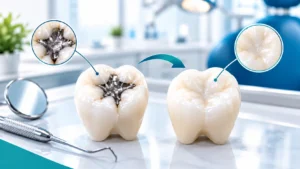
Once a cavity creates a hole in the tooth, the damaged tooth structure cannot grow back naturally. In these cases, a dental filling may be appropriate to remove the decay and restore the tooth.
The dentist will consider several factors before recommending treatment, including:
- The size and depth of the cavity
- The location of the affected tooth
- The child’s age
- Whether the tooth is causing pain or sensitivity
- Whether there are signs of infection
- How long the baby tooth is expected to remain
- How much healthy tooth structure remains
Parents looking for experienced children’s dental care in Lahore should choose a clinic where the dentist can assess the child’s individual needs and explain treatment options clearly.
Why are Baby Teeth Important?
Baby teeth are temporary, but they are important for much more than chewing. Healthy primary teeth help children eat comfortably, develop clear speech, and maintain proper space for their permanent teeth. Baby teeth also help guide permanent teeth into their correct positions. If a baby tooth is lost too early because of severe decay or infection, neighboring teeth may move into the empty space.
This can reduce the space available for the permanent tooth and may contribute to alignment problems. In some situations, a dentist may recommend a space maintainer after an early extraction. Healthy baby teeth can therefore support your child’s oral development until the permanent teeth are ready to replace them.
What Happens If a Cavity in a Baby Tooth Is Left Untreated?
Tooth decay usually continues to progress when the underlying causes are not controlled. Baby teeth have thinner enamel than permanent teeth, which can allow decay to progress relatively quickly.
An untreated cavity may cause:
- Tooth sensitivity
- Pain while eating or drinking
- Food getting trapped around the tooth
- Bad breath
- Difficulty chewing
- Nighttime toothache
- Sleep disturbance
- Reduced appetite
- Gum swelling
- Facial swelling
- Dental abscess
- Premature tooth loss
A child may also have a deep cavity without experiencing noticeable pain. No pain does not necessarily mean there is no serious decay. For this reason, parents should not wait until a child develops severe toothache before scheduling a dental examination.
How are Cavities in Baby Teeth Treated?
The appropriate treatment depends on how advanced the tooth decay is. A dentist will examine the tooth and may recommend a dental X-ray when necessary to determine how deep the decay has progressed. The main treatment options for cavities in baby teeth include:
Fluoride Treatment and Preventive Care
Very early enamel changes may sometimes be managed without a traditional filling. A dentist may recommend fluoride treatment, better brushing habits, dietary improvements, and regular follow-up appointments. This approach is generally considered when the tooth has not developed a significant physical cavity.
Dental Fillings
A baby teeth filling may be recommended when decay has created a small or moderate cavity but enough healthy tooth structure remains. The dentist removes the decayed portion and restores the tooth with an appropriate filling material. Treating decay while it is still small can help prevent it from progressing deeper.
Stainless-Steel Crowns
A stainless-steel crown may be recommended when a baby molar has extensive decay or has become significantly weakened. A crown covers and protects the remaining tooth structure. It can be a useful option when a large filling would not provide enough protection.
Pulp Treatment
If decay reaches the inner part of the tooth or causes significant inflammation or infection, the dentist may recommend pulp treatment. The purpose is to manage the affected tissue and preserve the tooth when it can still be restored safely.
Tooth Extraction
Extraction may be considered when a baby tooth is severely damaged, badly infected, or cannot be restored predictably. If the tooth is lost significantly earlier than expected, the dentist may evaluate whether a space maintainer is appropriate.
Does Every Cavity in a Baby Tooth Need a Filling?
No, not every cavity requires a filling. The term “cavity” is often used broadly to describe tooth decay. Very early decay may sometimes be managed without removing tooth structure. However, once decay has progressed far enough to create a hole or weaken the tooth, a filling or another restorative treatment may be necessary.
A filling may also not be recommended when a baby tooth is already naturally loose and expected to fall out soon, provided there is no significant pain, infection, or other complication. Only a dental examination can determine the safest option for a particular tooth.
Are Baby Tooth Fillings Painful?
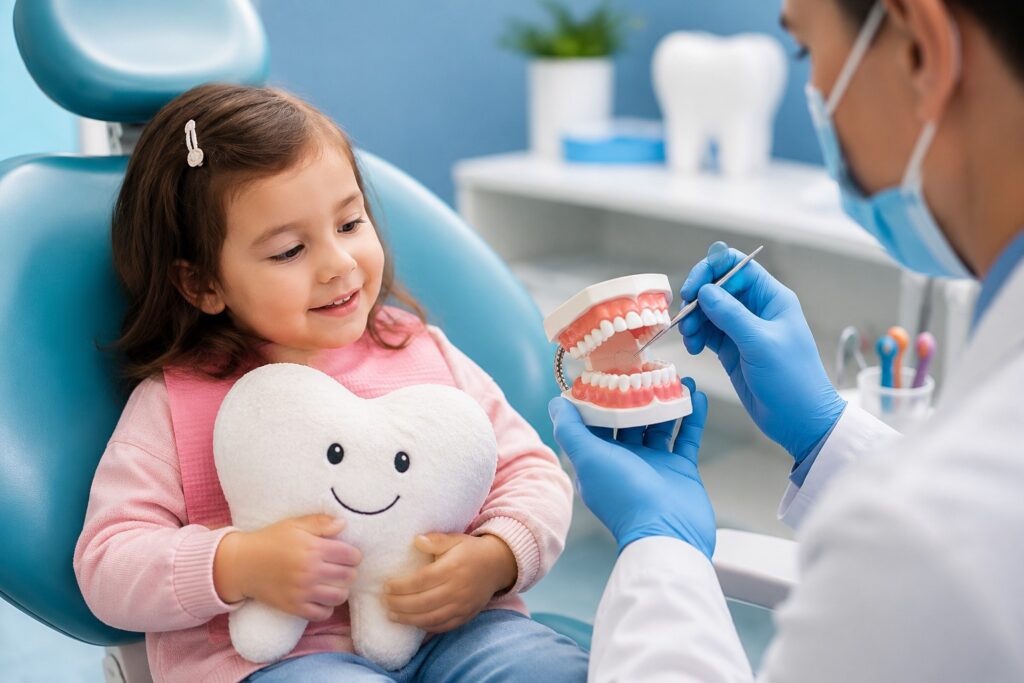
Many parents worry that dental fillings will be frightening or painful for their child. Modern pediatric dental care uses child-friendly communication and techniques designed to make treatment as comfortable as possible. When necessary, the dentist can use local anesthesia to numb the area before treatment.
Treating a small cavity early is generally easier than treating a deeply decayed or infected tooth. Parents can also help by speaking positively about dental visits and avoiding frightening descriptions of dental procedures.
Can an Infected Baby Tooth Affect a Permanent Tooth?
A serious infection in a baby tooth can affect the tissues and bone around the developing permanent tooth. This is one reason dentists recommend treating significant decay rather than simply waiting for the baby tooth to fall out. If your child has swelling, persistent pain, a dental abscess, or signs of infection, arrange a dental examination promptly.
Frequently Asked Questions About Cavities in Baby Teeth
Can a cavity in a baby tooth heal naturally?
Very early enamel changes may sometimes be stopped or stabilised with appropriate preventive care. However, once a physical hole has formed, the lost tooth structure does not naturally grow back.
What if my child’s baby tooth cavity does not hurt?
A cavity can become larger and deeper without causing noticeable pain. Your child may therefore have significant decay even when they appear comfortable.
Does every cavity in a baby tooth need a filling?
No. Depending on the severity of decay, the dentist may recommend fluoride treatment, monitoring, a filling, a crown, pulp treatment, or extraction.
At what age should children see a dentist?
Children should begin seeing a dentist early in childhood so that their oral health can be monitored and parents can receive guidance about brushing, fluoride, diet, and cavity prevention.
What should I do if my child’s baby tooth has a visible hole?
Schedule a dental examination. A dentist can determine how deep the cavity is and whether the tooth needs a filling or another type of treatment.
How Can Parents Prevent Cavities in Baby Teeth?
Preventing tooth decay is easier than treating advanced cavities. Parents can support their child’s oral health by:
- Brushing the child’s teeth twice a day with fluoride toothpaste appropriate for their age.
- Limiting frequent sugary snacks and drinks.
- Encouraging water between meals.
- Avoiding prolonged exposure to sugary drinks.
- Helping young children brush until they can clean their teeth effectively.
- Scheduling regular dental checkups.
- Asking the dentist about fluoride treatments when appropriate.
Good daily habits can reduce the risk of cavities and help children develop a healthy relationship with dental care.
Protect Your Child’s Smile With Early Dental Care
Cavities in baby teeth should not be ignored simply because primary teeth are temporary. These teeth support eating, speech, jaw development, and the proper spacing of permanent teeth. If your child has a visible cavity, tooth sensitivity, pain, swelling, or difficulty eating, schedule a dental examination rather than waiting for the problem to become worse.
Parents searching for experienced dentists in Lahore can visit SmileOn Dental Clinic in Johar Town for a professional examination and a treatment plan based on their child’s individual needs.
Medical disclaimer: This blog provides general educational information and does not replace an individual dental examination, diagnosis, or treatment plan.