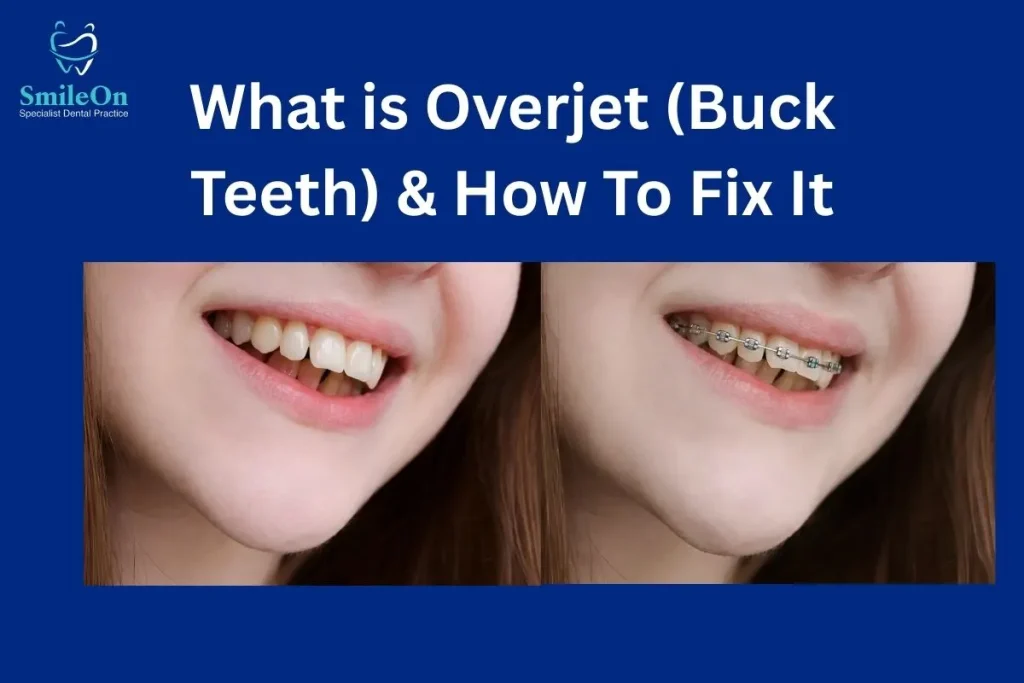
If your upper front teeth protrude in front of your lower front teeth, a condition called buck or overjet teeth. While some might believe it’s only a cosmetic issue, overjet teeth can impact everything from chewing to speech, the health of our jaws, and even confidence levels. The good news is modern dentistry provides several effective options to correct it, no matter your age.
Keep reading to know what Overjet actually is. What are the causes of an open bite, and how can it be corrected?
Table of Contents
ToggleUnderstanding Overjet Teeth
Protruding teeth are a condition of excessive proportion of the upper front teeth extending horizontally past the lower front teeth. When the gap becomes too wide, it’s a misalignment that requires adjustment.
Buck teeth are also commonly known when the misalignment is very obvious, particularly while smiling or talking. Though the name may make the condition sound informal, with a risk of serious long-term effects if not treated, it’s far from a joke.
So now that you know what it means, here are the features of overjet teeth.
- The upper front teeth stick out (stick) further than normal.
- This gap between the bites is widened laterally.
- It may range from mild to severe.
What Are the Symptoms of Overjet?
You are not always in pain with overjet, which is why so many people live with it for some time without getting treatment. Though over time it becomes more pronounced as the teeth shift or wear in an uneven manner.
Aesthetically, people with overjet teeth may notice a change in their smile and facial appearance. From a functional perspective, day-to-day activities such as eating and talking might feel awkward. It can also hurt your self-confidence.
Common symptoms include:
- Prominent or protruding front teeth that are more susceptible to being broken.
- Difficulty closing the lips comfortably
- Problems speaking, especially sounds
- Pain in your jaw or stiffness after chewing
- Uneven or excessive tooth wear
What Causes Buck Teeth?
Buck teeth are typically caused by a combination of both genetic and environmental factors. For a lot of people, the problem begins early in life and then becomes more and more pronounced as time passes.
A significant contributor is genetics. The size, shape, and alignment of the jaw and teeth are generally hereditary. Habits from childhood are also a significant contributor through constant pressure on forming teeth and jaws.
The most common causes include:
- Family history of overjet teeth
- Thumb Sucking or Pacifier Sucking for too long a time
- Thrusting the tongue while swallowing food or speaking
- Difference in the size of the jaws (upper and lower)
- Overcrowded, absent or impacted teeth
Why is Treating Overjet Important?
Treatment can be postponed by people, as overjet does not appear to cause any pain. Still, if overjet teeth are not treated, they could cause many oral health complications in the long run.
Buck teeth protrude and are susceptible to injury in a fall or sports. Unbalanced biting can stress jaw joints, and the bite force is distributed unevenly, causing teeth to wear out more quickly.
Possible hazards of not treating overjet are as follows:
- Greater risk of chipping and cracking of teeth in front
- Gum recession and enamel erosion
- Jaw joint (TMJ) problems
- Difficulty chewing certain foods
- Long-term speech challenges
Treatment Options for Overjet Teeth
The management of Overjet depends on the extent of the condition, age, and cause, either due to the position of teeth or the structure of the jaw. The good news is that today’s orthodontic procedures work for kids and adults.
Here are the best treatment options now.
Braces for Overjet Correction
Conventional orthodontics can still be considered as one of the most effective treatment options for moderate to severe overjet. They gently shift teeth into the correct position and fix bite problems over time.
Braces may include:
- Strong and precise metal brackets
- For a less visible look, ceramic braces
- Self-ligating braces for some with faster results
Clear Aligners for Mild or Moderate Overjet
Clear aligners are also a great choice for adults who want a more subtle option. These removable trays gently slide teeth into place when worn consistently.
Some of the advantages of clear aligners:
- Nearly invisible appearance
- Convenient to take off for eating and cleaning
- More comfortable than metal braces
Functional Appliances for Children
Functional appliances are sometimes used in children and teenagers to help with jaw growth while bones are still forming. These appliances are particularly effective in case of jaw-related overjet.
Common functional appliances include:
- Twin block appliances
- Herbst appliances
Tooth Extraction in Severe Cases
Where there is overcrowding or where the amount of protrusion is excessive, extraction of teeth may be required in order to make space. This creates room for teeth to reposition themselves in healthier locations.
Extraction may be recommended to:
- Reduce excessive protrusion
- Improve bite alignment
- Support long-term stability of results
Jaw Surgery for Skeletal Overjet
Severe overjet resulting from skeletal problems may need orthognathic surgery. This is usually reserved for adults who have a very high level of disability.
It is typically done in conjunction with orthodontic treatment to:
- Correct jaw alignment
- Improve chewing and breathing
- Enhance facial balance
Cosmetic Treatments for Buck Teeth
If you have a mild case of buck teeth or are primarily concerned about cosmetics, veneers or dental bonding could make your teeth appear more in line with the rest. But it doesn’t solve the problem of the bite that started everything.
Cosmetic treatments may help:
- Improve tooth shape and symmetry
- Enhance smile aesthetics
- Boost confidence
Can Overjet Be Corrected at Any Age?
Yes, overjet can be corrected at any age. Although treatment of younger children will always produce faster and easier corrections, excellent results can now be achieved with adult orthodontics.
The trick is to select the right treatment plan designed to individual circumstances.
Frequently Asked Questions
Can overjet be prevented?
In many cases, yes. Visiting the dentist at an early age, stopping the thumb-sucking habit and monitoring jaw development in children might help prevent overjet teeth from being extreme.
How to correct an overjet without braces?
Mild overjet can be treated with clear aligners, retainers, or functional appliances in children. Still, moderate to severe buck teeth will need a good bit of braces or aligner assistance in order to be corrected correctly.
Do buck teeth fix themselves?
No, buck teeth do not fix themselves. Untreated, overjet tends to increase in prominence as there is some natural movement of the teeth through time.
Conclusion
So, buck teeth, which are also known as an overjet type of dental malocclusion, are considered a normal problem in the world of odontology. If ignored, they can impact oral health, comfort and confidence. But, overjet can be safely and effectively corrected with dental care today.
With early diagnoses and the proper course of treatment, the difference can be lifelong, allowing you to enjoy a healthier bite and a happier smile.