Perfect teeth don’t always mean braces and a mouth full of crowns. Sometimes, small, flawed edges or chips can be fixed in a single appointment. And that’s where tooth contouring, or enameloplasty, comes in.
Tooth contouring is a conservative procedure in which the outside of the tooth’s surface is reshaped for cosmetic purposes. It was quick, painless, and usually produced instant results. If you’ve ever stared at your smile and wished those little imperfections would smooth down, you need enameloplasty.
Table of Contents
ToggleWhat is Enameloplasty?
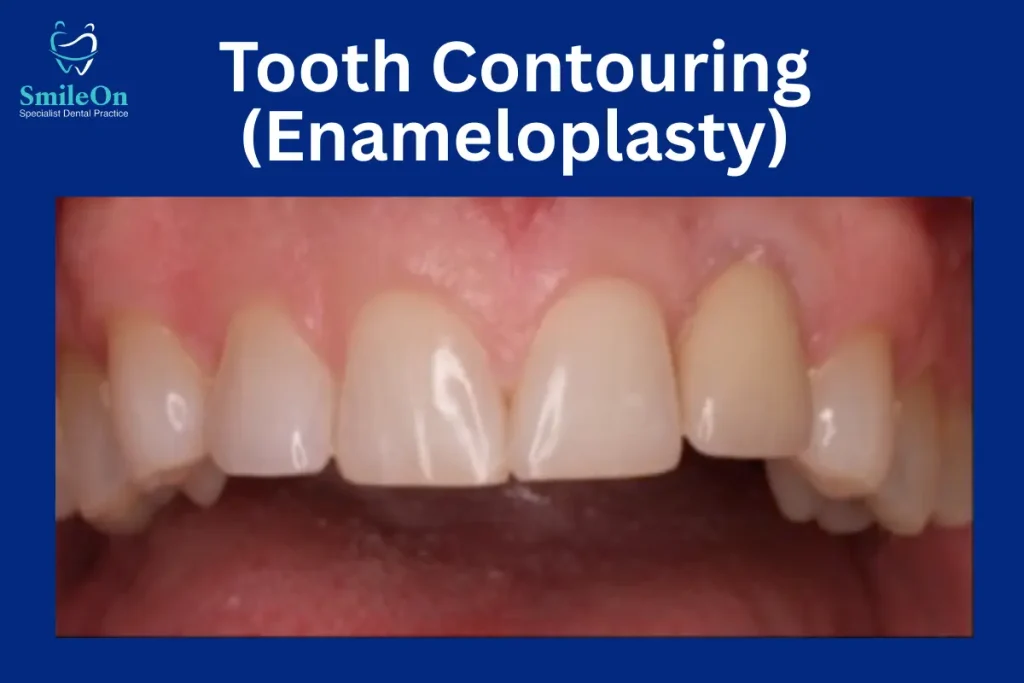
Enameloplasty (tooth contouring) is a procedure in which small amounts of tooth enamel are removed to modify a tooth’s shape, size, or surface.
The hard outer surface of the tooth is called enamel. As it lacks nerves, removing a minimal amount of enamel does not usually cause any pain, and no anesthetics are required in most cases.
Dentists use specialized tools to:
- Smooth rough edges
- Correct minor chips
- Adjust slightly overlapping teeth
- Create better symmetry
- Refine tooth length
It is often incorporated into a smile makeover or paired with another cosmetic treatment such as whitening or bonding.
The key point?
Enameloplasty is appropriate only for minor corrections. It’s not for serious structural problems or deep cracks.
Who May Need Enameloplasty?
Not everyone needs it. However, enameloplasty is perfect for patients with minor aesthetic issues.
You can get it done if you have:
Slightly Uneven Teeth:
When one tooth is a little longer, it can often be balanced by a slight reshaping.
Minor Chips:
Alternatively, small chips from wear or trauma can sometimes be polished away.
Rough or Jagged Edges:
Grinding and natural wear can cause teeth to have rough edges.
Slightly Overlapping Teeth:
Smile reshaping in some areas can improve alignment without braces.
Pointed or Sharp Teeth:
Slightly triangular-looking, lying over the lower ones and sticking out unnaturally, can be dulled off to make a more balanced look.
But it should be made clear that enameloplasty is not suitable for:
- Severely crooked teeth
- Large fractures
- Thin enamel
- Active tooth decay
- Deep structural damage
A dentist would check enamel thickness before suggesting the procedure. Too much enamel taken off may weaken teeth, so an accurate assessment is important.
Procedure of Tooth Contouring
One of the benefits of enameloplasty is how fast and easy it can be.
Here’s what typically happens:
Step 1: Examination and Planning
The dentist looks at your teeth and may take X-rays to check the thickness of the enamel. They pinpoint sections to reshape, and if necessary, they mark the tooth surfaces.
Step 2: Reshaping the Enamel
The dentist makes small holes by drilling with a fine diamond bur. This step is all about precision, so you keep that natural-looking shape.
Step 3: Smoothing and Polishing
Once the tooth has been reshaped, it is polished to form a glossy surface. This goes a long way to restoring the look and feel.
Step 4: Final Evaluation
The orthodontist sees how your bites fit together and feels comfortable. It typically takes about 20–40 minutes per tooth in a single visit. It means most patients will walk out of the clinic with instantly improved teeth, no injections, no recovery time, and no complex aftercare.
What Are the Benefits of Tooth Contouring?
Tooth contouring may appear to be a minor procedure, though the effect can be quite dramatic.
Immediate Results:
Unlike orthodontics, which lasts many months, enameloplasty looks great immediately following treatment.
Painless Procedure:
As enamel has no nerves, it can mostly be carried out without an anesthetic.
Cost-Effective:
Enameloplasty is significantly cheaper than veneers or braces.
Minimally Invasive:
No drilling into the inner layers of the tooth. The middle and the inner enamel are barely modified.
Improved Confidence:
Small imperfections can affect self-esteem. Smoothing and contouring can make a huge difference in how you feel about your smile.
No Recovery Time:
You are free to eat and go about your day afterwards.
Permanent Results:
Once it is done, there’s no chance for the enamel to grow back, so the new contour will last indefinitely.
What Are the Side Risks of Enameloplasty?
While enameloplasty is generally safe, it’s important to be aware of potential risks.
Increased Sensitivity:
Taking off enamel results in mild sensitivity to hot/cold foods for a short period of time.
Over-Reduction of Enamel:
Note! Too much removal of enamel can weaken the tooth structure. That is why it is so important to select an excellent and experienced dentist.
Risk of Damage:
Improper trimming can destabilize the natural bite or result in a lack of wear.
Not Reversible:
Enamel does not regenerate. Once removed, it cannot be put back.
Cosmetic Limitations:
It won’t repair deep cracks, big chips or significant alignment problems.
Tooth Contouring vs. Other Cosmetic Treatments
Many patients mistake enameloplasty for bonding or veneers. Understanding the distinction makes it easier for you to make the right choice.
Enameloplasty:
- Removes small amounts of enamel
- Best for minor reshaping
- No added material
- Quick and simple
Dental Bonding:
- Adds composite resin to teeth
- Repairs larger chips or gaps
- Can change tooth colour
Veneers:
- Thin porcelain shells
- Cover the entire front surface
- Ideal for major cosmetic changes
In fact, your dentist might pair contouring with bonding for even better-looking results.
How Long Does Enameloplasty Last?
Since enamel does not grow back, once reshaped, these changes are permanent. But not so; it is important to avoid decay or abrasion.
Results can last for years with proper brushing, flossing and professional dental cleanings.
Avoid habits like:
- Nail biting
- Teeth grinding
- Chewing hard objects
Frequently Asked Questions
Is enameloplasty painful?
No, enameloplasty is generally painless. Because enamel contains no nerves, the majority of patients will not need an anaesthetic. There may be some slight sensitivity after the treatment, but this is usually short-lived.
How long does it take to recover from enameloplasty?
There is hardly any recovery time. Patients are able to eat and return to normal activity immediately after the procedure. Minimal sensitivity may occur, but it typically goes away within a few days.
Does enameloplasty damage teeth?
With skilful hands and the best approach by a good dentist, enameloplasty does not harm the teeth. Anyway, too much enamel removal would weaken the tooth, and that’s why you should have it checked before.
How does enameloplasty compare to bonding?
Enameloplasty, which involves the removal of a small amount of enamel to satisfy the patient’s esthetic demands, or bonding, which adds tooth color composite material to change shape, close gaps or repair chips. However, bonding works for more obvious changes in appearance.
Final Thoughts
It’s when you make tiny changes that you see transformation. Tooth contouring (enameloplasty) is an example where a complex dental procedure isn’t always necessary to give you an upgraded smile.
Fast, painless and effective. If you are troubled by those annoying minor imperfections, a quick visit to SmileOn may be all it takes to smooth things out, literally.
A picture-perfect smile is closer than you realize!