Your smile is one of the most precious things about your personality, but what if, gradually, you start hiding it?
The worst enemy of tooth enamel is toothwear, a common but underestimated dental condition that can wear away your teeth. Without treatment, erosion of teeth can impact your appearance, comfort, and overall oral health.
Here’s what you need to know about tooth erosion, including what it is, what causes it, symptoms to look for, and treatments that can help protect your smile.
Table of Contents
ToggleKey Takeaways
- Tooth erosion, the gradual loss of enamel from exposure to acid, with no bacteria involved.
- Once tooth enamel has eroded, it’s irreversible, but early intervention can prevent further damage.
- Typical signs are sensitivity, discoloration, and translucent tips.
- Erosion of teeth can be caused by acidic food, soft drinks, acid reflux, a dry mouth, and over-brushing.
- And professional treatments, including fluoride and bonding, veneers, and crowns, can restore function, as well as appearance.
- Preventive care, like reducing acidic consumption and brushing with fluoride toothpaste, is the best defense against long-term enamel damage.
What is Tooth Erosion?
Tooth erosion is the wear down of your teeth’s outer surface, enamel, from exposure to acid. Unlike cavities, which occur from bacteria, tooth enamel erosion occurs when acids directly destroy the surface of your teeth.
Enamel is the hardest substance in your body, but it’s not unbreakable. Once lost, enamel does not grow back on its own. This highlights the need for screening and prevention.
Acids that contribute to erosion may be:
- Acidic foods and drinks
- Presence of stomach acid (eg, through medical conditions)
- Environmental exposure
- Poor oral habits
Hence, gradual tooth erosion can result in sensitivity, discoloration, and fracture.
What are the Symptoms of Erosion of Teeth?
Tooth enamel erosion usually happens gradually, so many people don’t realize it until a lot of damage is done. Early recognition of these symptoms helps future complications.
Tooth Sensitivity
One early indicator is heightened sensitivity to:
- Hot drinks
- Cold foods
- Sweet items
- Acidic foods
As enamel gets thinner, the underlying dentin is exposed, and teeth become more sensitive.
Discoloration
When enamel erodes, the yellowish dentin underneath becomes more apparent. Teeth may appear:
- Yellow
- Dull
- Less bright than before
- Rounded or Smooth Edges
Healthy teeth have defined edges. In the case of tooth erosion, the edges can also get rounded or smooth as they are worn away over time.
Transparent Appearance
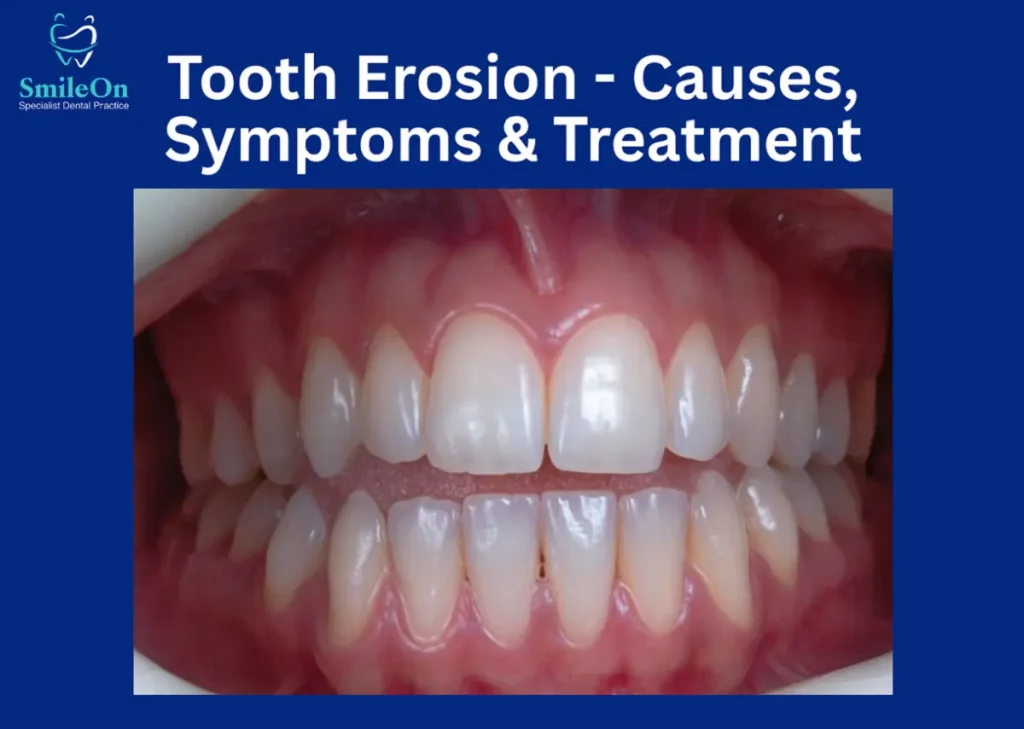
The front teeth may appear a bit transparent at the ends. This is a typical symptom of the erosion of tooth enamel.
Cracks and Chips
Enamel that has been compromised makes teeth more susceptible to:
- Chipping
- Cracking
- Fracturing
Shiny Surfaces
Teeth affected by acid erosion can appear unusually smooth and shiny.
If you’re seeing these signs, it’s time to see a dental professional. This guide, about common dental problems and teeth diseases, will also help you with related concerns.
Causes of Tooth Erosion
The first step to preventing tooth enamel erosion is understanding the causes. Acid is the main cause, but it can have various sources.
Acidic Foods and Beverages
Frequent consumption of:
- Soft drinks
- Citrus fruits
- Energy drinks
- Vinegar-based foods
- Carbonated beverages
These have acids that slowly eat away at enamel. Even diet sodas can erode your teeth thanks to their acidity.
Acid Reflux and GERD
Medical conditions such as acid reflux or GERD cause stomach acid to rise into the mouth. The acidity of the stomach is very powerful and can erode enamel over time.
Eating Disorders
This causes repeated vomiting, exposing teeth to caustic stomach acids, and speeding up the erosion of the tooth.
Dry Mouth (Xerostomia)
Saliva neutralizes acids and protects enamel. The risk of tooth enamel erosion increases as saliva flow decreases.
Overbrushing
Brushing too aggressively or with a toothbrush that has hard bristles can erode enamel, particularly when done right after eating acidic foods.
Environmental Factors
Exposure to industrial chemicals or chlorinated swimming pool water may also be involved in enamel erosion.
Teeth Grinding (Bruxism)
Grinding leads largely to mechanical wear, but mixed with acid exposure, it causes enamel loss. Find out more about worn teeth here.
What are the Treatments of Tooth Erosion?
The treatment for enamel erosion varies depending on the severity. With early intervention, further damage can be avoided and function restored.
Fluoride Treatment
In the early stages, fluoride helps:
- Strengthen remaining enamel
- Reduce sensitivity
- Slow further erosion
Dentists might prescribe fluoride gels, varnishes, or toothpaste.
Dental Bonding
For mild to moderate erosion, composite resin may be placed on:
- Cover exposed areas
- Restore shape
- Improve appearance
This is a long-lasting and effective cosmetic solution.
Dental Veneers
If front teeth are severely damaged, veneers can:
- Improve aesthetics
- Protect damaged enamel
- Restore confidence
Crowns
When there is a severe loss of teeth, crowns may be placed for the following purposes:
- Reinforce weakened teeth
- Prevent fractures
- Restore function
Treating Underlying Causes
Underlying health conditions like GERD or dry mouth need to be dealt with. The erosion may persist without dealing with the cause.
- Lifestyle Modifications
Dentists often recommend:
- Water rinse after acidic foods
- Waiting 30–60 minutes before brushing
- Using a soft-bristled toothbrush
- Limiting acidic drinks
- Using a straw to minimize contact with acids
Prevention is key since enamel cannot be naturally replenished once lost.
How to Stop Your Tooth Enamel from Eroding
Prevention is always better than treatment. Here are some practical tips for how to protect your enamel:
- Maintain good oral hygiene
- Use fluoride toothpaste
- Reduce acidic food intake
- Stay hydrated
- Visit your dentist regularly
- Manage acid reflux
Hence, simple lifestyle changes can effectively prevent tooth erosion.
FAQs
Can tooth erosion be reversed?
No, lost enamel does not grow back on its own. Early tooth enamel erosion can be treated with fluoride treatments and by lifestyle changes to prevent its advancement.
Is tooth erosion permanent?
Yes. Once enamel is worn away, it does not regenerate. Management aims to protect the remaining enamel and restore compromised regions.
Can tooth erosion cause cavities?
Yes. When enamel wears away, teeth become more susceptible to bacteria and decay. Fragile enamel leaves you more vulnerable to cavities.
Is erosion dental decay?
No. Erosion happens when acid wears away at enamel, while dental decay (cavities) is the result of bacteria producing acids from sugar. The two types are different, but both can be damaging to teeth.
Conclusion
Tooth erosion may begin quietly but can lead to long-term damage. Tooth enamel erosion can have an impact on everything from greater sensitivity to structural damage, so finding a method that will help is vital for both your oral health and self-worth.
The good news? Early detection, smart dietary decisions, and professional dental care can be very effective.
Don’t ignore the signs of tooth erosion if you see any.
So shield your pearly whites today, for a stronger, shinier tomorrow