A strange pain at the back of your throat can soon escalate into significant distress if left unattended.
If you have ever experienced swelling around a partly erupted tooth, then it’s possible that you’re suffering from pericoronitis. It is a common but mostly ignored dental condition, and it must be treated. Keep reading to know pericoronitis treatment and symptoms to deal with this dental condition effectively.
Key Takeaways
- Pericoronitis is inflammation around partially erupted teeth (usually wisdom teeth).
- Pericoronitis is often due to poor oral hygiene and bacterial accumulation
- Bad taste, swelling, and pain are early signs of pericoronitis
- Severe cases can involve infection, fever, and trouble opening the mouth.
- Pericoronitis treatment is available from cleaning to surgery
- Timely treatment helps avoid complications or repeat infections
What is Pericoronitis?
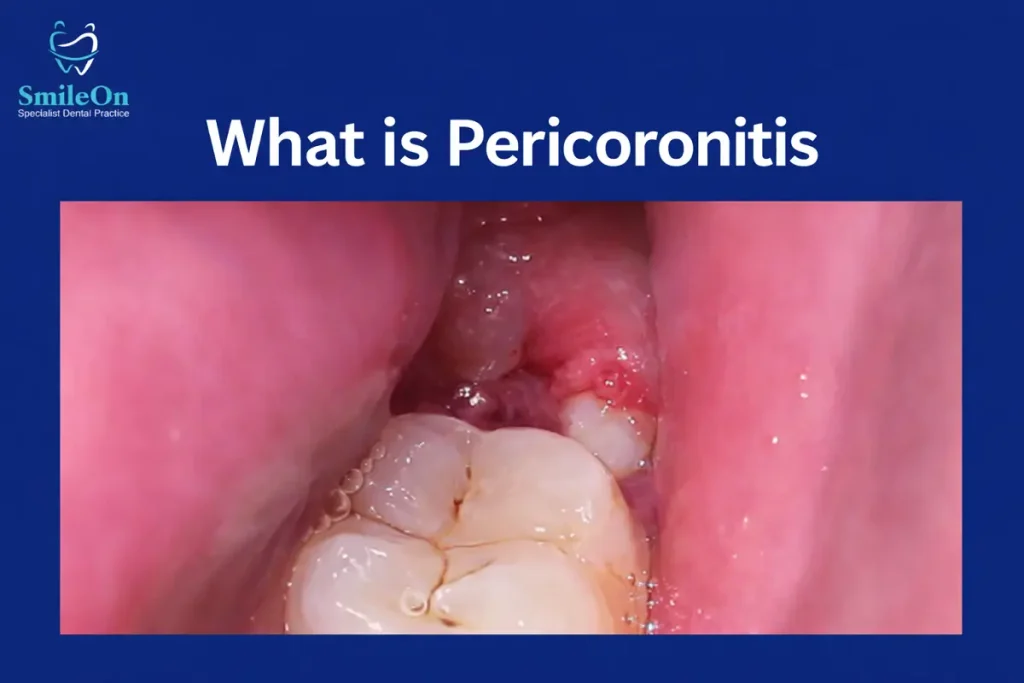
Pericoronitis is a dental condition in which the gum tissue surrounding a tooth that has not fully erupted, typically a wisdom tooth, becomes inflamed or infected.
This often occurs when a flap of gum (called an operculum) partially covers the tooth, trapping food and bacteria. Eventually, this causes irritation, swelling, and infection if untreated.
It is seen most commonly in young adults aged 20-40 years during the period of wisdom tooth eruption.
What Causes Pericoronitis?
Knowing pericoronitis causes can prevent it or allow for early treatment. Here are some of the main reasons:
Partially Erupted Wisdom Teeth
When wisdom teeth don’t fully break through the surface, they leave a space where bacteria can build.
Poor Oral Hygiene
Poor brushing and flossing lets food particles collect under the flap of gums.
Bacterial Infection
Food and plaque that are trapped provide a great breeding ground for bacteria.
Trauma from Opposing Teeth
There may also be biting by upper teeth into inflamed gum tissue, leading to further irritation.
Stress and Weakened Immunity
Lower immunity can hamper your body’s ability to fight infections, raising the risk.
What Are the Symptoms of Pericoronitis?
Early detection of pericoronitis symptoms can avoid complications. Symptoms can vary from mild discomfort to intense pain.
Mild Symptoms
- Enlarged and inflamed gum around a tooth
- Slight pain or discomfort
- Bad taste in the mouth
- Mild difficulty chewing
Severe Symptoms
- Severe pain that radiates to the ear or jaw
- Pus discharge around the tooth
- Difficulty opening the mouth
- Enlarged lymph nodes in the neck
- Fever and fatigue
If things get worse, dental treatment is essential to prevent the infection from spreading.
How is Pericoronitis Diagnosed?
In general, dentists diagnose pericoronitis with a physical exam. They might also take X-rays of your mouth to see where the wisdom tooth is and whether it needs pericoronitis removal or other treatments.
Effective Pericoronitis Treatment Options
Treatment of pericoronitis depends on the extent of the disease.
Professional Cleaning
Dentists clean the area that is affected from possible trapped food, bacteria and debris.
Medications
- Antibiotics to control infection
- Pain relievers to reduce discomfort
- Antiseptic mouth rinses to maintain hygiene
Saltwater Rinse (Home Care)
Rinses of warm saltwater soothe inflammation and kill some bacteria temporarily.
Operculectomy (Gum Removal)
The gum flap covering the tooth is surgically removed in some cases. This is a normal way of removing pericoronitis.
Tooth Extraction
Tooth Extraction may be the best long-term pericoronitis treatment if a wisdom tooth is impacted or causing problems over and over again.
When to Visit the Dentist?
Don’t brush off symptoms if they don’t go away or worsen. Ask for professional care if you have:
- Severe pain or swelling
- Difficulty swallowing or breathing
- Fever or signs of infection
- Repeated episodes of pericoronitis
For example, early treatment can reduce the chance of complications like abscess formation or spread of infection to other parts.
How to Prevent Pericoronitis
Prevention is better than cure. Here’s how to lower your risk:
- Brush and floss often, particularly around wisdom teeth
- Use antibacterial mouthwash
- Also, visit your dentist regularly for checkups
- Extract infected teeth, if necessary
- Eat right for immunity
Conclusion
Gum disease, if not taken care of, can become an even bigger problem. Know what pericoronitis is, be familiar with early symptoms and timely pericoronitis treatment, and keep yourself away from severe discomfort and complications.
If you are suffering from continuous pain or swelling, don’t wait; Get expert diagnosis and effective care at SmileOn Dental Clinic. Your mouth deserves its own professional care.
FAQs
Does pericoronitis go away on its own?
Mild cases can go temporarily with good oral hygiene and rinsing, but it usually recurs. Long-term relief usually requires professional treatment.
Is pericoronitis an infection?
Yes, pericoronitis is usually caused by a bacterial infection that forms around a partially erupted tooth.
What should I eat in pericoronitis?
Avoid hard, sticky, and spicy foods. The best thing to do is stick to soft foods, such as yogurt, soups, and pureed items, since they can help soothe irritation and discomfort.