There are many reasons that a tooth can be damaged, from cavities, broken teeth and wear to dental work that just is not holding up over time.
When this happens, dentists use various forms of dental restorations to fix the tooth and return it to its normal function and appearance. Yet patients often find themselves confused as to which is better for them: filling, dental inlays, onlays, or a crown. All of these choices serve a different purpose and are selected depending on the type and position of damage.
So, this is the explanation of all four restorations here, so you know exactly what kind of action to take in the event of dental damage.
Table of Contents
ToggleWhat Are Dental Restorations?
Restorations are dental treatments used to restore the function of missing teeth or bring structure and strength back to teeth. Their primary goal is to repair strength, but also function and appearance, while reducing future deterioration.
The type of restoration that is best for you depends on how much of your tooth structure is involved and how much protection the tooth needs.
What is Dental Filling?
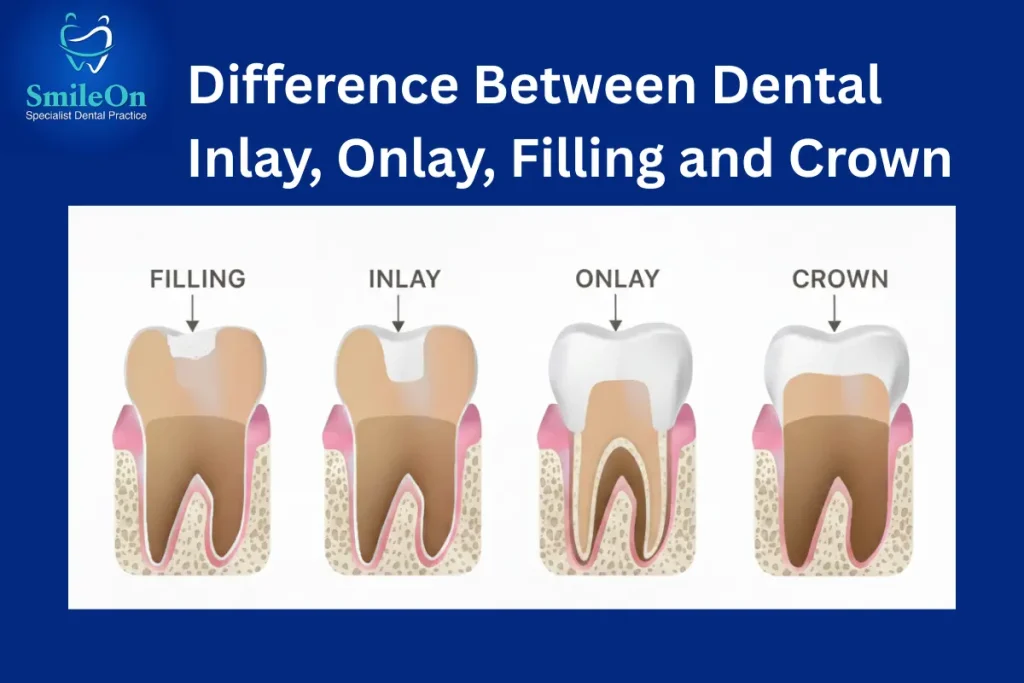
A filling is a material used to fill in a hole left when the dentist removes decayed or damaged teeth. It replaces the shape and function of the tooth, while also serving as a barrier to bacteria in keeping them out of the tooth.
The simplest and most frequently applied restorative is a filling.
When is a Filling Used?
- Small to moderate cavities
- Minor cracks or chips
- Early-stage tooth decay
Common Filling Materials
- Composite resin (tooth-colored)
- Amalgam (silver)
- Ceramic or porcelain
- Glass ionomer
Advantages and Limitations
Fillings are inexpensive and a quick way to restore teeth. They are not appropriate for larger areas of decay, and they can become worn down or cracked, particularly on teeth that have to do a lot of chewing forces.
What are Dental Inlays?
A dental inlay is a restoration of a devitalized tooth that covers one or more teeth. Inlays don’t fit in the same way as fillings and are constructed by a dental laboratory before being cemented into place.
A dental inlay is a step up from a conventional filling.
When is an Inlay Used?
- Moderate decay that is too large for a filling
- Concentrated destruction within the tooth crown
- Teeth requiring increased strength after partial coverage applications
Benefits and Drawbacks
Inlays are stronger and longer lasting than fillings, and they fit more accurately. They save more natural tooth structure than crowns. But they are more expensive than fillings and typically involve one dental visit.
What are Dental Onlays?
It is a custom-made restoration that fits over the cusp of a tooth. It is sometimes called a partial crown since it covers more of the tooth than an inlay while preserving healthy tooth structure.
Onlays are a lot like inlays, but they cover more area.
When is an Onlay Used?
- Cracked or fractured teeth
- Replacement of large, failing fillings
Advantages and Limitations
Onlays are highly durable and strong, and they also look as natural as possible. They may also be superior to crowns in preserving healthy enamel. Nonetheless, they are costlier than fillings and need lab construction.
What is a Dental Crown?
A dental crown is a cap that fits over the portion of your tooth visible to you above the gum line. It brings back the tooth’s form, size and appearance along with making it strong.
A crown is the longest-lasting restoration.
When is a Crown Used?
- Severe tooth decay
- Cracked or broken teeth
- After root canal treatment
- Teeth with extensive restorations
Crown Materials
- Porcelain or ceramic
- Metal or gold alloys
- Porcelain fused to metal
- Zirconia
Pros and Cons
Teeth Crowns are useful when maximum protection and durability are needed! They return full chewing capabilities. But tooth preparation for them is rather extensive, and they usually are the most costly type of restoration.
Key Differences Between Filling, Inlays, Crown and Dental Outlays
| Feature | Filling | Inlay | Onlay | Crown |
| Coverage | Small area | Inside cusps | One or more cusps | Entire tooth |
| Custom-made | No | Yes | Yes | Yes |
| Strength | Moderate | High | Very high | Maximum |
| Tooth preservation | Highest | High | Moderate | Least |
| Cost | Lowest | Medium | Medium-high | Highest |
Things to Consider for the Right Dental Restoration
There are several key considerations when selecting an appropriate dental restoration.
Extent of Tooth Damage
Fillings treatment is typically used for small cavities, inlays or onlays for moderate damage. When tooth structure has been substantially lowered or if teeth are particularly damaged, a crown is the best method to protect your teeth.
Tooth Location
Posterior teeth are used for chewing and generally require a heavier restoration, such as an onlay or crown. Aesthetic fillings or ceramic restorations can be performed on the front teeth.
Durability Requirements
If you tend to grind your teeth or chew hard foods a lot, we may suggest having crowns or onlays placed instead.
Aesthetic Preferences
Composite resin and, in some cases, ceramic restorations, as well as tooth-colored materials, may provide the best appearance if a visible tooth is being restored.
Budget Considerations
Fillings are the cheapest if not done on a tooth already containing fillings or another repair, whereas crowns cost more. But sustainability has to be balanced with durability.
Long-Term Oral Health
The goal is to save as much healthy tooth structure while providing that long term restoration. It also means one less dental problem down the line.
Advantages of The Right Dental Restoration
Choosing the right restoration has long-term benefits beyond cavity repair.
Restores Proper Chewing Function:
A good restoration will make you able to bite and chew your food in comfort and with symmetry, without any signs of discomfort or sensitivity.
Improves Smile Appearance:
The procedures help improve your smile by making your teeth look perfect.
Prevents Further Tooth Damage:
The proper coverage will protect weak areas of the tooth from a crack or additional decay.
Improves Longevity of Dental Work:
Selecting the right restoration cuts down on the number of future repairs and replacements.
Saves Money Over Time:
Many restorations are more expensive in the beginning, but they may save you money because they can help avoid future dental issues and costly procedures.
Supports Overall Oral Health:
Properly restored teeth keep the rest of your teeth in line and keep your overall dental health good!
Conclusion
When you know the difference between dental fillings, dental inlays, onlays and crowns is how we give patients confidence in their choices for oral health. Every restoration has its function; some cover minor flaws, others provide full tooth protection.
However, the correct option is based on the nature of injury, functional requirement and long-term durability. When you choose the right dental restoration, you keep your teeth, maintain your facial appearance, and promote lifelong oral health.