Dental pain that just won’t go away can often indicate a deeper problem, one of the most frequent being impacted teeth. This is very common, and many have no idea as to what it means or how bad it can get without treatment.
An impacted tooth can cause pain, infection, and chronic dental problems. Keep reading, we’ll cover everything you need to know about impacted teeth, including what causes them and how dentists are able to treat them effectively.
Table of Contents
ToggleWhat is Meant by Impacted Tooth?
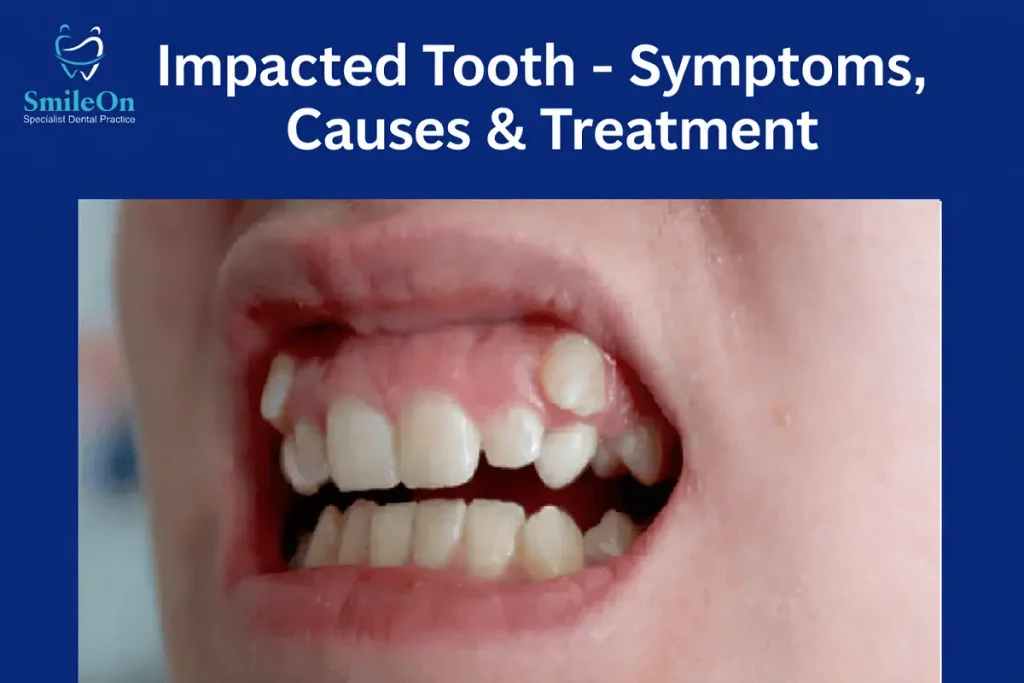
An impacted tooth is a tooth that does not fully pass through the gums or grows in an incorrect position. This typically occurs when there is insufficient space in the mouth, leaving the tooth stuck inside of the jawbone or gums.
How Does it Happen?
- The jaw is too small
- Other teeth block the path
- Growth direction is abnormal
Hence, the tooth becomes “impacted.”
The teeth most frequently affected by impaction are the upper and lower wisdom teeth (third molars), making these the most common problems associated with an impacted tooth.
Types of Impacted Teeth
Not all impacted teeth are created equal. They are classified based on their placement and level of eruption.
Mesial Impaction:
The tooth slants toward the neighboring tooth. This is a typical type of wisdom tooth impaction.
Distal Impaction:
The tooth is angled back toward the rear of the mouth, away from the neighboring tooth.
Vertical Impaction:
The tooth is vertical but does not fully erupt because there isn’t enough room.
Horizontal Impaction:
The most painful and complex of the types, a horizontal impacted wisdom tooth grows to be horizontal and presses directly against any teeth next door.
Soft Tissue Impaction:
The tooth erupts partially, but is still covered by gum tissue.
Full Bony Impaction:
The tooth is totally embedded into the jawbone.
What Are the Causes of Impacted Tooth?
Knowing what causes an impacted tooth can aid in its prevention and treatment.
Common Causes
- Not enough room in the mouth: Overcrowding inhibits eruption
- Genetics: Jaw sizes that run in your family
- Angle of Abnormal Tooth Growth: Teeth grow incorrectly
- Delayed Dentition: If teeth erupt later, they may not align properly
- Extra teeth present: Overtly obstructs the natural course
Risk Factors
- Poor oral hygiene
- Early loss of baby teeth
- Gum disease
- Orthodontic issues
Signs and Symptoms of Impacted Teeth
Many people appear to have no symptoms at first, but the condition can progress to be uncomfortable.
Common Symptoms are:
- Persistent jaw pain or stiffness
- Swollen, red, or bleeding gums
- Bad breath (halitosis)
- Difficulty opening the mouth
- Headaches or ear pain
Specific Impacted Wisdom Tooth Symptoms
- Pain at the back of the mouth
- Gum infection around partially erupted tooth
- Food getting trapped easily
- Sensitivity while chewing
Leaving this alone can produce severe impacted wisdom tooth problems, such as infections and loss of surrounding teeth.
How to Diagnose?
A dentist diagnoses impacted teeth correctly with clinical examination and imaging techniques.
Oral Examination:
The dentist looks for swelling, inflammation of the gum or visible misalignment of a tooth.
X-rays:
Dental X-rays allow you a detailed view of:
- Tooth position
- Depth of impaction
- Impact on surrounding teeth
3D Imaging (CBCT Scan):
Advanced imaging helps evaluate the proximity of nerves and the state of surrounding bone in complex cases.
Diagnosing this condition at an early stage not only helps avoid complications but also lets you get treatment on time.
How to Treat Impacted Teeth?
Treatment is different and depends on how serious the condition is and what the symptoms are.
Monitoring
If the tooth isn’t painful and it’s not causing complications, dentists might simply monitor it at routine visits.
Medications
- Pain relievers
- Antibiotics (for infection)
That is usually the stopgap before curative treatment.
Surgical Extraction
The hard but most effective way is tooth extraction.
What Happens During the Procedure?
This is done with local or general anesthesia.
- A tiny cut is made in the gum
- Bone can sometimes need to be removed in order to access the tooth
- It is removed (often bit by bit)
- Secured with stitches
Orthodontic Treatment
In some cases, braces can be used to direct the tooth into position.
Possible Complications of Impacted Teeth
Untreated impacted teeth may result in serious oral health problems.
Common Complications
- Infection: Bacteria formations around the trapped tooth
- Cysts: Fluid-filled pockets that can erode bone
- Cavities: Difficult-to-clean places foster tooth decay
- Gum Disease: Inflammation and bleeding
- Damage to Neighboring Teeth: Pressure from impacted teeth
When extracted promptly, these complications can be avoided.
Recovery After Impacted Tooth Removal
Recovery after surgery is typically a few days to a week.
Tips
- Use ice packs to decrease swelling
- Eat soft foods for a few days
- Do not smoke and do not drink with a straw
- Maintain oral hygiene carefully
When to See a Dentist?
- Severe pain after 3–4 days
- Excessive bleeding
- Signs of infection (fever, pus)
How to Prevent Impacted Teeth?
Although not all cases are preventable, earlier dental care can greatly decrease risk.
Prevention tips are:
- Regular dental checkups
- Early orthodontic evaluation
- Timely removal of problematic teeth
- Maintaining proper oral hygiene
FAQs
What are impacted teeth?
Impacted teeth are teeth that do not emerge properly through the gums because there is no space.
Are impacted wisdom teeth painful all the time?
No, some affected teeth have no symptoms. But they can cause problems further.
What are the signs I have an impacted tooth?
Typical signs include pain, swelling and difficulty chewing. A dentist can verify with X-rays.
Is impacted tooth removal painful?
The procedure is performed under anesthesia, so you will not feel any pain during the surgery. It is normal to have mild discomfort after the procedure.
Can impacted teeth fix themselves?
No, an impact tooth does not go away on its own. It does need to be taken care of professionally most of the time.
What if an impacted tooth does not want to be removed?
It can also cause infections, cysts, gum disease and destruction of nearby teeth.
Final Thoughts
The problem of impacted teeth among wisdom teeth is a common dental problem. Though not all of them get immediately uncomfortable, if you ignore the warning signals at first, you can end up having serious complications with time.
If you know what causes an impacted tooth, its symptoms and addressing it in time could avoid pain as well as ensure long-term oral health.
However, if you have any symptoms, it is better to go early to the dentist at SmileOn and find out which will be the best treatment for your disease.