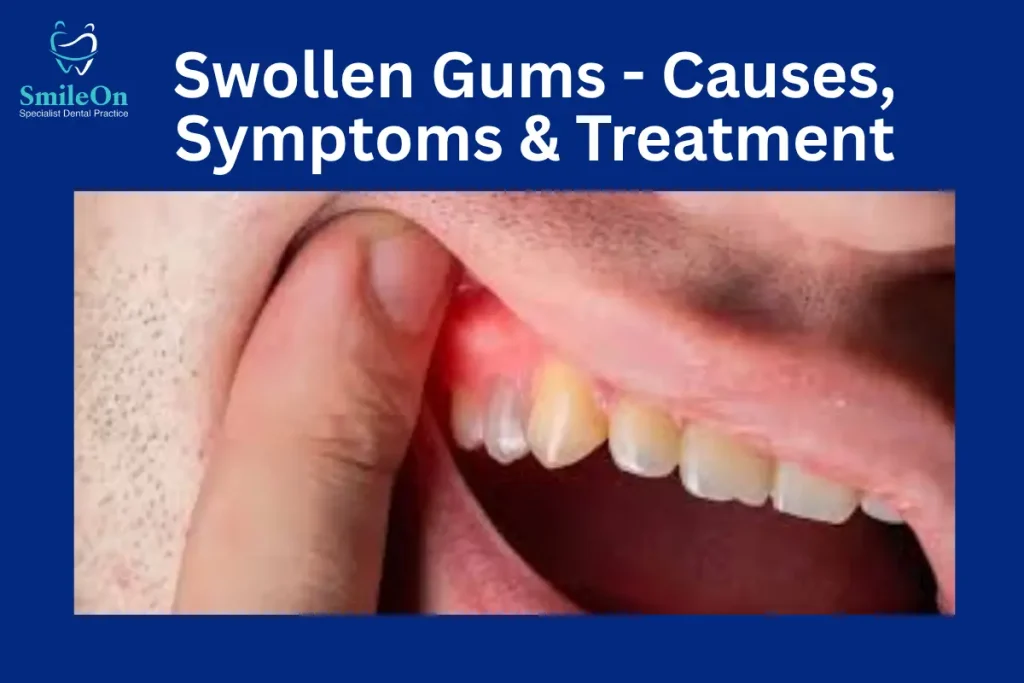
Swollen gums is a common but frequently ignored oral health issue. Gums might be inflamed, but that doesn’t mean they are dangerous; it may only point towards healthy or dental-related problems.
Knowing the reasons for swollen gums, identifying early indications, and treating swollen gums effectively can make sure no serious complications arise.
Table of Contents
ToggleKey Takeaways
- Gums can get swollen due to bad oral hygiene, infections, or hormonal changes.
- Initial symptoms include redness, bleeding and tenderness
- So brush your teeth with care.
- Saltwater gargles and proper hygiene help quickly reduce inflammation
- Severe cases may require professional dental attention
- Through daily care and checkups to professionals such as those at SmileOn, prevention is key
What Are Swollen Gums?
Swollen gums are an inflammation or puffiness of the gum (tissue around your teeth). Healthy gums are firm and pink, whereas when they become irritated, they may turn red, tender and swollen.
This condition usually occurs due to bacterial accumulation, poor oral care habits, or other medical reasons. Swollen gums can develop into gum disease if left untreated, which can cause tooth loss.
What Are Common Causes of Swollen Gums?
Here are the top causes:
Poor Oral Hygiene
When plaque builds up at or above the gum line, it can inflame and irritate the gums. Plaque hardens into tartar without sufficient brushing and flossing, contributing to the problem.
Gingivitis
Gingivitis is the earliest stage of gum disease and one of the most common causes of swollen gums. It can be red, swollen and bleed.
Hormonal Changes
Hormonal changes related to pregnancy, menstruation or puberty can cause gums to become more sensitive and prone to swelling.
Nutritional Deficiencies
Deficiency of key vitamins, especially vitamin C and B-complex vitamins can undermine gum tissue causing swelling.
Infections
Swollen and painful gums can also result from viral or fungal infections, such as one known as thrush.
Ill-Fitting Dental Appliances
Poorly fitting braces or dentures or even retainers can rub against the gums and cause inflammation.
Allergic Reactions
Certain toothpaste, mouthwash or food products as well can do an allergic response and cause gum swelling.
What Symptoms Should You Look Out For?
If you go for swollen gums treatment in time, it is due to the early identification of the symptoms.
Common signs include:
- Red or darkened gums
- Tenderness or pain while eating
- Bleeding during brushing or flossing
- Persistent bad breath
- Gum recession or puffiness
- Sensitivity to hot or cold food
When these signs last you may want to consider that something much more serious, needing professional attention, is in play.
What Are the Different Types of Swollen Gums?
The appearance of swollen gums can vary based on the underlying cause:
Localized Swelling
It usually occurs in a small area and is often the result of food particles that have gotten lodged between teeth, or due to an infection localized to one spot.
Generalized Swelling
This is when the whole area around the gums becomes inflamed and often associated with gingivitis or general health problems.
Hormonal Swelling
Common in pregnancy or puberty, this type is caused by increased blood flow to the gums.
Medication-Induced Swelling
Some medicines can have side effects that can lead to gum overgrowing or breaking out.
How to Get Rid of Swollen Gums Fast?
If you’re asking what is the fastest way to heal swollen gums, it depends a little bit on the cause of the inflammation. However, some effective methods include:
Maintain Proper Oral Hygiene
Brushing with fluoride toothpaste using a soft-bristled brush twice a day. Soft brushing dislodges plaque and doesn’t irritate gums.
Use Saltwater Rinse
Gargling warm salt water might reduce bacteria, while also soothing inflamed gums.
Apply Cold Compress
Applying a cold compress can help relieve swelling and pain.
Stay Hydrated
Drinking plenty of water also clears bacteria away and cleans your mouth naturally.
Use Antibacterial Mouthwash
This may help manage plaque and reduce inflammation.
Avoid Irritants
Avoid tobacco, alcohol and hard-to-digest spicy foods that can further irritate your gums.
The Right Treatments for Gum Swollen
Treatments vary greatly depending on the cause and severity, but here are a few commonly recommended options for swollen gums:
Professional Dental Cleaning
Dentists also scrape off plaque and tartar that regular brushing fails to dislodge.
Medications
Infection and inflammation may be treated with antibiotics or medicated mouthwashes.
Scaling and Root Planing
This deep cleaning process removes bacteria below the gum lines.
Dietary Improvements
Vitamin C (found in strawberries, for example) and vitamin D-rich foods also support gum health.
Adjusting Dental Appliances
Your dentist may do what is called an adjustment if you have braces or dentures causing irritation in your mouth so that you aren’t in as much pain.
Surgical Treatment
In people with more serious illness, surgical techniques may even be needed to return the gums to health, or as close to it as possible.
Tips to Prevent Swollen Gums
As they say, prevention is better than cure. Here are some simple tips to avoid frequent swollen gum treatment.
- Brush and floss daily
- Visit your dentist regularly
- Incorporate a diverse nutrient-rich diet
- Avoid smoking and tobacco use
- Change your toothbrush every three months
Conclusion
Swollen gums can be more than a minor inconvenience, they may signal deeper dental or health problems. The key to maintaining a healthy and confident smile is to know the causes of swollen gums, catch symptoms early, and understand how to treat swollen gums.
So if you want to know what is the fastest way to heal swollen gums, then it will be made up of constant oral hygiene and regular dentist appointments.
Don’t overlook persistent symptoms, check with the professional dentist at SmileOn, your gum health is a key part of your overall well-being.
FAQs
Will swollen gums from braces go away?
Yes, swollen gums with braces should eventually subside as your mouth becomes habitual to the new appliances or after effective oral hygiene is practiced. But if swelling persists, a dentist should check it.
Can flossing cause swollen gums?
Yes, flossing incorrectly or aggressively can irritate the gums and lead to temporary swelling. Proper flossing techniques and being gentle are ways to prevent the problem.
What can I eat if my gums are swollen?
Soft, non-irritating foods, yogurt, mashed potatoes, soups, smoothies and steamed vegetables are best. Avoid spicy, crunchy or acidic food that could increase irritation.