Well, if you have ever wondered how a little toothache becomes a full-blown cavity. You’re not alone.
Dental caries is one of the most prevalent oral diseases globally that occurs in all age groups. Even those who brush religiously will still develop cavities if certain habits and conditions aren’t addressed.
Knowing the cause of a tooth cavity is the first step in protecting your teeth and preserving a healthy smile for life.
Table of Contents
ToggleWhat Is Tooth Cavity?
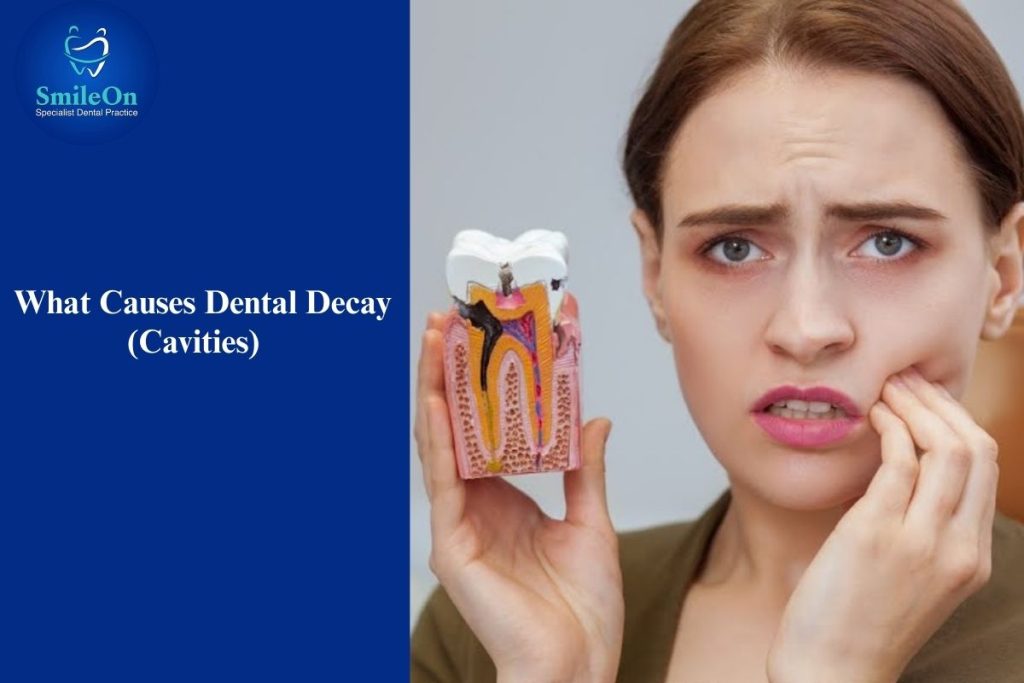
Caries or cavities are the decay of tooth enamel, which is caused by acids that are made when plaque (film) builds up on your teeth. These bacteria live on sugars and starches that remain after eating, chewing, and creating acids that wear down enamel over time.
If allowed to go untreated, tooth decay may advance from the enamel into the dentin and pulp. This can cause pain, infection, sensitivity and tooth loss to occur. The silver lining is that cavities are almost entirely preventable with the right care and know-how.
What Causes Cavities in Teeth?
Dental cavities don’t develop overnight. They are a product of various factors that acted in concert.
Here are 8 things that can cause tooth decay in your mouth that you may not be aware of.
Poor Oral Hygiene:
If you skip brushing or flossing, plaque can accumulate on teeth. Plaque is a sticky layer of bacteria that adheres to the enamel and creates acid. If not regularly gotten rid of, plaque solidifies into tartar and raises the possibility of cavities.
Frequent Sugar and Starch Consumption:
Candy, soda, desserts and processed carbohydrates provide food to the bad bacteria in your mouth. The more often you eat sugar, the longer acids attack your teeth and cause decay.
Acidic Foods and Beverages:
The acid in citrus fruits, sodas, sports and energy drinks can directly weaken enamel. Thin or eroded enamel means the teeth are more prone to cavities.
Dry Mouth (Lack of Saliva):
Saliva is important for rinsing food debris and acid. They also found that conditions such as dehydration, some medications or medical treatments can limit saliva production and raise the risk of dental decay.
Not Enough Fluoride:
Fluoride strengthens tooth enamel and can even reverse early decay. Non-fluoridated toothpaste or non-fluoride containing drinking water can allow teeth to be more prone to cavities.
Poor Diet and Nutritional Deficiencies:
A diet deficient in calcium and vitamins damages teeth. Teeth that are not getting the nutrients they require have weaker enamel, which becomes more susceptible to acid attacks and cavities.
Teeth Grinding (Bruxism):
Enamel is worn away over time. Teeth grinding or clenching teeth over and over wears enamel away. When the layer of enamel that protects a tooth is broken or eaten away, bacteria easily get inside and create cavities, for example.
Irregular Dental Visits:
Failure to keep up with routine dental visits allows early evidence of cavities to slip beneath the radar. Dentists are able to identify and manage decay before it reaches a painful or unmanageable stage, preventing the need for expensive interventions down the track.
How to Prevent Tooth Cavity?
It’s easier to prevent dental decay than treat it!
There are so many easy things you can do each day that will improve your dental health and minimize your need for fillings.
Brush Properly Twice a Day:
Brush with fluoride toothpaste for a minimum of two minutes, covering all surfaces of the teeth. Good brushing rids the plaque before it starts to damage.
Floss Daily:
Flossing helps scrape away food particles and plaque from in between teeth where brushes can’t reach. This is one of the crucial measures to protect between-teeth spaces from developing dental caries.
Limit Sugary and Acidic Foods:
Limit snacks and drinks high in sugar. When you do splurge, rinse your mouth with water afterward to cancel out acid exposure.
Drink Plenty of Water:
Water helps remove food activators and bacteria. The presence of fluoride in the water also remineralizers and helps prevent tooth decay.
Chew Sugar-Free Gum:
Chewing sugar-free gum encourages the production of saliva: this helps dilute acids and protect your teeth after eating.
Use Mouthwash:
An antibacterial or fluoride mouthwash helps give more protection against plaque and strengthen enamel.
Visit Your Dentist Regularly:
Regular visits to the dentist allow for early detection of decay and a healthy mouth.
FAQs
Can You Reverse a Cavity?
Some early-stage tooth decay, also called demineralization, can be reversed through fluoride treatments or by using better oral hygiene and eating habits. But, after a cavity has developed, you do need professional treatment.
When is it too late to reverse tooth decay?
It’s no longer possible to reverse tooth decay when the enamel has been irreversibly damaged, and a visible hole becomes present in the tooth. While it’s at this stage, cavities or other work must be done.
Do cavities spread from Tooth to Tooth?
Yes, cavities can spread. The bacteria that cause tooth decay can spread to adjacent teeth, particularly if oral hygiene is low, as it can be in a child, increasing the potential for multiple cavities.
Conclusion: Protect Your Smile Before It’s Too Late
So, once you know what cavities are caused by and how to prevent them, that issue can go away, and you’ll never have to worry about pain again!
A beautiful smile requires care, commitment, and routine dental visits. Minor efforts now could save your teeth for a lifetime!