
Before & After
Root Canal Before and After
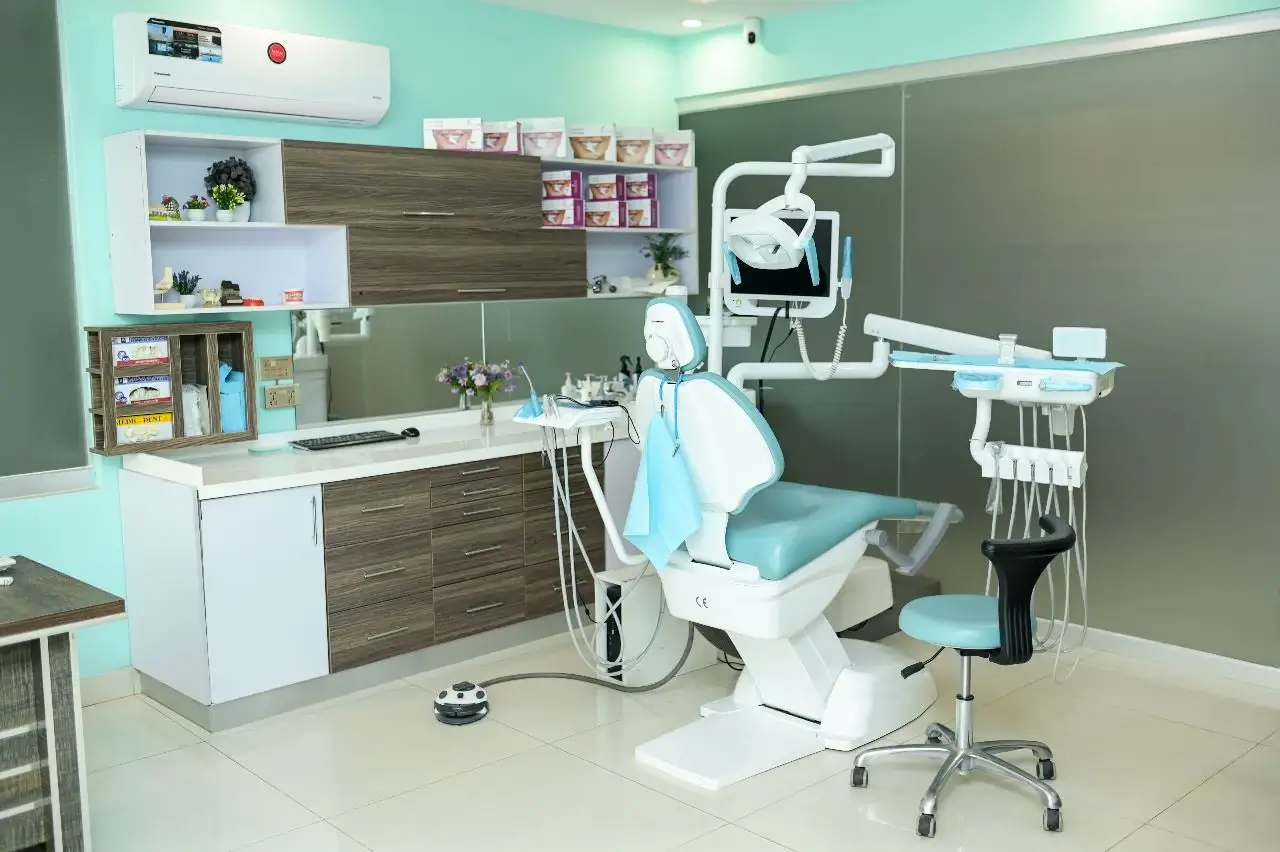
Restore Your Tooth, Relieve Your Pain
There’s no need to extract every tooth that is damaged or infected. In fact, root canal treatment has come a long way, and it enables dentists to remove infection while saving the tooth and restoring both form and function.
The dental professionals at SmileOn have a professional team of dentists conducting advanced root canal procedures effectively and painlessly. So when you have a tooth with serious decay, an infected nerve, or a prior chip in that same tooth, we can create custom treatment plans to safeguard your pearly whites for years.
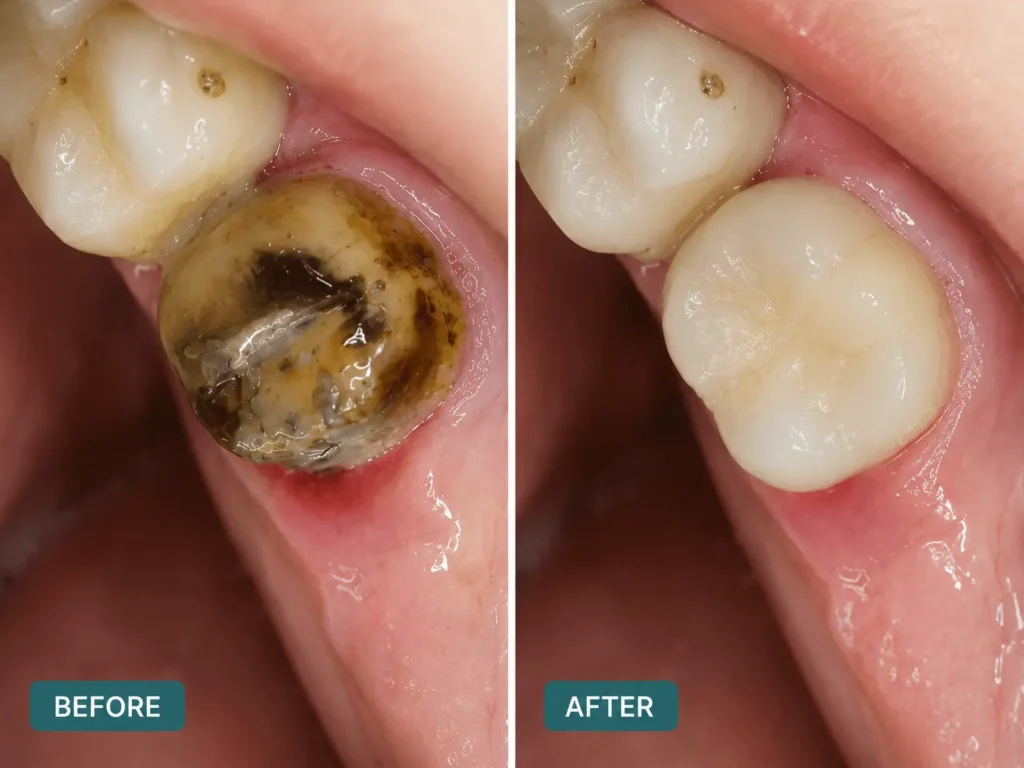
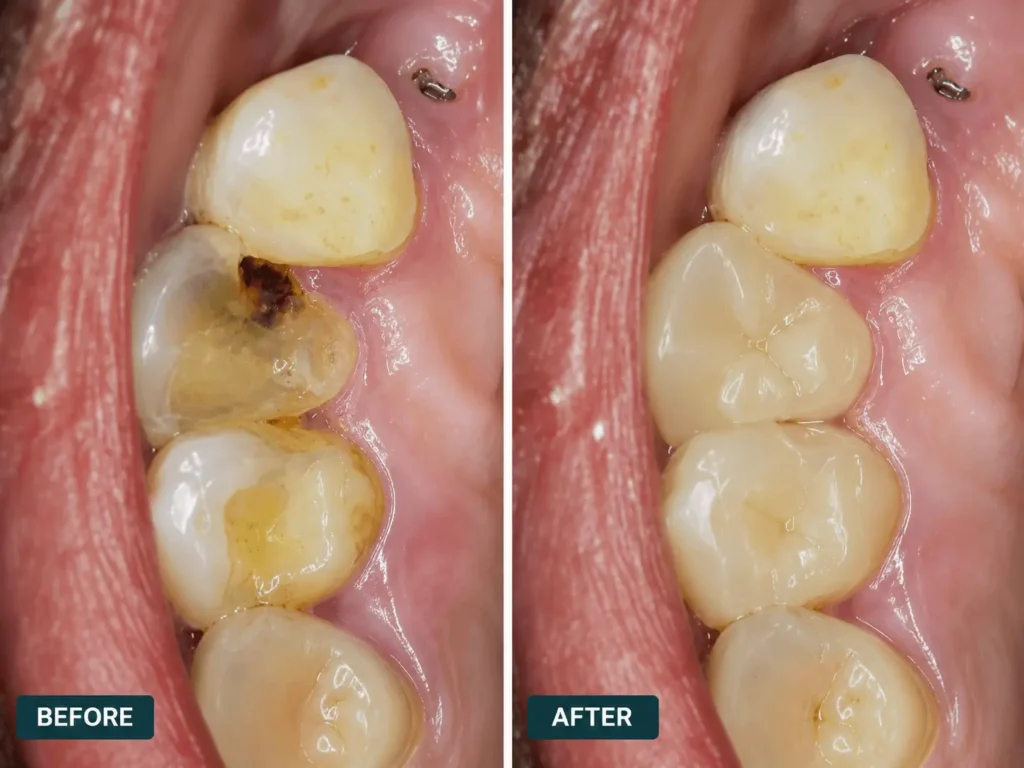
We provide remarkable root canal before and after result of our patients, that not only about help in lessen pain but also gives you healthy and strengthen set of teeth.
Root Canal - Before and After Pictures
See How Root Canal Treatment Saves Natural Teeth
Each root canal that is done successfully tells the tale of a saved tooth rather than being extracted. Our before and after gallery features patients who came to us with infected, painful, or extremely decayed teeth and left with healthy smiles filled with functional teeth.
Whether it is repairing badly broken down teeth or treating deep rooted infections, these real-life root canal before and after shows the difference modern root canal treatments can truly make.
Why Patients Choose Root Canal Treatment
Rather than extracting the tooth, the infection is cleaned, canals are sealed, and the tooth is restored with a filling or crown.
Benefits include:
- Saves your natural tooth
- Eliminates severe tooth pain
- Prevents infection from spreading
- Restores normal chewing function
- Improves oral health
- Prevents unnecessary tooth extraction
- Offers long-lasting protection with proper maintenance
At SmileOn, we use modern technology and techniques, making the process as painless as possible.
What to Expect in a Procedure?
This is how your procedure will go:
1. Initial Examination:
Your dentist goes through an integral evaluation as they take a few digital X-rays of what the infection looks like and see if root canal treatment is the go-to in this case.
2. Removing the Infection:
The tooth is first numbed, and the infected pulp is gently removed from within the root canals.
3. Cleaning and Disinfecting:
The canals are cleaned, shaped, and disinfected to remove bacteria.
4. Sealing the Tooth:
The canals that were cleaned are then filled with specialized filling material to keep it clean from future infection.
5. Final Restoration:
The choice will depend on the condition of the tooth, and a filling or crown may be required to restore strength, function, and aesthetics.
What Problems Can a Root Canal Fix?
Teeth with diseased or damaged pulp due to wear, trauma, or multiple dental procedures are treated with root canal.
It can effectively treat:
- Deep cavities
- Severe toothache
- Dental abscesses
- Cracked teeth affecting the pulp
- Sensitivity of the tooth to hot or cold
- Gums swollen near the affected tooth
- Trauma-related nerve damage
- Teeth that are darkened or discolored as a result of nerve death
Since, immediate treatment stops further deterioration and saves the natural smile.
The Difference You'll Notice After Treatment
A lot of patients postpone treatment out of fear for the actual process. In practice, however, the vast majority see benefits as soon as the infection is gone.
Post successful treatment, patients often go through:
- Relief from constant tooth pain
- Reduced swelling and inflammation
- Comfortable chewing
- Better oral health
- Preservation of the natural tooth
- General confidence that the infection has been treated.
However, any mild soreness lasts for a few days at most and is typically resolved quickly with aftercare.
Dead Tooth Root Canal Before and After
The dental pulp dies and loses its blood supply is referred to as a dead tooth, whether due to injury to or decay in the tooth or infection. The tooth can darken, cause pain, or form an abscess if left untreated.
Patients will either have significant pain, swelling, bruising, or tenderness prior to treatment. Once the infected tissue is removed, and the tooth is restored with a crown that resembles your existing teeth, pain ends, you are free from infection. However, if left untreated, your tooth can sometimes be reinfected and affect the rest of your mouth.
An early treatment of a dead tooth improves the chances of saving the tooth instead of extracting it.
Why Should You Choose SmileOn?
We provide comfortable, predictable, and long-lasting root canal using modern techniques.
Our advantages include:
- Saves your natural tooth
- Experienced dentists
- Digital diagnostic technology
- Gentle and minimally invasive procedures
- Modern sterilization standards
- Personalized treatment planning
- High-quality dental restorations
- Comfortable clinical environment
- Patient-focused aftercare guidance
We believe in saving as many of your natural teeth as possible.
Caring for Your Tooth After a Root Canal
Good aftercare ensures that your treated tooth heals appropriately and stays healthy for many years.
We recommend that patients:
- Refrain from biting hard foods until you heal.
- Brush and floss regularly.
- Attend scheduled follow-up appointments.
- Wear a night guard to avoid teeth grinding.
- Go to the dentist for check-ups every 6 months
And a tooth that is saved by root canal therapy will function just as your natural teeth, with good care.
Schedule Your Consultation For Root Canal Today!
Fix your tooth pain before it compromises your quality of life. More complex dental issues are usually developed over time, and could have been avoided by early intervention; allowing for treatment to save the natural tooth root.
If you are suffering from a painful tooth, swelling or signs of infection our team at SmileOn is ready to assist!
Call to book your appointment now and learn how our root canal treatment can help you regain comfort, confidence, and oral health.
FAQs

Can a root canal last forever?
With good oral hygiene, regular dental check ups and some luck, a root canal should last for years, sometimes a lifetime.
What happens 10 years after a root canal?
Most teeth that have had root canal treatment function normally for up to and beyond 10 years. You should visit your dentist on a regular basis to make sure that the tooth is free from caries or any other injury.
What to not do after a root canal?
Avoid chewing hard or sticky foods on the tooth treated with a root canal until your dentist fills it permanently. Keep your mouth clean and follow all aftercare instructions so that healing can take place.
When is it too late for a root canal?
If the tooth is broken severely, there may not be enough remaining tooth structure to perform a root canal, or if significant damage has occurred to the interior of the tooth that cannot be repaired with root canal. A dental examination by your dentist is the best way to find out whether the tooth can still be saved.