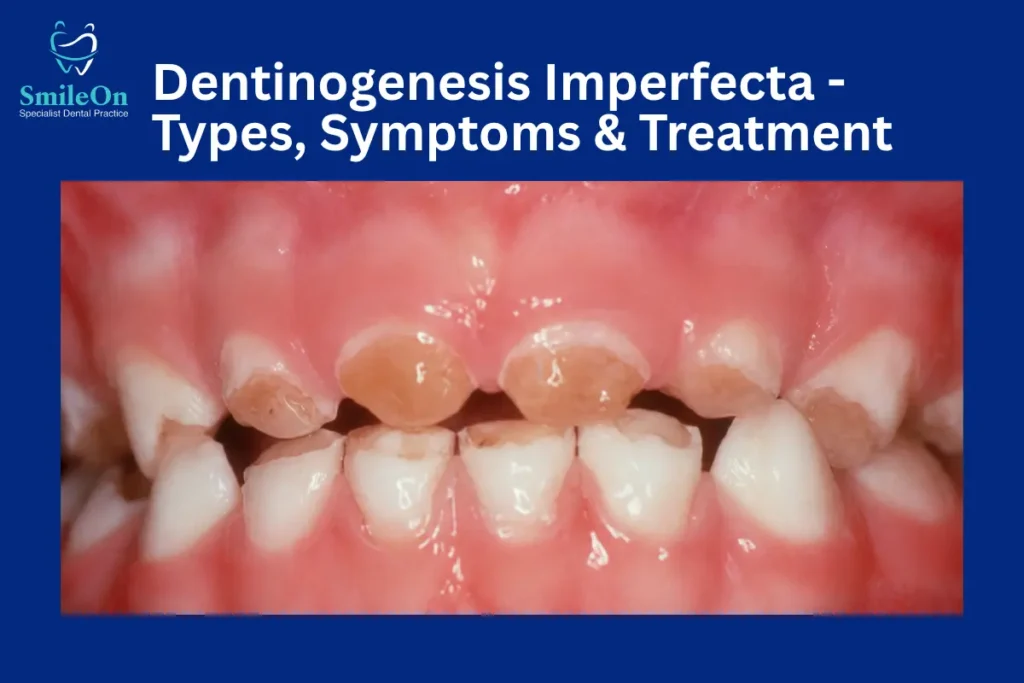
What if your teeth initially appeared normal but slowly became brittle, yellowed, and chipped?
That’s the reality of dentinogenesis imperfecta, an uncommon genetic disorder that alters tooth structure from the inside. Spotting it early could be important to the future and long term dental health.
Key Takeaways
- Dentinogenesis imperfecta is a genetic disease affecting dentin.
- Type 1, type 2, and type 3 are the three major types.
- Symptoms consist of discoloration, fragility, and breakage.
- The diagnosis is performed with clinical exams and an X-ray.
- There is no treatment, but it can be prevented and treated.
- Preventive intervention can lead to considerable dental outcomes.
What is Dentinogenesis Imperfecta?
Dentinogenesis imperfecta (DGI) is a genetic dental condition that affects the dentin, the underlying layer behind the enamel. Because dentin serves to support enamel, the tooth structure is weakened if an obvious defect can be found.
Teeth DGI often appear in the following ways:
- Discolored (blue-gray or yellow-brown)
- Translucent or opalescent
- Easily worn down or fractured
Early diagnosis is important because it can affect both your child’s primary (baby) teeth and their permanent teeth.
What Are the Causes?
It has been seen that DGI is linked to specific genetic mutations located within the DSPP (dentin sialophosphoprotein) gene. These are the involved genes that can play a role in dentin development.
Common Causes Include:
- Inheritance of genetic mutations (Autosomal Dominant Inheritance)
- Systemic conditions such as osteogenesis imperfecta
- Dentin formation during tooth development is not normal
If a gene is present on just one parent, then there remains a risk of it being passed onto the offspring.
What Are the Types of Dentinogenesis Imperfecta?
Diagnosis of the various dentinogenesis imperfecta types will help in treatment planning.
Dentinogenesis Imperfecta Type 1
- Associated with osteogenesis imperfecta (brittle bone disease)
- Teeth appear translucent and weak
Higher chances of fractures or chipping of the enamel.
Dentinogenesis Imperfecta Type 2
- The most common form
- Not linked to bone disease
- Found out from teeth discoloration
- Often called hereditary opalescent dentin
Dentinogenesis Imperfecta Type 3
- Rare and severe form
- Pulp chambers: Teeth sorts resemble shells having sizable pulp chambers
- Common among some populations (Brandywine isolate)
They differ only in severity, and all contain the same basic defect, dentin.
What Are The Symptoms?
The symptoms of DGI can vary, but typically present at an early age.
Common Symptoms:
- Bluish, grayish, or brown-stained teeth
- Rapid tooth wear
- Fragile enamel that chips easily
- Shortened tooth structure
- Increased tooth sensitivity
- Loose teeth in severe cases
Visual Indicators:
- Glossy or opalescent shine
- Flattened chewing surfaces
- Broken or worn-down teeth
Identifying orthodontic issues early prevents problems like tooth loss and infection
How is Dentinogenesis Imperfecta Classified?
If you can identify the kind of DGI and its stage it goes through, you will be able to apply effective interventions in a timely manner.
Stage 1: Early Development
- Teeth erupt with abnormal color
- Structure appears normal initially
Stage 2: Structural Weakening
- Enamel begins to chip
- Dentin becomes exposed
Stage 3: Advanced Damage
- Severe wear and tear
- Teeth become short and fragile
Stage 4: Complications
- Tooth loss
- Possible infections or abscesses
The disease is progressive when untreated.
How to Diagnose it?
Diagnosis is clinical and with imaging.
Clinical Examination:
Dentists look for:
- Tooth discoloration
- Structural weakness
- Family history
Dentinogenesis Imperfecta X-Ray Findings:
Diseases or problems occurring inside the body often affect bone densities and structural stability, which cause significant changes in dental X-ray images.
- Bulbous crowns
- Narrow or obliterated pulp chambers
- Short roots
- Thin dentin layers
These characteristics help in confirming the diagnosis and differentiating types.
What Treatment Options Are Available?
Because these treatments are not a permanent fix, dentinogenesis imperfecta treatment centers on shielding teeth and supporting use.
Preventive Treatments
- Regular dental checkups
- Fluoride treatments
- Good oral hygiene practices
Restorative Options
- Dental crowns: Protect weak teeth
- Bonding: Improves appearance
- Veneers: Cosmetic enhancement
Advanced Treatments
What Root Canal Therapy Can Do.
- Focused on dental implants or dentures if severe
Pediatric Care
Children may need:
- Stainless steel crowns
- Proactive measures to avoid losing teeth
Treatment Goals
- Preserve natural teeth
- Reduce sensitivity
- Improve aesthetics
- Prevent further damage
However, to achieve long-term success, you need a treatment plan that is made just for you.
FAQs
Which teeth are affected by DGI?
DGI can affect both primary (baby) and permanent teeth. Often, baby teeth show worse symptoms than permanent ones.
How does DGI affect teeth?
This can erode dentin, which causes teeth to be:
- Fragile and prone to breakage
- Discolored and translucent
- More exposed to wear and tear damage
Is DGI the same as amelogenesis imperfecta?
No, they are different conditions.
- DGI affects dentin (inner layer)
- Amelogenesis imperfecta is a disorder affecting the enamel (outer layer)
But they both result in a less severely affected tooth and need specialist care.
Conclusion
Dentinogenesis imperfecta may be ultra-rare, but it still affects dental health in a major way. The good news?
Because of the early diagnosis, appropriate care and a required treatment plan at SmileOn can lead to confident and functional proud smiles.
Hence, the identification of the condition is important for managing it properly.