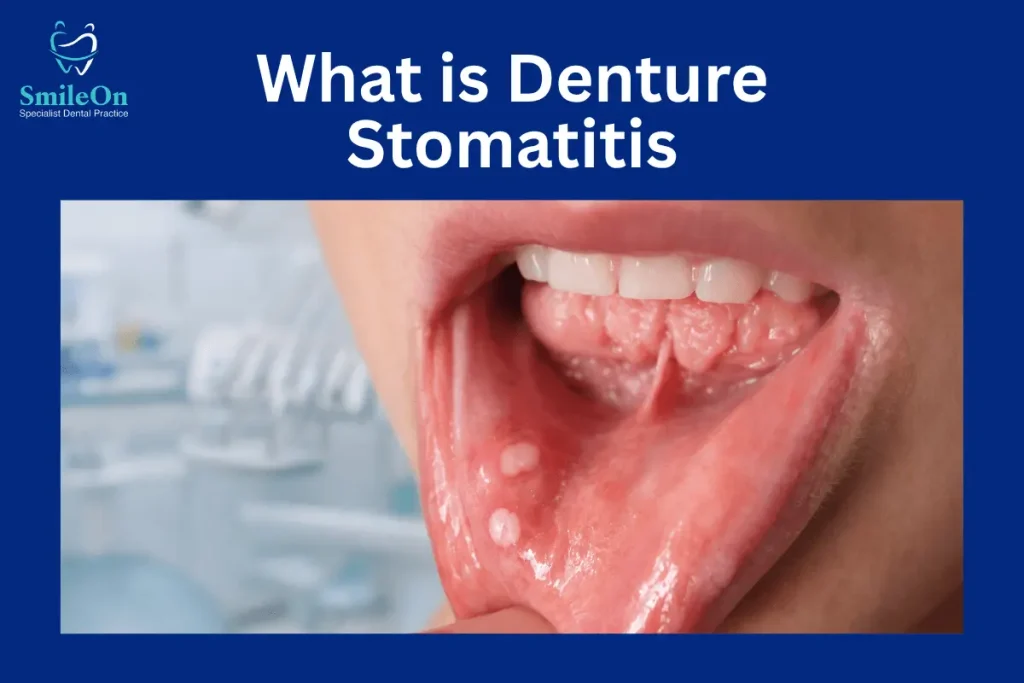
Dentures are meant to restore your smile, not cause discomfort or pain. But for many, an underlying condition known as Denture Stomatitis can transform comfort into discomfort with little to no visible signs.
This condition often progresses silently under dentures, which makes it easy to overlook until it hurts. If you’ve ever experienced redness, soreness, or a burning sensation in your mouth while wearing dentures, you’re not alone.
Learning about denture stomatitis is the first step to ensuring your oral health and a healthy smile.
Key Takeaways
- Denture stomatitis is the most common disease of denture wearers.
- Under dentures, it causes inflammation, again with little initial pain.
- Denture stomatitis can be divided into three types according to its severity.
- This is mostly due to inadequate hygiene and continual denture wear.
- Treatments for denture stomatitis include improving hygiene, medications and adjusting the dentures.
- One of the easiest preventive steps is to remove dentures at night.
- Early treatment prevents significant oral health problems.
What is Denture Stomatitis?
Denture stomatitis is a common inflammatory condition affecting the oral tissue beneath a denture. It primarily impacts people who use full or partial dentures, particularly when good hygiene is not maintained.
Unlike typical gum infections, this can initially be painless. Which is why so many don’t know they have it until it becomes more obvious.
Why Does it Happen?
Denture stomatitis is typically associated with:
- Poor denture hygiene
- Continuous denture wear (especially overnight)
- Ill-fitting dentures
- Fungal infections
- Dry mouth conditions
When dentures leave moisture and bacteria trapped against the gums, they create an ideal environment for infection and irritation.
Denture Stomatitis Symptoms: What Do You Need to Watch Out For?
Early recognition of denture stomatitis can prevent complications. Some may feel mild discomfort, and some might have more visible signs.
Common Symptoms Include:
- Redness under the denture area
- Swollen or inflamed gums
- Burning sensation in the mouth
- Dryness or irritation
- Bad breath
- Small red spots on the palate
In some situations, particularly in advanced cases, you might also feel pain or find it hard to wear dentures comfortably.
Types of Denture Stomatitis
Being aware of the various denture stomatitis types can promote their proper diagnosis and treatment. Dentists usually break this down into three categories of severity.
Type I: Localized Inflammation
This is the least virulent form and usually passes unnoticed.
Characteristics:
- Small red areas
- Limited to specific spots
- Usually results from minor denture pressure
What it means:
This stage is reversible and easily treated if caught soon enough.
Type II: Generalized Redness
The most common type around denture wearers.
Characteristics:
- Widespread redness under the denture
- Inflammation across a larger area
- Often linked with poor hygiene
What it means:
However, at this point, it becomes more apparent although still manageable if addressed properly.
Type III: Granular or Nodular Stomatitis
This is the most serious type and needs to be dealt with straight away.
Characteristics:
- Bumpy or nodular tissue growth
- Thickened gum tissue
- Long-term irritation
What it means:
This type may need advanced denture stomatitis treatment to involve professional dental procedures.
What are the Causes and Risk Factors
Denture stomatitis doesn’t occur overnight, it develops over time, as the result of a combination of habits and conditions.
Key Causes:
- Wearing dentures 24/7 without removal
- Not cleaning dentures properly
- Using old or damaged dentures
- Smoking
- Poor nutrition
Who is at Higher Risk?
- Older people denture wearers
- People with diabetes
- Individuals with weakened immune systems
- Patients with dry mouth issues
How to Get Relief from Denture Stomatitis
The good news? Denture stomatitis treatment is led by avoiding the cause, and often very effective if done promptly.
Improve Denture Hygiene
This step is the first and most important.
- Brush dentures with a soft-bristled brush daily
- Use denture-cleaning solutions
- Rinse after every meal
Remove Dentures at Night
Giving your gums a rest gives tissues a chance to heal.
- Remove dentures before sleeping
- They should be kept in fresh solution
Antifungal Medications
In the case of a fungal infection, dentists may prescribe:
- Antifungal creams
- Oral medications
- Medicated mouth rinses
Adjust or Replace Dentures
Improper-fitting dentures can make the issue worse.
- Visit your dentist for adjustments
- Replace worn-out dentures
Maintain Oral Hygiene
Even if you are using complete dentures, it is important to care for your mouth.
- If you need to, wear braces to straighten your teeth.
- Use an antiseptic mouthwash
Prevention Tips: Maintain Oral Health
As always treatment is best when no disease has occurred. Simple habits can lower your risk by a lot.
Easy Prevention Tips:
- Never sleep with dentures in
- Clean dentures regularly
- Go to your dentist for regular visits
- Stay hydrated
- Avoid smoking
Consistency is key: the little things you do every day compound.
Conclusion
Denture stomatitis might seem like a small problem, but it can subtly impact your comfort, confidence, and general oral health. The good news is, with the right care, it’s both preventable and treatable.
If you have dentures, also consider that they’re part of your daily hygiene, not something you can ignore. Clean them, rest your gums, and watch for changes in your mouth.
At SmileOn Dental Clinic, your smile is more than just appearance; it’s health, comfort, and care every day.