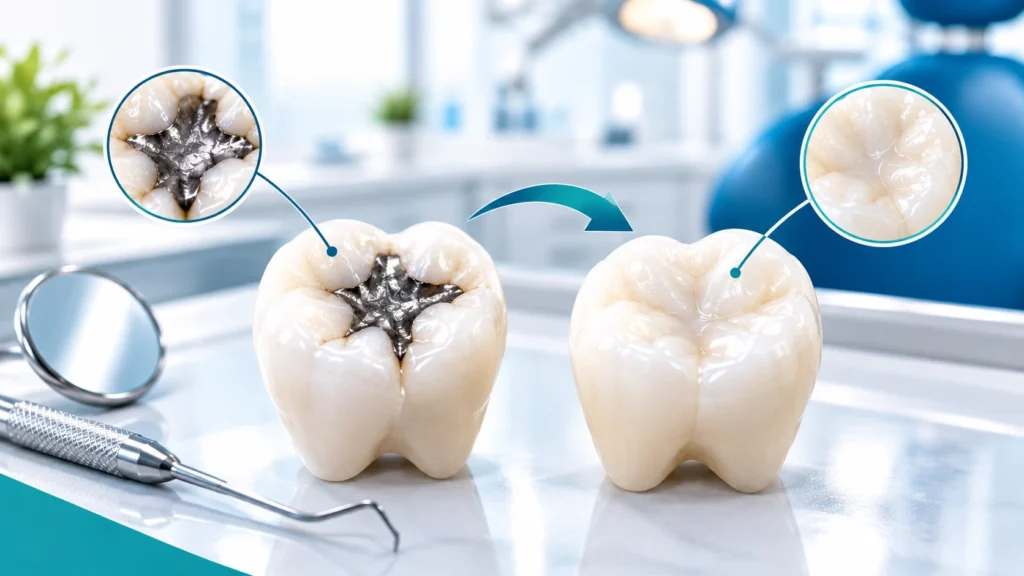
Dental fillings help protect teeth from further damage caused by cavities. For many years, silver-colored amalgam fillings have been a common choice for repairing decayed teeth. Other than this, everything is fine. These fillings are known for their durability and ability to withstand chewing pressure. However, as dental materials and treatment options have improved, many people have started considering amalgam filling replacement, even when their existing fillings are not causing pain.
But does every old amalgam filling need to be replaced? The answer is no. A filling that is functioning properly and has no signs of damage may not require immediate replacement. The decision depends on the condition of the filling, the health of the surrounding tooth, and your dentist’s professional assessment.
At SmileOn Dental, understanding your dental health and making informed decisions about treatment can help you maintain a healthy smile. Let’s explore when replacing an old amalgam filling may be necessary and when it is better to leave it alone.
What Makes Amalgam Fillings Different from Other Dental Fillings?
Amalgam fillings differ from other dental fillings because they are made from a mixture of metals rather than tooth-colored resin or ceramic materials. This metallic composition gives them a silver appearance and makes them a recognizable option in restorative dentistry. Their strength has made amalgam fillings a common choice for repairing cavities in back teeth, where chewing forces can be significant. However, like other dental restorations, they can wear down or become damaged over time.
Modern alternatives, such as composite resin, can match the natural color of teeth and may be suitable for many restorations. Still, replacing an old amalgam filling is not always necessary. A dental professional should examine the filling and surrounding tooth before recommending replacement.
Do You Need Amalgam Filling Replacement If There Is No Pain?
In most cases, an old amalgam filling does not need to be replaced if it is intact, properly sealed, and the tooth underneath is healthy. Pain is an important warning sign, but it is not the only way to identify a dental problem.
Some issues, including early decay around a filling, may develop without noticeable symptoms. Regular dental examinations allow your dentist to check the filling and identify potential concerns before they become more serious.
Your dentist may recommend keeping the existing filling if:
- It remains stable and securely attached to the tooth.
- There are no signs of new decay around its edges.
- The surrounding tooth structure is healthy.
- There are no cracks or fractures that require treatment.
- The filling does not interfere with your bite.
If the filling is working properly, replacing it unnecessarily may remove additional healthy tooth structure and introduce avoidable treatment risks. The best approach is to assess the condition of the filling rather than make a decision based only on its age or appearance.
Signs That an Old Amalgam Filling May Need Replacement
Even if you are not experiencing pain, certain changes may indicate that your filling needs professional evaluation.
1. Cracks or Damage in the Filling
Amalgam fillings can wear down or become damaged over time. A crack, broken edge, or missing section may allow bacteria to reach the underlying tooth.
Not every visible line indicates a serious problem, but suspected damage should be checked by a dentist. Depending on the extent of the damage, treatment may involve repairing the filling, replacing it, or restoring the tooth with another suitable option.
2. Tooth Decay Around the Filling
New decay can develop along the edges of an existing filling. This may happen when bacteria and plaque accumulate around an area that is difficult to clean or when the seal between the filling and tooth is compromised. Early decay may not cause pain. Your dentist can examine the area and recommend appropriate treatment based on the extent of the damage.
If decay is present, simply placing a new filling over the affected area is not enough. The dentist must first address the decay and determine how much healthy tooth structure remains.
3. A Loose or Worn Filling
A filling that feels loose, has a damaged edge, or no longer fits properly may need attention. Changes in the way your teeth meet when you bite can also indicate that a restoration requires adjustment or repair. Avoid repeatedly testing a loose filling with your tongue or chewing hard foods on the affected tooth. Arrange a dental appointment so the problem can be assessed.
4. Cracks in the Natural Tooth
Sometimes, the filling itself is not the main concern. The natural tooth around an older restoration may develop cracks because of chewing pressure, previous decay, or the amount of tooth structure removed during earlier treatment. A cracked tooth may cause sensitivity when biting, but some cracks produce few symptoms initially.
Your dentist will determine whether the tooth can be treated with a new filling or whether a stronger restoration, such as a crown, may be more appropriate.
5. Changes in Tooth Sensitivity
New sensitivity to hot, cold, sweet foods, or biting pressure should not be ignored. It can be associated with a damaged filling, exposed dentin, decay, or another dental condition. Sensitivity does not automatically mean that an amalgam filling needs replacement. Your dentist must identify the underlying cause before recommending treatment.
Is It Safe to Keep Old Silver Fillings?
For most people, an intact amalgam filling that has been properly evaluated can remain in place. Dental organizations generally advise against removing sound amalgam fillings solely to prevent disease or because they contain mercury. Removing an intact filling can temporarily increase exposure to mercury vapor during the procedure. It can also require the removal of additional healthy tooth structure, potentially weakening the tooth.
However, this does not mean that every amalgam filling should remain in place indefinitely. A filling that is damaged, leaking, associated with decay, or otherwise unsuitable may need repair or replacement. Your dentist can assess the benefits and risks of keeping the restoration compared with replacing it.
If you have concerns about mercury exposure, allergies, or the appearance of silver fillings, discuss them openly with your dentist. Individual circumstances matter, and treatment decisions should be based on current dental guidance and your specific oral health needs.
What are the Benefits of Amalgam Filling Replacement?
When replacement is clinically appropriate, it can help restore the tooth and improve its appearance. The benefits depend on why the original filling is being replaced and the condition of the tooth.
Improved Appearance
One of the most common reasons people consider amalgam filling replacement is the desire for a natural-looking smile. Silver fillings can be noticeable when laughing or opening the mouth.
Tooth-colored composite resin may blend with the natural shade of your teeth, making the restoration less visible. Your dentist can explain whether composite resin is suitable for the location and size of your filling.
Treatment of Recurrent Decay
If new decay has developed around an old filling, replacing the restoration after treating the affected area may help protect the remaining tooth structure.
The amount of decay and the strength of the tooth determine whether a new filling is sufficient or whether a different restoration is needed.
Repair of a Damaged Restoration
Replacing a broken or worn filling can restore the tooth’s shape and chewing function. In some cases, a repair may be possible instead of removing the entire filling. Your dentist will recommend the least invasive option that can reliably address the problem.
Addressing Specific Dental Concerns
Some patients have a documented allergy or sensitivity to a material used in a restoration. In these cases, a dentist can assess whether the filling is responsible for the symptoms and discuss suitable alternatives. A replacement should be based on a clear clinical reason rather than an assumption that all silver fillings are harmful.
What Materials Can Replace Amalgam Fillings?
If your dentist recommends replacement, several restorative materials may be considered.
Composite Resin Fillings
Composite resin is a tooth-colored material that can be matched to the natural shade of your teeth. It is commonly used for small to moderate restorations, depending on the location of the tooth and the amount of remaining structure. Its appearance makes it a popular option for patients who want a less noticeable filling. However, its suitability depends on factors such as chewing pressure, cavity size, moisture control, and the condition of the tooth.
Ceramic Restorations
Ceramic materials may be used for certain larger restorations, including inlays and onlays. These restorations can provide a natural appearance and may be appropriate when a conventional filling would not adequately restore the tooth. Ceramic restorations generally require more planning and may cost more than a standard filling.
Dental Crowns
When a tooth has extensive damage or insufficient healthy structure to support a regular filling, a dental crown may be recommended. A crown covers and protects much of the visible tooth. A crown is not necessary for every old amalgam filling. Your dentist will evaluate the tooth and select an appropriate treatment based on the amount of damage and the tooth’s overall condition.
What Happens During Amalgam Filling Replacement?
The exact procedure depends on the type of filling, the tooth’s condition, and the replacement material.
In a typical appointment, your dentist will:
- Examine the tooth: The dentist checks the existing filling, surrounding tooth structure, and signs of decay or cracking. Dental X-rays may be recommended when clinically necessary.
- Discuss the treatment plan: The dentist explains whether replacement is necessary and which materials may be appropriate.
- Prepare the tooth: If replacement is indicated, the old filling is removed using appropriate dental techniques and protective measures.
- Treat affected areas: Any decay or damaged tooth structure is addressed before placing the new restoration.
- Place the new restoration: The selected filling or other restoration is fitted and checked for comfort and bite alignment.
The procedure may be completed in one visit, although larger restorations can require additional appointments. Local anesthesia may be used when needed to keep you comfortable. Your dentist will also explain any aftercare instructions relevant to your treatment.
How Can You Take Care of Your Fillings?
Whether you have amalgam or tooth-colored fillings, good oral hygiene can help protect your teeth and restorations.
Follow these simple habits:
- Brush twice daily with fluoride toothpaste.
- Clean between your teeth every day using floss or another suitable interdental cleaner.
- Limit frequent consumption of sugary foods and drinks.
- Avoid chewing ice or using your teeth to open packages.
- Attend regular dental checkups.
- Seek advice if you notice a loose filling, a chipped tooth, new sensitivity, or discomfort while chewing.
Fillings restore damaged teeth, but they do not make them immune to future decay. Keeping the surrounding tooth clean is essential for long-term oral health.
When Should You Visit a Dentist?
You should arrange a dental examination if an old filling appears cracked, becomes loose, develops a rough edge, or is associated with sensitivity or pain.
Even without symptoms, regular checkups are important because some dental problems develop quietly. Your dentist can monitor older restorations and determine whether they need treatment.
Severe or worsening pain, facial swelling, or fever associated with a dental problem warrants prompt professional assessment. Do not wait for a routine checkup if these symptoms occur.
If your main concern is the appearance of an amalgam filling, schedule a consultation to discuss cosmetic alternatives. You do not necessarily need to replace a healthy filling to achieve a better-looking smile; your dentist can help you weigh the options.
Amalgam Filling Replacement at SmileOn Dental
At SmileOn Dental, patients can seek professional guidance about existing fillings, restorative treatment, and ways to maintain their natural teeth. The right treatment starts with understanding the condition of the tooth rather than automatically replacing an older restoration.
If you are considering amalgam filling replacement, a dental examination can help determine whether your filling should remain in place, be repaired, or be replaced with a suitable alternative.
Your dentist can explain the available materials, expected benefits, possible risks, and costs before treatment begins. This allows you to make an informed decision that supports both your oral health and your smile.
Final Thoughts
An old amalgam filling does not automatically need replacement just because it is silver or has been in your mouth for many years. If it is intact and the surrounding tooth is healthy, monitoring it may be the most appropriate option. However, cracks, recurrent decay, damage, and certain individual dental concerns can make replacement necessary. The key is to identify the actual problem and choose a treatment that preserves as much healthy tooth structure as possible.
If you are unsure about an existing filling, consult SmileOn Dental for a professional assessment. With regular checkups and proper oral hygiene, you can make informed decisions that help protect your teeth and maintain a healthy smile.
Frequently Asked Questions
1. Should I replace an old amalgam filling if it does not hurt?
Not necessarily. If the filling is intact, properly sealed, and the tooth is healthy, replacement may not be required. A dental examination can identify problems that may not cause pain.
2. How long do amalgam fillings usually last?
Amalgam fillings can last many years, often around 10–15 years or longer, although their lifespan varies. Factors such as filling size, chewing pressure, oral hygiene, and the condition of the tooth affect durability.
3. Are old amalgam fillings dangerous?
An intact amalgam filling is generally not recommended for removal solely because it contains mercury. If you have specific health concerns or a suspected allergy, consult your dentist to discuss your individual circumstances.
4. Can amalgam fillings be replaced with white fillings?
Yes. Composite resin may be used to replace suitable amalgam fillings. However, the best material depends on the size and location of the restoration, the tooth’s condition, and the forces placed on it during chewing.
5. Does amalgam filling replacement hurt?
The procedure is generally well tolerated. Local anesthesia can be used when appropriate to reduce discomfort. Some temporary sensitivity may occur afterward, depending on the condition of the tooth and the treatment performed.
6. Can a dentist detect problems with an old filling before pain begins?
Yes. A clinical examination and, when necessary, dental X-rays can help identify signs of decay, damage, or other concerns before symptoms develop. Not every problem can be detected immediately, which is why ongoing dental monitoring matters.
7. Is it better to replace all silver fillings with white fillings?
No. Replacing every silver filling is not routinely necessary. A dentist should evaluate each restoration individually and recommend replacement only when there is a suitable clinical or personal reason.