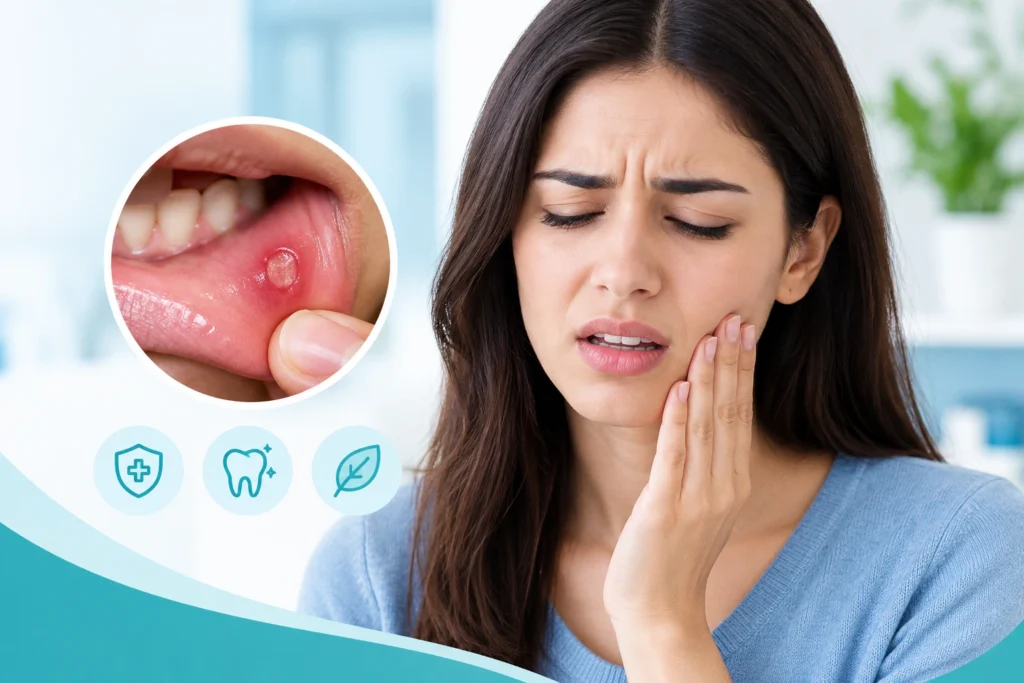
Mouth ulcers are small, painful sores that can develop inside the mouth. They may appear on the tongue, gums, inner cheeks, lips, or the roof of the mouth. Although most mouth ulcers are not serious and heal on their own, they can make everyday activities such as eating, drinking, brushing, and speaking uncomfortable.
Knowing what causes mouth ulcers and how to manage them can help reduce discomfort and support faster healing. If ulcers keep coming back, become unusually painful, or do not heal within a reasonable time, it is important to consult a dental professional.
How Do Mouth Ulcers Develop?
Mouth ulcers are open sores that develop on the soft tissues inside the mouth. They can vary in size and usually have a white, yellow, or gray center surrounded by a red area. Some ulcers appear as a single sore, while others may develop in groups. They are usually temporary, but the pain can be bothersome, especially when eating spicy, salty, or acidic foods.
Common types include minor ulcers, major ulcers, and ulcers associated with certain viral infections. The appropriate approach to Mouth Ulcers Treatment depends on the cause, severity, and frequency of the sores.
What Causes Mouth Ulcers?
There is no single cause of every mouth ulcer. Several everyday factors can contribute to their development.
Common causes include:
- Accidentally biting the inside of the cheek or lip
- Brushing too hard
- Injury from braces or sharp teeth
- Stress or emotional tension
- Lack of sleep
- Hormonal changes
- Certain food sensitivities
- Vitamin or mineral deficiencies
- Some medications
- Mouth infections
- Certain underlying health conditions
Sometimes, an ulcer develops without an obvious reason. Keeping track of when ulcers appear and what may have triggered them can help a dentist identify possible causes.
How Can You Get Relief From Painful Mouth Ulcers?
Most minor mouth ulcers improve within one to two weeks. During this time, simple steps can help control pain and irritation.
Rinse With Salt Water
A mild salt-water rinse can help keep the mouth clean and may soothe an irritated area. Mix a small amount of salt with warm water and gently rinse your mouth before spitting it out. Avoid swallowing the solution.
Avoid Foods That Irritate the Ulcer
Spicy, acidic, salty, and very hot foods can make an ulcer more painful. Citrus fruits, pickles, hot sauces, and similar foods may cause additional irritation. Choose softer and milder foods until the ulcer starts to heal.
Maintain Good Oral Hygiene
Continue brushing and flossing, but be gentle around the affected area. Keeping your mouth clean can help reduce irritation and support normal healing. A soft-bristled toothbrush may be more comfortable while you have an ulcer.
Drink Enough Water
Staying hydrated helps prevent dryness and keeps the mouth more comfortable. Drink water regularly, especially if eating or speaking causes discomfort.
Use Recommended Oral Treatments
Depending on the cause and severity, a dentist may recommend a suitable oral gel, rinse, or other treatment to reduce pain and irritation. It is better to seek professional advice before using medication, particularly when ulcers are frequent or severe.
When Should You See a Dentist?
A small mouth ulcer that heals within a week or two is usually not a reason for concern. However, professional advice is recommended when an ulcer:
- Does not heal after two weeks
- Keeps returning frequently
- Becomes very large or painful
- Makes eating or drinking difficult
- Bleeds without an obvious reason
- Appears alongside fever or other symptoms
- Develops suddenly and repeatedly
Persistent or recurring ulcers may sometimes be linked to an underlying dental, nutritional, or medical issue. A dental examination can help determine whether further investigation is needed.
How is Mouth Ulcers Treatment Done?
There is no single treatment that works for every mouth ulcer. The dentist first considers the appearance of the ulcer, its location, how long it has been present, and whether it keeps returning.
Depending on the situation, Mouth Ulcers Treatment may involve:
- Managing the source of irritation
- Using products to relieve pain
- Treating an underlying oral infection when present
- Addressing nutritional deficiencies when identified
- Recommending appropriate topical medication
- Treating dental problems that may repeatedly injure the soft tissues
The goal is not only to reduce the pain but also to identify why the ulcers are occurring.
Can Mouth Ulcers Be Prevented?
Not every mouth ulcer can be prevented, but certain habits may reduce the chances of developing them.
Try to:
- Brush gently with a soft toothbrush
- Avoid biting your cheeks or lips
- Eat a balanced diet
- Drink enough water
- Limit foods that trigger irritation
- Manage stress where possible
- Address sharp teeth or poorly fitting dental appliances
- Maintain regular dental checkups
If you notice that particular foods or habits repeatedly trigger ulcers, avoiding those triggers may also help.
Why Choose SmileOn Dental for Mouth Ulcers Treatment?
At SmileOn Dental, patients can receive professional dental evaluation for persistent or recurring mouth ulcers. A dentist can examine the affected area, look for possible sources of irritation, and recommend an appropriate treatment approach.
If you are searching for the best dentist in Lahore for professional advice about recurring mouth ulcers or other oral health concerns, choosing an experienced dental team can help you understand the cause of the problem and receive appropriate care.
Frequently Asked Questions
How long do mouth ulcers usually take to heal?
Most minor mouth ulcers heal naturally within one to two weeks. If an ulcer lasts longer than expected, becomes increasingly painful, or keeps returning, you should consult a dentist.
What is the fastest way to get relief from a mouth ulcer?
Avoiding irritating foods, keeping the mouth clean, drinking enough water, and using a dentist-recommended oral treatment can help manage discomfort while the ulcer heals.
Can stress cause mouth ulcers?
Stress may contribute to mouth ulcers in some people. However, ulcers can have several possible causes, so recurring sores should be discussed with a dental professional.
Are mouth ulcers contagious?
Most common canker sores are not contagious. However, some mouth sores caused by viral infections can spread. A dentist can help identify the likely cause based on the symptoms and appearance.
When should I worry about a mouth ulcer?
You should seek professional advice if an ulcer does not heal within two weeks, frequently returns, becomes unusually large or painful, or is associated with other concerning symptoms.
Can a dentist treat recurring mouth ulcers?
Yes. A dentist can examine recurring ulcers and look for possible causes such as irritation, oral health problems, or other contributing factors. They can then recommend suitable Mouth Ulcers Treatment based on your condition.
Conclusion
Painful mouth ulcers can make simple activities such as eating and speaking uncomfortable, but most minor ulcers heal on their own. Gentle oral care, avoiding irritating foods, staying hydrated, and following appropriate treatment can help manage the discomfort.
If your mouth ulcers are persistent, unusually painful, or repeatedly coming back, do not ignore them. Professional dental evaluation can help identify the possible cause and determine the right approach to Mouth Ulcers Treatment. For reliable dental care and professional guidance, SmileOn Dental can help you take better care of your oral health.