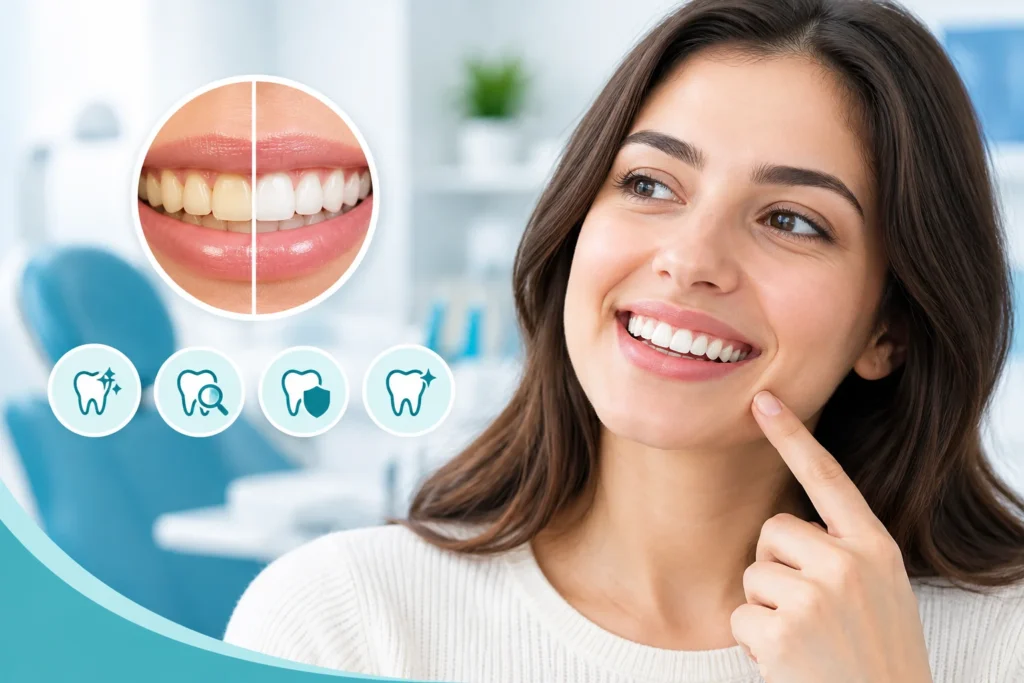
Have you noticed that your teeth look more yellow than they used to? You are not alone. Tooth discoloration is a common concern, and many people wonder whether yellow teeth can become white again.
The good news is that yellow teeth treatment can often improve the appearance of discolored teeth. However, the right treatment depends on why your teeth have become yellow in the first place. Some stains can be removed with professional cleaning, while deeper discoloration may require teeth whitening or another cosmetic dental treatment.
At SmileOn Dental, we help patients understand the cause of tooth discoloration and choose an appropriate treatment based on their individual dental needs.
Why Do Teeth Become Yellow?
Teeth can become yellow for several different reasons. In some cases, the discoloration develops gradually because of everyday habits. In others, it may be related to the natural structure of the teeth.
Some common causes include:
1. Food and Drinks
Certain foods and drinks can stain the teeth over time. Tea, coffee, soft drinks, berries, tomato-based foods, and other strongly colored foods may contribute to surface staining.
Regular exposure does not necessarily mean your teeth will become severely discolored, but frequent consumption can gradually affect their appearance.
2. Smoking and Tobacco
Smoking and tobacco products can cause noticeable staining. Nicotine and other substances found in tobacco can leave yellow or brown deposits on the teeth. These stains may become more difficult to remove when they build up over time.
3. Poor Oral Hygiene
Plaque and tartar can make teeth look dull or yellow. When brushing and flossing are not done regularly, bacteria and food particles can accumulate around the teeth and gums. Professional dental cleaning can help remove tartar and certain types of surface stains.
4. Natural Tooth Color
Not all yellow-looking teeth are unhealthy. Natural teeth are not always bright white. The layer underneath the enamel, called dentin, has a naturally yellowish color. As enamel becomes thinner with age, the underlying dentin can become more visible, making teeth appear more yellow.
5. Aging
Teeth naturally change as we get older. Years of exposure to food, drinks, and other staining factors can affect tooth color. Enamel can also gradually wear down, making the natural color of dentin more noticeable.
6. Certain Medications or Dental Conditions
Certain medications, fluorosis, previous dental trauma, and changes within the tooth can cause internal tooth discoloration. These types of stains respond differently to conventional whitening and should be assessed by a dentist. A dentist will examine the teeth and recommend the best dental treatment suitable for the condition.
Can Yellow Teeth Become White Again?
In many cases, yellow teeth can be noticeably lightened. However, the final shade depends on the natural color of the teeth, the cause of discoloration, and how the teeth respond to treatment. Surface stains may improve considerably after professional dental cleaning or whitening. Deeper stains may require professional cosmetic treatment.
It is important to understand that teeth whitening does not necessarily make natural teeth completely white. The goal is usually to lighten the existing tooth color and create a cleaner, brighter appearance.
What Is the Best Yellow Teeth Treatment?
There is no single treatment that works for everyone. A dentist first needs to determine what is causing the discoloration.
Professional Dental Cleaning
If yellow teeth are mainly caused by plaque, tartar, or surface stains, professional cleaning may make a noticeable difference. A dental professional can remove hardened deposits that regular brushing cannot eliminate. This can leave the teeth looking cleaner and brighter.
Professional Teeth Whitening
Professional whitening is one of the commonly used options for improving the color of natural teeth. Whitening treatments use specially formulated whitening agents to reduce certain types of tooth discoloration. Depending on your dental condition and the treatment selected, whitening may be performed at a dental clinic or with dentist-provided products for use at home. Professional guidance is important because whitening may not be suitable for everyone.
Dental Veneers
If discoloration is deep, uneven, or difficult to treat with whitening, veneers may be considered in some cases. Veneers are thin coverings placed over the front surfaces of teeth to improve their appearance. They can address certain cosmetic concerns, including discoloration, shape, and minor imperfections.
However, veneers are a different treatment from teeth whitening and require a dental consultation to determine whether they are appropriate.
Dental Crowns
A crown may be recommended when a tooth is significantly damaged, weakened, or discolored and requires more comprehensive restoration. Crowns are not normally used simply because someone wants whiter teeth. A dentist may recommend one when there is an underlying dental reason for restoring the tooth.
How Can You Prevent Teeth From Becoming More Yellow?
After improving tooth color, maintaining good oral habits can help reduce new staining.
Here are some simple steps you can follow:
- Brush your teeth twice a day with fluoride toothpaste.
- Clean between your teeth regularly with floss or another suitable interdental cleaner.
- Limit frequent consumption of highly staining foods and drinks.
- Drink water after consuming beverages that may stain your teeth.
- Avoid smoking and tobacco products.
- Visit your dentist regularly for checkups and professional cleaning.
- Do not overuse whitening products without professional advice.
Good oral hygiene is important not only for a brighter smile but also for healthy teeth and gums.
Can Whitening Toothpaste Remove Yellow Teeth?
Whitening toothpaste can help remove some surface stains, but it does not work in the same way as professional whitening. Many whitening toothpastes contain mild polishing ingredients that help remove stains from the surface of the teeth. They may be useful for maintaining a cleaner appearance, but they generally cannot change the natural color of teeth significantly.
If your teeth remain yellow despite regular brushing, a dental examination can help determine whether professional treatment may be more suitable.
Are Home Remedies Safe for Yellow Teeth?
Many home remedies for whitening teeth are shared online, including the use of acidic foods, abrasive powders, or other household ingredients. These methods are not always safe for your teeth. Acidic substances can affect tooth enamel, while abrasive materials may wear down the tooth surface if used incorrectly.
Instead of experimenting with strong home remedies, it is better to discuss your concerns with a dentist. A professional can identify the cause of discoloration and recommend a safer approach.
When Should You See a Dentist About Yellow Teeth?
Yellow teeth are not always a sign of a dental problem. However, you should consider visiting a dentist if:
- Your teeth have suddenly changed color.
- One tooth has become noticeably darker than the others.
- Yellow discoloration remains despite good oral hygiene.
- You have tooth sensitivity, pain, or bleeding gums.
- You have visible tartar buildup.
- You are considering professional teeth whitening.
A dental examination can help identify whether the discoloration is caused by surface stains, natural tooth color, enamel changes, or another dental concern.
Yellow Teeth Treatment at SmileOn Dental
If you are unhappy with the color of your teeth, you do not have to guess which treatment is right for you.
At SmileOn Dental, our dental team can assess your teeth, discuss your concerns, and explain suitable options for improving your smile. Depending on the cause of discoloration, treatment may include professional cleaning, teeth whitening, or another cosmetic or restorative procedure. The best approach is based on the condition of your teeth, your oral health, and your desired results.
Frequently Asked Questions
Can yellow teeth become white again?
Yes, many types of yellow tooth discoloration can be improved. The results depend on the cause of the discoloration and the condition of your teeth.
What is the best yellow teeth treatment?
The best treatment depends on why your teeth are yellow. Professional cleaning may help with surface stains, while professional whitening may be suitable for certain types of discoloration. A dentist can recommend an option after examining your teeth.
Does brushing make yellow teeth white?
Regular brushing helps remove plaque and some surface stains, but brushing alone may not significantly change the natural color of teeth.
How long does teeth whitening last?
The duration of whitening results varies from person to person. Eating and drinking habits, oral hygiene, smoking, and natural tooth changes can all affect how long the results remain noticeable.
Is it normal for teeth to have a yellowish shade?
Yes. A slightly yellowish or cream-colored shade can be natural. Dentin, the layer underneath the enamel, naturally has a yellowish color. As enamel becomes thinner, especially with age, this natural shade can become more visible.
Can yellow teeth be naturally white?
Natural teeth can have different shades, and they are not always naturally bright white. Some teeth may have a slightly yellow or cream-colored appearance because the dentin underneath the enamel is naturally yellowish.
Is professional teeth whitening safe?
Professional teeth whitening can be safe when properly planned and performed according to dental guidance. Some people may experience temporary sensitivity, so a dental assessment is useful before treatment.
Does Teeth Whitening Work on Crowns, Veneers or Fillings?
Teeth whitening treatments are designed to lighten natural teeth. Crowns, veneers, and tooth-colored fillings generally do not change color during whitening.
If you have visible restorations, your dentist can assess their shade before treatment and discuss whether any additional cosmetic treatment may be needed afterward.
Final Thoughts
Yellow teeth can develop for many reasons, and not every type of discoloration requires the same treatment. Surface stains may improve with professional cleaning, while deeper discoloration may benefit from professional whitening or another cosmetic option. If you are concerned about yellow teeth, the first step is to understand the cause rather than relying on unproven home remedies. A professional dental evaluation can help you find an appropriate yellow teeth treatment and work toward a healthier, brighter-looking smile.
SmileOn Dental provides personalized dental care to help patients understand their options and make informed decisions about their smiles.