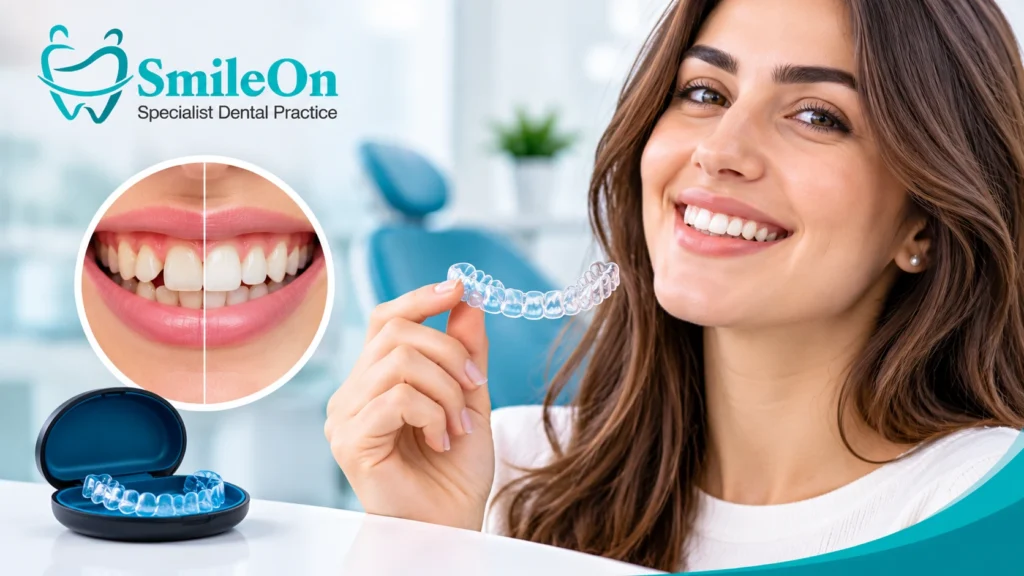
Not everyone has perfectly aligned teeth. For some people, teeth grow too close together, overlap, or turn slightly because there is not enough room in the jaw. This condition is known as dental overcrowding. Although it can make a smile look uneven, the problem is not limited to appearance. Crowded teeth can also make brushing and flossing difficult, allowing plaque and food particles to collect in areas that are hard to reach.
For years, traditional metal braces were considered one of the main ways to correct this problem. Today, however, orthodontic treatment has become more flexible. Clear aligners offer another option for people who want to improve their tooth alignment without wearing visible metal brackets.
Many people exploring Clear Aligners in Lahore want to know whether these transparent trays can actually correct overlapping and crowded teeth. The good news is that they can help with many types of crowding. However, the right treatment depends on how much space is available, how the teeth are positioned, and whether other dental concerns are present.
Let’s look at how clear aligners work and when they may be the right choice for correcting overcrowded teeth.
What Causes Teeth to Become Overcrowded?
Dental overcrowding happens when the available space in the jaw is not sufficient for all the teeth to sit in their natural positions. Instead of growing in a straight line, some teeth may overlap, twist, or move behind other teeth. The condition can develop during childhood or become more noticeable when permanent teeth appear. Some people experience mild crowding, while others have more complicated alignment problems.
Common reasons for overcrowded teeth include:
- Jaw and tooth size: A smaller jaw may not provide enough room for naturally larger teeth.
- Genetic factors: Tooth size, jaw shape, and dental development can run in families.
- Early loss of baby teeth: Losing a baby tooth before the permanent tooth is ready can affect the space available for other teeth.
- Delayed tooth development: Baby teeth that remain longer than expected may interfere with the proper eruption of permanent teeth.
- Dental development issues: Differences in how the teeth and jaws develop can lead to irregular alignment.
Crowding can also create practical problems. When teeth overlap, toothbrush bristles and dental floss may not reach every surface properly. Over time, this can increase the risk of plaque buildup, cavities, and gum inflammation.
Can Clear Aligners Straighten Crowded Teeth?
Yes, clear aligners can straighten many cases of overcrowded teeth. They are particularly useful when the crowding is mild or moderate and the required tooth movements can be achieved with removable trays. Clear aligners are custom-designed to fit over the teeth. Each tray applies gentle pressure to specific areas, encouraging selected teeth to move gradually. Patients change their aligners according to their orthodontist’s instructions as treatment progresses.
For example, if two front teeth overlap slightly, a treatment plan may gradually move them into better positions. When more space is required, the orthodontist may recommend additional steps before or during treatment.
However, severe crowding is a different situation. If several teeth are significantly displaced or there is very little room in the jaw, clear aligners alone may not provide the desired results. Traditional braces or other orthodontic procedures may be more appropriate. This is why a proper dental examination should always come before choosing an aligner treatment.
How Do Clear Aligners Work for Overcrowded Teeth?
Correcting crowded teeth involves more than simply placing transparent trays over them. Each stage of treatment is planned according to the patient’s existing tooth positions and the movements needed to achieve better alignment.
1. Examining the Teeth and Jaw
The process begins with an orthodontic assessment. The dentist examines how the teeth overlap, checks the bite, and evaluates the overall condition of the gums and teeth.
Digital dental scans and X-rays may also be required to understand the available space and identify any underlying concerns.
2. Planning the Required Tooth Movements
Once the examination is complete, a customized treatment plan is prepared. This plan identifies which teeth need to move, the direction of movement, and the approximate time required.
Depending on the severity of crowding, additional space may be created through interproximal reduction (IPR), controlled dental expansion or tooth extractions in selected cases. Digital treatment planning can also help patients understand how their smile may change throughout the process.
3. Receiving Custom Aligners
A series of aligners is prepared to match the patient’s teeth and treatment plan. Each tray is slightly different because it is designed to move the teeth closer to their intended positions. Patients usually wear each set for around one to two weeks, although the exact schedule depends on the orthodontist’s recommendations.
4. Moving Teeth Into Better Positions
As treatment continues, the aligners gradually correct overlapping and improve the spacing between teeth. In some cases, small tooth-coloured attachments are placed on selected teeth. These help the aligners apply pressure more effectively and achieve specific movements.
5. Maintaining the Final Results
After the teeth reach their planned positions, treatment does not simply end there. Retainers are generally required to keep the teeth aligned. Without proper retention, teeth can gradually move toward their previous positions. Following the retainer schedule is therefore an important part of long-term results.
Signs That Clear Aligners May Be Right for You
Clear aligners are not suitable for every orthodontic problem, but they can be a practical option for people with certain alignment concerns.
You may be a suitable candidate if:
- Your front teeth overlap slightly.
- Some teeth are twisted or positioned unevenly.
- There are small spaces or alignment irregularities.
- Your crowding is mild to moderate.
- Your gums and teeth are healthy.
- You can follow the recommended daily wearing schedule.
Another important factor is consistency. Clear aligners are removable, which makes them convenient, but patients must take responsibility for wearing them regularly. If you frequently forget to put them back in, treatment may take longer than expected.
When Might Traditional Braces Be a Better Option?
Although clear aligners have many advantages, they are not the ideal solution for every case. Some patients have severe overcrowding that requires more complicated tooth movements. Others may have significant bite problems or teeth that need substantial rotation.
In these situations, traditional braces may offer better control over certain movements. An orthodontist may also recommend additional treatment to create enough room for the teeth. Depending on the case, this could involve expansion or tooth extraction. The goal is not simply to make the teeth look straight. It is to create an alignment that supports a comfortable bite and healthy dental function.
Clear Aligners vs. Metal Braces: Which Should You Choose?
Both treatments can improve tooth alignment, but the experience is different.
| Comparison | Clear Aligners | Metal Braces |
|---|---|---|
| Appearance | Transparent trays | Visible metal brackets |
| Cleaning | Easy to remove for brushing | Requires careful cleaning around brackets |
| Eating | Removed before meals | Certain foods should be avoided |
| Comfort | Smooth plastic surface | Brackets may irritate cheeks and lips |
| Convenience | Removable | Fixed throughout treatment |
| Best suited for | Many mild to moderate cases and selected complex cases | A wide range of alignment problems, including complex cases |
Your lifestyle may influence your preference, but the complexity of your dental condition should guide the final decision.
What are the Main Benefits of Clear Aligners?
The growing interest in clear aligner treatment is not only about appearance. Many patients appreciate the flexibility these trays offer during everyday activities.
A discreet way to straighten teeth
Clear aligners are made from transparent material, so they are generally less noticeable than metal braces. This can make patients feel more comfortable during conversations, meetings, and social activities.
No major food restrictions
Since the trays are removed before eating, patients can continue enjoying their usual meals without worrying about damaging brackets or wires.
Easier brushing and flossing
Patients can remove their aligners and follow their normal oral hygiene routine. This is particularly helpful for people whose crowded teeth already make cleaning difficult.
A customized treatment approach
Each set of aligners is made according to an individual treatment plan. This allows the orthodontist to address the specific alignment concerns of each patient.
Fewer concerns about metal irritation
The smooth surface of clear aligners does not have the brackets and wires commonly associated with traditional braces. Some pressure is normal when changing trays, but severe or persistent discomfort should be discussed with the dentist.
What are the Limitations of Clear Aligners?
Although clear aligners offer several advantages, they also have certain limitations. Some complex tooth movements may be less predictable and require additional procedures or refinement aligners. Treatment success also depends on wearing the aligners consistently for the recommended 20–22 hours daily. Once treatment is complete, retainers are necessary to help maintain the corrected tooth positions.
How Long Does It Take to Correct Crowded Teeth?
There is no single treatment duration for everyone. The time required depends on how much the teeth need to move and how complicated the alignment problem is.
Someone with minor overlapping may complete treatment in several months. More noticeable crowding can require a year or longer.
Other factors that influence the treatment period include:
- The amount of available space in the jaw.
- The number of teeth involved.
- The complexity of the required movements.
- How regularly the aligners are worn.
- Whether additional procedures are necessary.
- The patient’s response to orthodontic treatment.
Wearing aligners for the recommended 20 to 22 hours each day is important. Removing them for longer periods than advised can interfere with planned tooth movement.
How to Take Care of Your Clear Aligners
Proper aligner care helps keep the trays clean, comfortable, and suitable for everyday use.
Here are a few habits worth following during treatment:
- Clean your trays daily: Use a cleaning method recommended by your orthodontist to remove buildup.
- Remove them before meals: Eating with aligners can damage or stain the trays.
- Drink water while wearing them: Tea, coffee, juices, and other coloured drinks can stain aligners.
- Brush before putting them back: This helps prevent food particles and bacteria from becoming trapped against your teeth.
- Keep them in their case: Avoid wrapping aligners in tissues because they can easily be misplaced or thrown away.
- Avoid hot water: High temperatures can change the shape of the trays.
- Follow your replacement schedule: Change aligners only when instructed by your orthodontist.
These simple steps help patients maintain good oral hygiene while making their treatment easier to manage.
Where Can You Get Clear Aligner Treatment in Lahore?
Finding the right dental clinic is an important part of orthodontic treatment. Before starting, patients should look for professional guidance, an appropriate treatment plan, and regular monitoring throughout the process.
SmileOn provides dental care and orthodontic treatment options for people interested in improving their smiles. The first step is to have your teeth examined so that the dental team can understand your alignment concerns and discuss suitable treatment options.
Whether you have slightly overlapping front teeth or more noticeable crowding, an individual assessment can help determine whether clear aligners are appropriate.
If you are considering Clear Aligners in Lahore, SmileOn can help you understand the available options and make an informed decision about your dental care.
Frequently Asked Questions
1. Do clear aligners work for severely overcrowded teeth?
Clear aligners can treat many cases of dental crowding, but severe overcrowding may require additional orthodontic procedures or traditional braces. The decision depends on the amount of available space and the movements required.
2. Can clear aligners fix overlapping front teeth?
Yes, clear aligners can correct many cases of overlapping front teeth. They gradually move the affected teeth into better positions according to a customized treatment plan.
3. Are clear aligners suitable for adults with crowded teeth?
Yes. Adults can benefit from clear aligner treatment if their teeth and gums are healthy enough for orthodontic movement. Age alone is not a barrier to treatment.
4. How many hours should I wear clear aligners?
Most patients need to wear their aligners for approximately 20 to 22 hours daily. They should be removed for meals, drinks other than water, and oral hygiene.
5. Can crowded teeth become straight without braces?
Yes. Clear aligners can straighten many types of crowded teeth without traditional metal braces. However, some complicated cases still require fixed orthodontic treatment.
6. Do clear aligners affect eating and speaking?
Patients remove their aligners before eating, so they can enjoy their usual foods. Some people notice a slight change in speech during the first few days, but they generally adjust as they become familiar with the trays.
7. What happens if I stop wearing my aligners?
Stopping treatment or wearing aligners irregularly can interrupt planned tooth movement. Teeth may not reach their intended positions, and treatment may take longer. Patients should discuss any difficulties with their orthodontist.
8. How much do clear aligners cost in Lahore?
The cost varies according to the severity of crowding, treatment duration, number of aligners, and complexity of the case. A dental consultation is necessary to receive an accurate estimate.
Conclusion
Overcrowded teeth can make everyday oral hygiene more challenging and affect the appearance of your smile. Fortunately, modern orthodontic options have made it possible to correct many alignment problems without relying entirely on traditional metal braces.
Clear aligners can be a suitable choice for people with mild to moderate crowding who prefer a removable and discreet treatment option. However, the best results begin with understanding the actual condition of your teeth rather than choosing a treatment based only on appearance or convenience.
If overlapping or crowded teeth are affecting your smile, consider arranging a dental consultation at SmileOn. A professional assessment can help you understand whether clear aligners are the right approach to achieving a healthier and more naturally aligned smile.