Not everyone develops perfectly straight teeth. For some people, teeth grow too close together, overlap, twist, or leave uneven spaces. These changes can affect the appearance of a smile, but they may also make brushing, flossing, and chewing more challenging. The good news is that modern dentistry offers several ways to improve tooth alignment without relying on a single treatment approach.
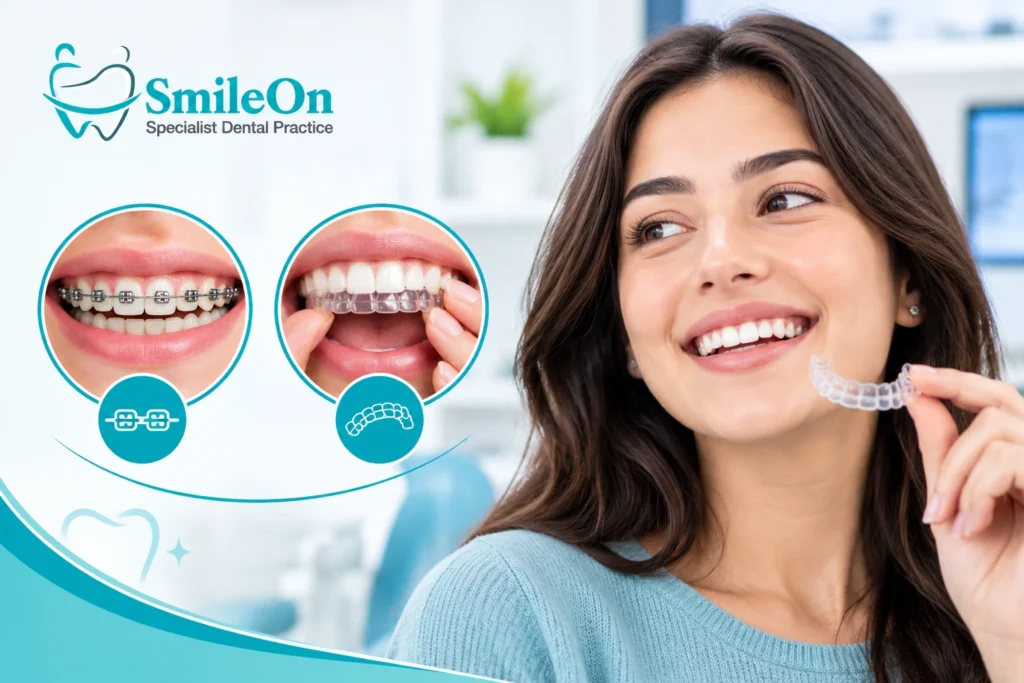
Crooked Teeth Treatment has become more convenient with orthodontic options such as traditional braces and clear aligners. Both methods gradually move teeth into better positions, but they use different techniques and suit different dental needs. Understanding how these treatments work can help you decide what to discuss with your dentist.
At SmileOn Dental, patients can explore suitable orthodontic options based on their dental condition, smile goals, and everyday lifestyle. Before choosing a treatment, it is worth understanding why teeth become crooked and how braces and clear aligners can help correct them.
Why Do Teeth Become Crooked?
Crooked teeth can develop during childhood or become noticeable later in life. In some cases, the problem is related to genetics, while other factors influence how permanent teeth grow and settle into the mouth.
Some common reasons include:
- Genetic factors: Inherited jaw size and tooth dimensions can affect whether teeth have enough room to grow properly.
- Dental crowding: When the jaw is too small to accommodate all the teeth, they may overlap or become rotated.
- Childhood habits: Thumb sucking, prolonged pacifier use, and tongue thrusting can influence tooth positioning.
- Early loss of baby teeth: Losing a baby tooth earlier than expected may allow neighbouring teeth to shift into the available space.
- Impacted teeth: A tooth that cannot emerge normally may affect the position of nearby teeth.
- Changes in dental structure: Tooth loss, gum problems, and age-related changes can contribute to shifting teeth.
Not every crooked smile requires orthodontic treatment. However, when misalignment affects oral hygiene, bite function, or confidence, a dental examination can help determine whether correction is worthwhile.
How Can Crooked Teeth Affect Your Oral Health?
Misaligned teeth are not always painful, which is why some people ignore them for years. However, certain alignment problems can create difficulties that go beyond appearance.
Difficulty Cleaning Between Teeth
When teeth overlap or sit too closely together, toothbrush bristles and dental floss may not reach every surface easily. Plaque can accumulate in these areas, increasing the risk of cavities and gum inflammation.
Uneven Pressure While Chewing
When the upper and lower teeth do not meet correctly, some teeth may receive more pressure than others. This can contribute to uneven tooth wear and chewing discomfort in certain cases.
Increased Risk of Gum Problems
Crowded teeth can make cleaning along the gumline more difficult. Without proper oral hygiene, plaque buildup may contribute to gingivitis and other gum problems.
Changes in Smile Appearance
Overlapping or rotated teeth can make a smile appear uneven. Some individuals become self-conscious about their teeth and avoid smiling naturally in photographs or social situations. Addressing significant alignment problems may improve both dental function and appearance.
How Do Traditional Braces Correct Crooked Teeth?
Traditional braces remain a widely used option for treating different types of dental misalignment. They work through a combination of brackets, wires, and controlled pressure that gradually guides teeth into their planned positions. Unlike removable appliances, braces stay attached to the teeth throughout the treatment period.
The Process of Straightening Teeth With Braces
The treatment begins with a dental examination. The dentist or orthodontist checks the position of the teeth, evaluates the bite, and may recommend dental X-rays or digital scans to understand the underlying structure. Once the treatment plan is ready, the following steps generally take place:
1. Attaching the Brackets
Small brackets are bonded to the front surfaces of the teeth. These brackets act as connection points for the orthodontic wire.
2. Positioning the Orthodontic Wire
A wire is placed through the brackets to apply controlled forces to the teeth. This pressure encourages gradual movement.
3. Making Regular Adjustments
During follow-up appointments, the orthodontist checks the progress and adjusts the appliance when necessary.
4. Monitoring Tooth Movement
The position of the teeth is monitored throughout treatment to ensure they are moving according to the plan.
What Problems Can Braces Help Correct?
Depending on the individual case, traditional braces may be used to treat:
- Crowded and overlapping teeth
- Gaps between teeth
- Rotated or twisted teeth
- Overbite and underbite
- Crossbite
- Certain complex alignment problems
One of the main advantages of braces is that they provide continuous pressure without depending on the patient remembering to wear an appliance. However, patients need to pay attention to oral hygiene and avoid foods that could damage the brackets or wires.
How Do Clear Aligners Straighten Crooked Teeth?
Clear aligners offer another approach to improving tooth alignment. Instead of brackets and wires, this treatment uses a series of transparent, removable trays designed specifically for the patient’s teeth. Each tray makes small adjustments to tooth positioning. As patients move from one aligner to the next, their teeth gradually follow the planned movement.
Understanding the Clear Aligner Process
Clear aligner treatment involves careful planning and regular monitoring.
1. Dental Assessment
The dentist examines the teeth, gums, and bite to determine whether aligners can address the alignment problem.
2. Digital Scanning
A digital scan or impression is taken to create an accurate model of the teeth. This information helps plan the required movements.
3. Custom Treatment Planning
A series of aligners is designed according to the patient’s dental structure and treatment goals.
4. Wearing the Aligners
Patients generally wear their aligners for approximately 20–22 hours each day. They remove them for meals, drinks other than water, and oral hygiene.
5. Changing the Trays
New aligners are introduced according to the dentist’s schedule. Each set continues the gradual movement of the teeth.
6. Regular Dental Check-Ups
Follow-up visits help the dental professional evaluate progress and make any necessary changes to the treatment plan.
Why Do People Choose Clear Aligners?
Clear aligners are particularly appealing to people who prefer a less noticeable orthodontic option.
Some practical advantages include:
- Transparent trays that are less visible when speaking or smiling.
- Removable design that allows patients to eat their usual foods.
- Easier access to teeth during brushing and flossing.
- Smooth material without traditional brackets and wires.
- Custom-made trays designed around individual tooth movements.
However, clear aligners are not suitable for every orthodontic problem. Their success also depends on wearing them for the recommended number of hours each day.
Braces or Clear Aligners: Which Option Should You Choose?
Both treatments can help correct crooked teeth, but the better option depends on the patient’s dental condition. For example, someone with significant crowding or a complicated bite may benefit more from traditional braces. Another person with mild spacing or moderate alignment concerns may be a suitable candidate for clear aligners.
Here is how the two options compare:
| Comparison | Traditional Braces | Clear Aligners |
| Visibility | More noticeable | Less noticeable |
| Design | Brackets and wires | Transparent trays |
| Removable | No | Yes |
| Eating | Some food restrictions | Removed during meals |
| Cleaning | Requires careful cleaning around brackets | Allows normal brushing and flossing |
| Daily responsibility | Remain fixed in place | Requires consistent wear |
| Treatment suitability | Many simple and complex cases | Selected mild, moderate, and some complex cases |
When Should You Consider Braces?
Traditional braces may be recommended when teeth have significant overlap, rotation, or bite-related problems that require detailed control. They are also a practical option for patients who may find it difficult to follow the daily wearing schedule required by removable aligners.
When Are Clear Aligners Worth Considering?
Clear aligners may be a good choice for people who want a discreet treatment and have an alignment problem that can be managed with removable trays.
They are particularly convenient for individuals who prefer fewer changes to their eating and oral hygiene routines. The final decision should always be based on a professional examination rather than appearance alone.
How Long Does It Take to Fix Crooked Teeth?
One of the first questions patients ask before starting orthodontic treatment is how long they will need to wear braces or aligners. There is no fixed timeline because every smile has different requirements. A patient with a few slightly rotated teeth may need less time than someone with severe crowding or a complicated bite.
Several factors influence treatment duration:
- The severity of tooth misalignment
- The amount of movement required
- The patient’s age and dental condition
- The type of orthodontic appliance
- Consistency in following treatment instructions
- Regular attendance at dental appointments
Some mild cases can be completed within several months, while more complex treatments may take two years or longer. Your dentist can provide a more realistic estimate after examining your teeth and preparing a personalized treatment plan.
Can Adults Get Their Crooked Teeth Straightened?
Absolutely. Orthodontic treatment is not just for teenagers. Adults can also improve the alignment of their teeth with braces or clear aligners. Some adults have lived with crooked teeth since childhood, while others notice changes in their alignment over time. Teeth can shift as a result of ageing, tooth loss, gum disease, or changes in the supporting structures.
Before beginning treatment, the dentist needs to assess gum health, tooth stability, existing dental work, and overall oral condition. Healthy teeth and gums are important for successful orthodontic treatment, regardless of age.
What Happens After Braces or Clear Aligner Treatment?
Reaching the end of orthodontic treatment is exciting, but maintaining the results requires attention. Teeth have a natural tendency to shift, particularly during the period after active treatment. This is why retainers are an important part of long-term orthodontic care. A retainer is an appliance that helps hold teeth in their corrected positions. Your dentist may recommend a removable or fixed retainer depending on your dental needs.
To protect your results:
- Wear your retainer according to professional instructions.
- Brush twice daily with fluoride toothpaste.
- Floss between your teeth every day.
- Attend regular dental check-ups.
- Maintain healthy eating and oral hygiene habits.
- Contact your dentist if your retainer becomes damaged or stops fitting properly.
Following these steps can help maintain your new smile for years.
How to Prepare for Crooked Teeth Treatment
Starting orthodontic treatment becomes easier when you understand what to expect. A little preparation can help you feel more comfortable throughout the process.
Consider these points before your first appointment:
Discuss Your Concerns: Explain which teeth you are unhappy with and whether you experience problems with chewing, cleaning, or biting.
Ask About Available Options: Find out whether braces, clear aligners, or another orthodontic appliance would be appropriate for your condition.
Check Your Oral Health: Cavities and gum problems may need attention before orthodontic treatment begins.
Understand the Treatment Plan: Ask about the expected duration, follow-up visits, costs, and aftercare requirements.
Consider Your Daily Routine: Think about whether you can manage the cleaning requirements of braces or consistently wear removable aligners.
Being informed from the beginning can make the treatment process easier to manage.
Start Your Journey Towards a Straighter Smile With SmileOn Dental
Living with crooked teeth does not mean you have to accept alignment problems forever. With modern orthodontic options, many patients can improve the position of their teeth and work towards a more balanced smile.
At SmileOn Dental, patients can explore suitable solutions for crooked and misaligned teeth based on their individual dental requirements. Whether you are considering traditional braces or clear aligners, a professional assessment is the first step towards understanding your options.
Every smile has different needs, so treatment should be planned around your dental condition rather than following a one-size-fits-all approach. Book a consultation with SmileOn Dental to discuss your concerns and find out which orthodontic option may be right for you.
Frequently Asked Questions
1. What Is the Most Effective Treatment for Crooked Teeth?
Traditional braces and clear aligners are two common options. Braces can manage many complex alignment problems, while clear aligners are suitable for selected cases. The most effective option depends on your dental condition.
2. Can Clear Aligners Fix Crooked Teeth Completely?
Clear aligners can correct many types of misalignment when used as prescribed. However, some severe or complicated cases may require traditional braces or alternative orthodontic approaches.
3. Are Braces Better Than Clear Aligners?
Neither option is universally better. Braces may offer greater control for certain complex movements, while aligners provide convenience and a less noticeable appearance. Your orthodontist can help determine the appropriate treatment.
4. How Many Months Does Crooked Teeth Treatment Take?
Treatment may take several months for mild alignment concerns or two years and sometimes longer for complex cases. The exact duration depends on the amount of tooth movement required.
5. Can I Fix Crooked Teeth Without Metal Braces?
Yes. Clear aligners and other orthodontic appliances may correct certain alignment problems without traditional metal braces. A dental assessment is necessary to determine suitability.
6. Does Straightening Crooked Teeth Improve Oral Hygiene?
Properly aligned teeth may be easier to brush and floss because there are fewer overlapping areas where plaque and food particles can accumulate. Good oral hygiene is still necessary after treatment.
7. Can Crooked Teeth Become Straight Again Without Treatment?
Permanent teeth generally do not correct significant alignment problems on their own. Braces and aligners use controlled orthodontic forces to move teeth into planned positions.
8. Do I Need to Wear Retainers After Orthodontic Treatment?
Yes, retainers are generally recommended after braces or clear aligner treatment. They help prevent teeth from gradually shifting back towards their previous positions.
Conclusion
Crooked teeth can affect your smile, make cleaning more difficult, and sometimes contribute to bite-related problems. Fortunately, traditional braces and clear aligners provide effective ways to address many orthodontic concerns.
The right treatment depends on the severity of misalignment, your oral health, and your everyday needs. By understanding the available options and seeking professional advice, you can make a more confident decision about your dental care. With the right treatment plan and consistent aftercare, achieving and maintaining a straighter smile becomes a realistic goal.