Many parents wonder about the best age to get braces for their children. Adults considering orthodontic treatment often have the same question: “Am I too old for braces?”
There is no single perfect age for orthodontic treatment. Children should ideally have their first orthodontic evaluation around the age of seven, while full braces are commonly started between 11 and 14 years of age, when most permanent teeth have erupted. Adults can also get braces when their teeth, gums, and supporting bone are healthy.
At SmileOn Dental Clinic in Johar Town, Lahore, orthodontic patients are assessed by Dr. Fahad Chaudhry, Consultant Orthodontist, who evaluates the teeth, bite, jaw development, and overall oral health before recommending the appropriate time for treatment.
Why Is Age Seven a Good Time for an Orthodontic Check-Up?
The American Association of Orthodontists recommends that children have their first orthodontic check-up by age seven. At this stage, children usually have a mixture of baby teeth and permanent teeth, allowing an orthodontist to assess how their teeth and jaws are developing.
An orthodontic check-up at seven does not necessarily mean your child needs braces immediately. In many cases, the orthodontist may simply monitor dental development and recommend treatment when the timing is more suitable.
An early orthodontic assessment can help identify:
- Severe dental crowding
- Protruding front teeth
- Crossbite
- Underbite
- Significant overbite
- Narrow upper jaw
- Teeth erupting in the wrong position
- Early or delayed loss of baby teeth
- Jaw growth concerns
Early detection gives the orthodontist an opportunity to determine whether treatment is needed and when it should begin.
What Is the Best Age to Get Braces for Children?
For many children, the most suitable age to start full braces is between 11 and 14 years. By this stage, most permanent teeth have erupted, making it easier to correct problems with tooth alignment and bite.
There are several reasons why this age range is commonly recommended:
- Most permanent teeth have erupted
- The jaws and facial structures are still developing
- Teeth can often be guided more effectively during growth
- Teenagers generally adapt well to orthodontic appliances
- Bite and alignment problems can be addressed before adulthood
However, age alone does not determine when braces should begin. Every child develops differently. The ideal timing depends on the position of the teeth, the severity of crowding, the type of bite problem, jaw development, and overall oral health. At SmileOn Dental Clinic, orthodontic treatment is planned according to each patient’s individual dental needs rather than age alone.
When Does a Child Need Early Orthodontic Treatment?
Some children may benefit from orthodontic treatment before all of their permanent teeth have erupted. Early or interceptive orthodontic treatment may be recommended when an orthodontist identifies a developing problem that could become more difficult to manage later.
Early treatment may be considered for children with:
- Crossbite that may affect jaw development
- Developing underbite
- Severe dental crowding
- Narrow upper jaw
- Protruding front teeth
- Difficulty biting or chewing
- Abnormal jaw development
- Certain problems with permanent teeth erupting
Early orthodontic treatment does not always eliminate the need for braces later. Some children may receive early treatment to guide jaw or tooth development and require another phase of orthodontic treatment when their permanent teeth have erupted. An orthodontic evaluation can help determine whether your child needs early treatment or simply regular monitoring.
What Is the Best Age for Braces for Teenagers?
The teenage years are one of the most common times to begin orthodontic treatment. Most permanent teeth have erupted, while the jaws are still developing.
Braces for teenagers can help correct several common orthodontic problems, including:
- Crooked teeth
- Crowded teeth
- Gaps between teeth
- Protruding front teeth
- Overbite
- Underbite
- Crossbite
- Poor bite alignment
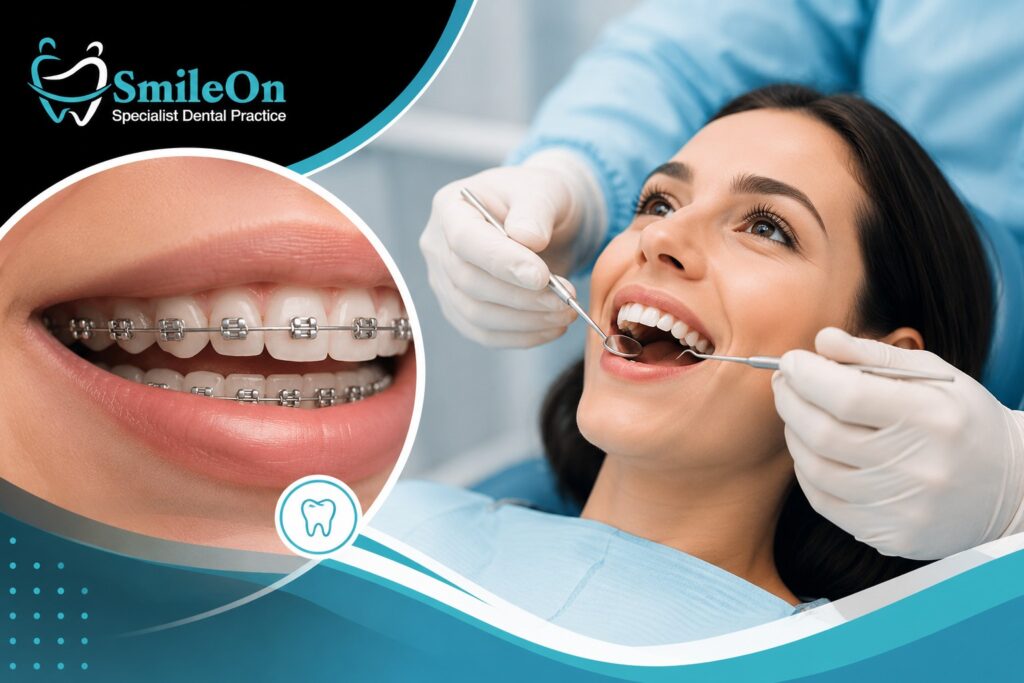
Depending on the patient’s condition and treatment goals, teenagers may be suitable for traditional metal braces, ceramic braces, or clear aligners. Dr. Fahad Chaudhry, Consultant Orthodontist at SmileOn Dental Clinic, evaluates the patient’s teeth and bite before recommending the most appropriate orthodontic treatment option.
Can Adults Get Braces?
Yes. There is no maximum age for braces. Adults can undergo orthodontic treatment in their twenties, thirties, forties, fifties, or later, provided they have healthy teeth and gums.
Adult orthodontic treatment can help improve:
- Crowded teeth
- Crooked teeth
- Gaps between teeth
- Protruding teeth
- Certain bite problems
- Overall tooth alignment
Before starting braces, some adults may need treatment for existing dental problems. This can include professional cleaning, fillings, gum treatment, or treatment for dental infections.
If you are considering braces in Lahore as an adult, an orthodontic consultation can help determine whether you are a suitable candidate and which treatment option may work best for you.
Do Teeth and Gums Need to Be Healthy Before Braces?
Yes. Maintaining good oral health is important before and throughout orthodontic treatment. Braces can make brushing and flossing around the teeth more challenging. If tooth decay, gum disease, or an active dental infection is present, these problems may need to be treated before braces are fitted.
At SmileOn Dental Clinic in Lahore, your teeth and gums are assessed before orthodontic treatment begins. If necessary, your dentist may recommend completing other dental treatments first. Good oral hygiene during braces can help reduce the risk of tooth decay, gum problems, and white spots developing around orthodontic brackets.
What Are the Signs You May Need Braces?
You or your child may benefit from an orthodontic consultation if you notice:
- Crowded or overlapping teeth
- Large gaps between teeth
- Protruding front teeth
- Difficulty biting or chewing
- Upper and lower teeth that do not meet correctly
- Early or delayed loss of baby teeth
- The jaw shifting when biting
- Difficulty cleaning between crooked teeth
- Concerns about the appearance of the smile
Some orthodontic problems are not obvious without a professional examination. An orthodontist can assess your bite, tooth alignment, and jaw development to determine whether braces are necessary.
How Long Does Braces Treatment Take?
The length of orthodontic treatment varies from person to person. In many cases, braces treatment may take around 12 months to two and a half years, although some complex cases can take longer.
Treatment time may depend on:
- Severity of the orthodontic problem
- Type of braces used
- Amount of tooth movement required
- Patient’s age and dental development
- Attendance at adjustment appointments
- Patient cooperation
- Oral hygiene during treatment
Following your orthodontist’s instructions and attending scheduled appointments can help keep treatment on track. After braces are removed, retainers are usually recommended to help maintain the new position of the teeth. Wearing retainers as instructed is an important part of long-term orthodontic care.
Get Braces in Lahore at SmileOn Dental Clinic
If you are looking for braces treatment in Lahore, SmileOn Dental Clinic in Johar Town provides personalised orthodontic care for children, teenagers, and adults.
Dr. Fahad Chaudhry, Consultant Orthodontist, carefully evaluates the patient’s teeth, bite, jaw development, and oral health before creating an appropriate treatment plan. Dental photographs, scans, and X-rays may be recommended when clinically necessary.
Whether your child needs an early orthodontic assessment or you are considering braces as an adult, the right treatment timing can make a significant difference.
Book a consultation with Dr. Fahad Chaudhry at SmileOn Dental Clinic to find out whether braces are right for you or your child.