Wisdom teeth are the last set of teeth to develop at the back of the mouth, usually appearing during the late teenage years or early adulthood. Some people experience wisdom tooth pain, swelling, infection, or difficulty chewing, while others never develop any problems.
So, do all wisdom teeth need to be removed? No. Not every wisdom tooth requires extraction. If a wisdom tooth has erupted properly, remains healthy, can be cleaned easily, and does not damage nearby teeth, a dentist may recommend monitoring it instead of removing it.
However, wisdom teeth can sometimes cause problems without obvious symptoms. Regular dental check-ups and X-rays can help identify potential issues early.
What Are Wisdom Teeth?
Wisdom teeth, also called third molars, are located at the very back of the upper and lower jaws. Most people develop up to four wisdom teeth, although some people develop fewer or none at all. When there is enough space in the jaw, wisdom teeth can emerge normally and function like other molars. However, many people do not have sufficient space for these teeth to grow properly.
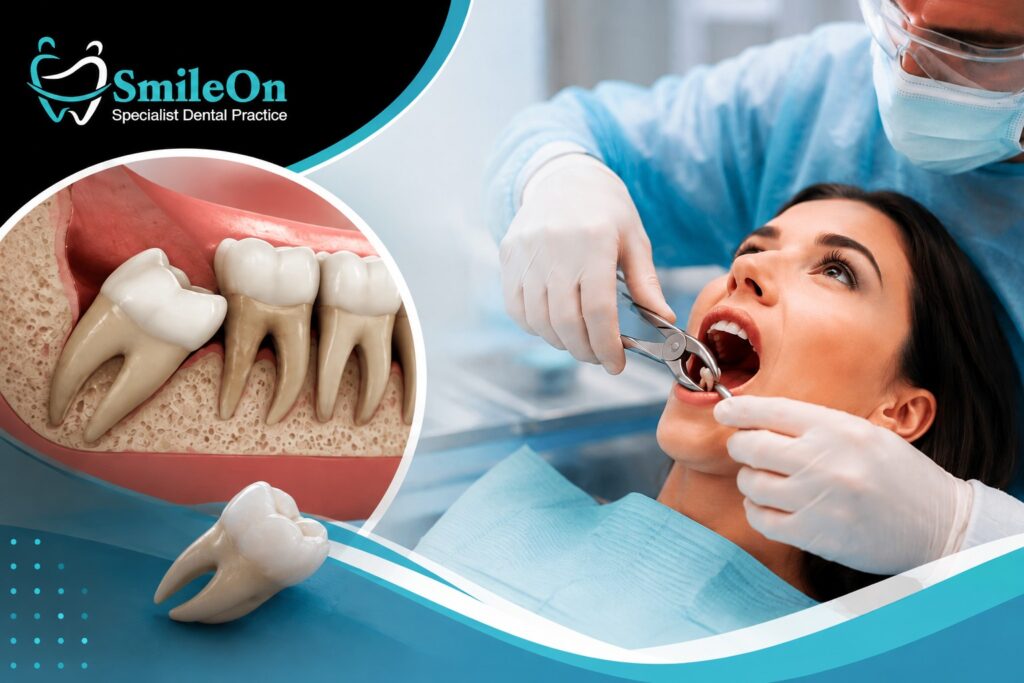
A wisdom tooth may become trapped under the gum or bone, grow at an unusual angle, or partially emerge through the gums. This condition is known as an impacted wisdom tooth. An impacted tooth does not always cause immediate symptoms, but it may create oral health problems over time.
When Can Wisdom Teeth Stay?
Not every wisdom tooth needs to be removed. A dentist may recommend keeping a wisdom tooth if it:
- Has fully erupted through the gums
- Is positioned upright and correctly
- Does not cause pain or swelling
- Has no signs of infection
- Does not damage neighbouring teeth
- Can be brushed and flossed properly
- Has no significant tooth decay
- Is not contributing to gum disease
Even when wisdom teeth appear healthy, regular dental examinations are important. Your dentist can monitor their condition and identify changes before they become serious.
When Do Wisdom Teeth Need to Be Removed?
A dentist or oral surgeon may recommend wisdom tooth removal when the tooth causes pain, infection, damage, or other risks to your oral health.
1. Repeated Wisdom Tooth Pain
Persistent or recurring pain at the back of the mouth can indicate a problem with a wisdom tooth. The pain may be mild at first but can become more uncomfortable over time. Wisdom tooth pain may occur because the tooth is impacted, pressing against another tooth, affected by decay, or surrounded by inflamed gum tissue.
In some cases, discomfort can extend toward the jaw, ear, head, or throat. A dental examination can help determine the underlying cause.
2. Swollen or Infected Gums
A partially erupted wisdom tooth can leave a small flap of gum tissue around the tooth. Food particles and bacteria can become trapped underneath this tissue and cause inflammation or infection.
This condition is commonly known as pericoronitis.
Symptoms may include:
- Pain and swelling around the wisdom tooth
- Red or bleeding gums
- Bad breath or an unpleasant taste
- Pain while chewing
- Difficulty opening the mouth
- Pain when swallowing
- Swelling around the jaw or face
If infections continue to return, your dentist may recommend wisdom tooth extraction to prevent further complications.
3. Impacted Wisdom Teeth
An impacted wisdom tooth cannot emerge normally because it is blocked by bone, gum tissue, or another tooth.
Some impacted wisdom teeth remain symptom-free, while others can cause:
- Pain
- Infection
- Tooth decay
- Gum disease
- Damage to neighbouring teeth
- Cysts or other dental complications
Your dentist may recommend dental X-rays to determine the position of an impacted tooth and assess its relationship with nearby teeth and structures.
4. Tooth Decay
Wisdom teeth are located at the back of the mouth, making them harder to reach with a toothbrush and floss. This can allow plaque and food particles to accumulate around them. As a result, wisdom teeth can develop cavities. In some cases, decay can also affect the second molar next to the wisdom tooth. If a wisdom tooth is difficult to clean or cannot be restored effectively, extraction may be a suitable treatment option.
5. Damage to the Neighbouring Tooth
An impacted wisdom tooth may grow sideways or at an angle toward the second molar. Continued pressure or food accumulation between the teeth can contribute to decay and gum problems. In some situations, the wisdom tooth can damage the roots or supporting structures of the neighbouring molar. Removing the problematic wisdom tooth may help protect the nearby healthy tooth.
6. Gum Disease
Poorly positioned or partially erupted wisdom teeth can create areas that are difficult to clean. Bacteria may build up around these teeth and contribute to gum inflammation. Over time, this can lead to gum pockets, infection, and periodontal problems. The neighbouring molar may also be affected. If a wisdom tooth is contributing to ongoing gum disease, your dentist may recommend removing it.
Should Pain-Free Wisdom Teeth Be Removed?
A pain-free wisdom tooth does not automatically need to be removed. However, the absence of pain does not necessarily mean that the tooth is completely healthy. Problems such as decay, gum disease, or damage to a neighbouring tooth may develop without noticeable symptoms.
For this reason, dentists consider several factors before recommending extraction. These include the position of the wisdom tooth, its condition, the surrounding teeth, and whether the area can be kept clean. If the wisdom teeth are healthy and properly positioned, your dentist may recommend regular monitoring instead of immediate extraction.
How Does a Dentist Decide Whether to Remove a Wisdom Tooth?
The decision to remove or retain a wisdom tooth depends on your individual oral health. Your dentist or oral surgeon may consider:
- The position and angle of the tooth
- Whether the tooth is fully or partially erupted
- Signs of pain or repeated infection
- The condition of neighbouring teeth
- Your ability to clean around the tooth
- Tooth decay or gum disease
- The presence of an abscess
- The patient’s age and overall oral health
- The results of dental X-rays
A clinical examination combined with appropriate dental imaging can help your dentist understand the position of the tooth and recommend the most suitable treatment.
What Happens If a Problematic Wisdom Tooth Is Not Removed?
If a wisdom tooth is causing problems and remains untreated, the condition may become more complicated.
Potential problems can include:
- Repeated pain and swelling
- Gum infections
- Tooth decay
- Bad breath or unpleasant taste
- Damage to neighbouring teeth
- Gum disease
- Dental abscesses
- Difficulty opening the mouth
This does not mean every problematic wisdom tooth must be removed immediately. Your dentist will assess the tooth and determine whether monitoring, treatment, or extraction is appropriate.
What Are the Treatment Options for Wisdom Teeth?
Treatment depends on the condition and position of the tooth.
Monitoring
Healthy wisdom teeth may simply need regular dental examinations and X-rays. Your dentist can monitor them for signs of decay, infection, or other changes.
Treating Infection
If the gum around a wisdom tooth becomes infected, your dentist may first manage the infection and inflammation. Further treatment depends on the underlying cause.
Wisdom Tooth Extraction
If a wisdom tooth is repeatedly infected, severely decayed, impacted, or damaging another tooth, extraction may be recommended.
The procedure may involve removing the tooth normally or performing a surgical extraction when the tooth is impacted. Your dentist or oral surgeon will explain the procedure, recovery process, and aftercare instructions before treatment.
When Should You See a Dentist About Wisdom Tooth Pain?
You should arrange a dental examination if you experience:
- Persistent pain at the back of your mouth
- Swelling around a wisdom tooth
- Repeated gum infections
- Difficulty chewing
- Difficulty opening your mouth
- Bad taste or discharge around the tooth
- Facial or jaw swelling
- Pain that spreads toward the ear or jaw
- Fever or feeling generally unwell
Severe swelling, worsening pain, fever, or difficulty swallowing requires prompt professional dental assessment.
Wisdom Tooth Extraction in Lahore at SmileOn Dental Clinic
If you are looking for wisdom tooth extraction in Lahore, SmileOn Dental Clinic provides professional assessment and treatment for patients experiencing wisdom tooth problems.
At SmileOn Dental Clinic, wisdom tooth cases are carefully assessed by Dr. Ali Farooq, an oral surgeon. He evaluates the position and condition of the wisdom tooth and may recommend appropriate dental X-rays to determine whether the tooth can be monitored or requires extraction.
The clinic focuses on patient comfort, modern dental facilities, appropriate treatment planning, and strict sterilisation practices. Each wisdom tooth case is assessed individually to determine the most suitable treatment approach. If you are experiencing wisdom tooth pain, swelling, repeated infection, or difficulty opening your mouth, schedule a dental consultation with SmileOn Dental Clinic for a professional evaluation.
Final Thoughts
Not all wisdom teeth need to be removed. Healthy wisdom teeth that have erupted properly, can be cleaned effectively, and are not causing problems may be monitored through regular dental check-ups. However, wisdom tooth removal may be recommended when there is persistent pain, infection, impaction, decay, gum disease, or damage to a neighbouring tooth.
The best approach depends on your individual oral health. A dental examination and appropriate X-rays can help determine whether your wisdom tooth should be monitored, treated, or removed. If you are experiencing wisdom tooth symptoms, do not wait for the problem to become more severe. Book a consultation with SmileOn Dental Clinic in Lahore to have your wisdom teeth professionally assessed.