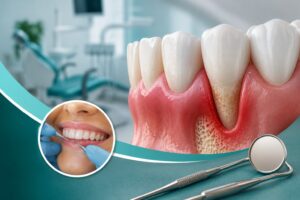
Missing teeth can affect much more than your smile. They may make it difficult to chew food, change the way you speak, and gradually affect the position of nearby teeth. Fortunately, modern dentistry offers several effective ways to replace missing teeth.
The three most common options are dental implants, dentures, and dental bridges. Each treatment has its own benefits, limitations, cost considerations, and suitability depending on your oral health and personal needs. So, which option is best for missing teeth? The answer depends on factors such as the number of missing teeth, the condition of your gums and jawbone, your budget, and your long-term expectations.
What Are the Main Options for Replacing Missing Teeth?
When a tooth is lost, your dentist may recommend one of several replacement solutions:
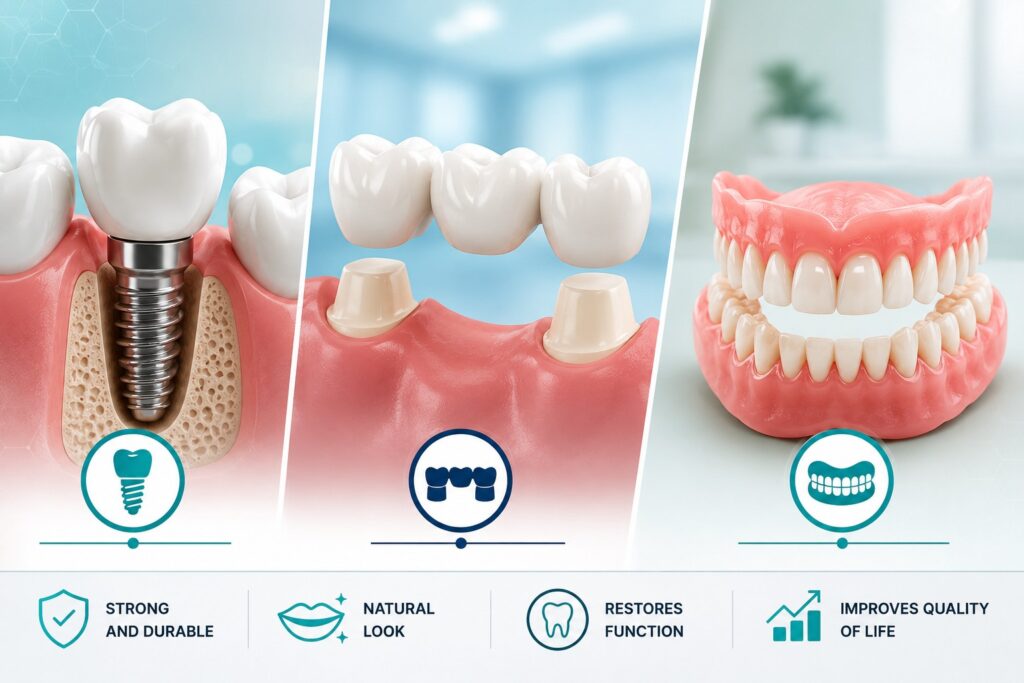
- Dental implants: Artificial tooth roots placed into the jawbone and topped with crowns, bridges, or dentures.
- Dental bridges: Fixed dental restorations that replace one or more missing teeth by using neighboring teeth for support.
- Dentures: Removable appliances designed to replace several missing teeth or an entire set of teeth.
Although all three options can restore your smile, they work in different ways.
Dental Implants
Dental implants are one of the most advanced solutions for replacing missing teeth. An implant consists of a small titanium or other biocompatible post that is placed into the jawbone. Once the implant has healed and integrated with the bone, a dental crown is attached to restore the visible tooth.
Benefits of Dental Implants
Dental implants offer several advantages for suitable patients.
- Natural appearance: A properly designed implant-supported crown can closely resemble a natural tooth.
- Strong and stable: Because the implant is anchored in the jawbone, it does not normally move around while eating or speaking.
- Long-term solution: With proper oral hygiene and regular dental checkups, dental implants can provide a long-lasting tooth replacement.
- Helps preserve jawbone: Tooth loss can contribute to gradual bone loss. An implant transfers chewing forces to the jawbone and can help maintain bone structure.
- No need to remove them: Unlike removable dentures, implants are designed to remain in place.
Possible Limitations of Dental Implants
Dental implants are not suitable for everyone immediately. Patients need sufficient bone support and healthy gums, and certain dental or general health factors may affect treatment planning. The procedure also takes longer than some other tooth replacement options because healing and implant integration require time.
Dental Bridges
A dental bridge is a fixed restoration used to replace one or more missing teeth. The artificial tooth, known as a pontic, is supported by crowns attached to neighboring teeth or other appropriate structures. For example, if you have one missing tooth between two healthy teeth, a traditional bridge may be considered.
Benefits of Dental Bridges
- Fixed replacement: A bridge remains attached to the teeth and does not need to be removed for everyday use.
- Faster treatment: Compared with implant treatment, a traditional dental bridge may often be completed in fewer appointments.
- Natural-looking results: Modern bridges can be designed to blend with the surrounding teeth.
- Useful for certain patients: Bridges can be an option when a patient is not a suitable candidate for an implant or prefers a different treatment.
Possible Limitations of Dental Bridges
Traditional bridges usually require the supporting teeth to be prepared. This means some healthy tooth structure may need to be removed. A bridge also does not replace the natural tooth root. As a result, it does not provide the same type of stimulation to the jawbone as a dental implant. Good oral hygiene is especially important around and underneath a bridge to help prevent plaque buildup and gum problems.
Dentures
Dentures are removable dental appliances that replace multiple missing teeth or all teeth in an arch. They can be either partial or complete.
- Partial dentures replace some missing teeth while the patient still has natural teeth remaining.
- Complete dentures replace all teeth in the upper or lower arch.
Benefits of Dentures
- Replace multiple teeth: Dentures can replace several missing teeth at once.
- Removable: They can be taken out for cleaning and maintenance.
- No implant surgery: Traditional dentures do not require surgical placement of implants.
- Can be cost-effective: Depending on the type of restoration, dentures may have a lower initial cost than some implant-based treatments.
Possible Limitations of Dentures
Dentures can take some time to get used to. New users may initially notice changes in speaking, chewing, or the way the appliance feels. Traditional dentures can also move slightly during eating or speaking, particularly when there is limited natural support. Proper cleaning is essential because food particles and plaque can collect around dentures and affect oral health.
Dental Implants vs Dentures vs Dental Bridges
The right treatment depends on your individual situation. Here is a simple comparison:
| Feature | Dental Implants | Dental Bridges | Dentures |
|---|---|---|---|
| Fixed or removable | Fixed | Fixed | Usually removable |
| Can replace one tooth | Yes | Yes | Usually partial denture |
| Can replace multiple teeth | Yes | Yes | Yes |
| Requires surgery | Usually | No | No |
| Uses neighboring teeth | No | Usually yes | May use remaining teeth |
| Helps support jawbone | Yes | No | No |
| Treatment time | Usually longer | Usually shorter | Varies |
| Maintenance | Similar to natural teeth | Requires careful cleaning | Requires removal and cleaning |
| Initial cost | Usually higher | Moderate | Often lower |
This comparison provides a general overview. Your dentist can recommend the most appropriate option after examining your teeth, gums, bite, and jawbone.
Which Is Better: Dental Implants or Bridges?
Dental implants and bridges can both be excellent options for replacing a missing tooth, but they have important differences. An implant replaces the tooth root as well as the visible tooth. A traditional bridge replaces the visible tooth but generally relies on neighboring teeth for support.
For patients with healthy gums and adequate bone, an implant may offer a more independent and long-term solution. However, a bridge may be preferable when treatment needs to be completed more quickly or when the neighboring teeth already require crowns. The best choice should be based on your oral health rather than simply choosing the most advanced treatment.
Which Is Better: Dentures or Dental Implants?
Dentures and implants serve different needs. If several or all teeth are missing, dentures can provide a practical way to restore chewing and appearance without implant surgery. However, conventional dentures may move during eating or speaking.
Implant-supported dentures can provide additional stability. In this approach, implants are used to help secure the denture. For patients who are suitable candidates, implant-supported restorations can provide improved stability compared with traditional removable dentures.
How Much Do Dental Implants, Bridges, and Dentures Cost?
The cost of replacing missing teeth varies from patient to patient. It can depend on:
- Number of teeth being replaced
- Type and quality of restoration
- Materials used
- Condition of the gums
- Amount of available jawbone
- Whether additional procedures are required
- Dentist’s experience and treatment location
Dental implants often have a higher initial treatment cost because the process can involve implant placement, healing, and a final crown or other restoration. Dentures and bridges may have a lower initial cost, but the overall value of treatment should also consider durability, maintenance, comfort, and future replacement needs. For an accurate estimate, it is best to have a dental examination and discuss your treatment options with your dentist.
How Do You Know Which Treatment Is Right for You?
There is no single replacement option that is best for every patient. Your dentist will usually consider several factors before recommending treatment.
Number of Missing Teeth
Replacing one missing tooth may involve an implant or bridge. Patients missing several teeth may consider bridges, partial dentures, implants, or implant-supported restorations.
Gum Health
Healthy gums are important for successful tooth replacement. Gum disease may need to be treated before certain restorative procedures.
Jawbone Condition
Dental implants require adequate bone support. If there has been significant bone loss, additional treatment may sometimes be recommended before implant placement.
Your Budget
Cost is an important consideration for many patients. Your dentist can explain the upfront and long-term costs associated with each option.
Lifestyle and Comfort
Some people prefer a fixed restoration that stays in place, while others may prefer the flexibility of a removable denture.
Long-Term Goals
Consider how you want your replacement teeth to look, feel, and function several years from now. A dentist can help you compare the short-term and long-term advantages of each treatment.
What Happens If Missing Teeth Are Not Replaced?
Leaving a missing tooth untreated may create additional dental concerns over time. Nearby teeth can gradually shift into the empty space, which may affect your bite. Missing teeth can also make chewing more difficult. In some cases, tooth loss is associated with changes in the jawbone over time. Replacing missing teeth can help restore oral function and support a balanced smile.
Why Professional Dental Evaluation Matters
Online information can help you understand your options, but it cannot determine which treatment is suitable for your mouth. A dentist may examine your teeth and gums and may recommend dental X-rays or other imaging when necessary. This allows the dental team to assess the condition of the teeth, bone, and surrounding structures.
At SmileOn Dental Care, patients can discuss their concerns about missing teeth and explore suitable restorative options based on their individual dental needs.
Final Thoughts
Choosing between dental implants, dentures, and dental bridges is an important decision. Dental implants can offer excellent stability and a long-term solution for suitable patients. Dental bridges can provide a fixed replacement without implant surgery, while dentures can be a practical option for replacing multiple or all missing teeth. The best choice depends on your oral health, number of missing teeth, bone condition, budget, lifestyle, and long-term goals.
If you are unsure which option is right for you, schedule a consultation with SmileOn Dental Care. A professional dental assessment can help you understand your choices and select a treatment plan designed around your smile and oral health.