Missing teeth can affect more than just your appearance. A gap in your smile may gradually affect the way you chew, the position of nearby teeth, your bite, and your ability to maintain good oral hygiene. Understanding the effects of missing teeth can help you decide when to seek professional dental advice.
Whether you have recently lost a tooth or have been living with a gap for years, it is important to understand the potential impact on your oral health.
Can One Missing Tooth Cause Problems?
Yes. Even one missing tooth can cause changes over time. The effects may not be noticeable immediately, but the teeth surrounding the empty space can gradually move or tilt towards the gap. This may affect the way your upper and lower teeth meet when you bite.
As nearby teeth shift, food particles may become trapped in areas that were previously easy to clean. Over time, this can increase the risk of plaque build-up, tooth decay, gum problems, and other dental concerns. The right missing teeth treatment depends on the location of the missing tooth, how long it has been absent, the condition of your surrounding teeth and gums, and your overall oral health.
How Missing Teeth Can Affect Your Oral Health
1. Nearby Teeth May Shift
Your teeth help support and maintain each other’s position. When one tooth is missing, the neighbouring teeth may gradually move towards the empty space. The tooth opposite the gap may also move because it no longer has a tooth to bite against. Over time, this movement can lead to new gaps, crowding, or changes in your bite. These changes may also make future treatment more complicated if the space becomes smaller.
2. Chewing May Become Less Efficient
Different teeth have different functions. Molars and premolars, for example, play an important role in chewing food. When one of these teeth is missing, you may avoid chewing on that side of your mouth or find certain foods uncomfortable to eat. This can cause you to rely more heavily on the opposite side of your mouth. Over time, this may make eating less comfortable and place additional pressure on other teeth.
3. Gum Health Can Be Affected
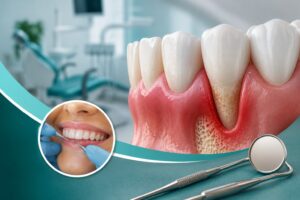
A gap caused by a missing tooth can sometimes become difficult to clean properly, particularly if the surrounding teeth begin to move. Food particles and plaque may collect around the neighbouring teeth and gums. If oral hygiene is not maintained, this may contribute to bleeding gums, bad breath, tooth decay, or gum disease.
Good brushing and cleaning between the teeth remain important. However, replacing a missing tooth may also help make the area easier to manage as part of your daily oral hygiene routine.
4. Bone Support May Reduce Over Time
The jawbone is stimulated when you bite and chew. After a tooth is lost, the bone in that area may gradually reduce because it is no longer supporting a natural tooth root. This process does not happen overnight, but it is one reason why it can be helpful to discuss treatment options sooner rather than later.
Changes in bone support may affect the appearance of the gumline and can also influence the treatment options available in the future.
5. Speech and Confidence Can Change
A missing front tooth may affect the way some words sound, particularly if the gap changes the way your tongue meets your teeth. Missing teeth can also affect confidence. Some people may feel self-conscious when smiling, speaking, or eating in public.
Replacing a missing tooth is not only about appearance. Depending on the treatment option, it may also help restore comfort and everyday function.
What are the Options for Missing Teeth Treatment?
There is no single treatment that is suitable for everyone. Your dentist will assess the missing tooth, surrounding teeth, gums, bite, and long-term oral health needs before recommending an appropriate option.
Dental Implants
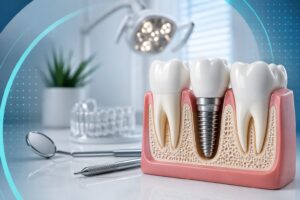
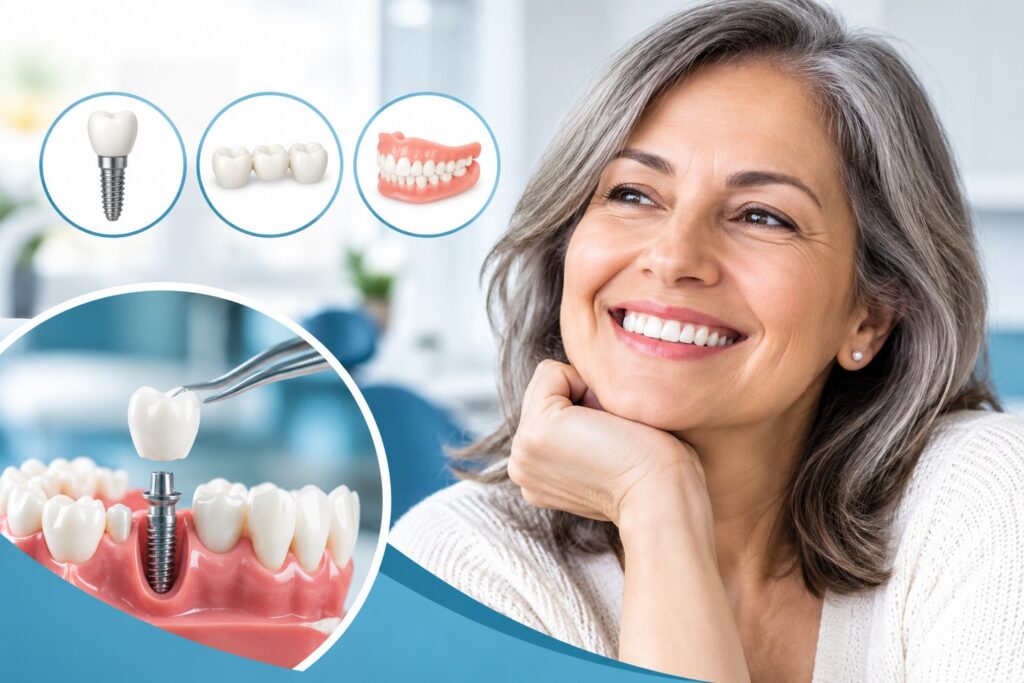
A dental implant replaces the root of a missing tooth and can support a crown, bridge, or denture. It is a fixed treatment option and does not rely on neighbouring teeth for support. However, suitability can depend on factors such as gum health, bone support, medical history, and healing.
Dental Bridges
A dental bridge can replace a missing tooth by using the surrounding teeth for support. This option may be considered when the neighbouring teeth already require crowns or when a dental implant is not suitable.
Partial Dentures
A removable partial denture can replace one or more missing teeth. It may be considered when several teeth are missing or when a fixed treatment option is not appropriate for the patient’s individual needs.
Full Dentures
When all teeth in an arch are missing, complete dentures may help restore appearance and everyday function. Some patients may also explore implant-supported dentures, which can provide additional stability depending on their individual oral health and treatment suitability.
When Should You See a Dentist?
You should consider arranging a dental assessment if you have:
- Recently lost a tooth
- An old gap that appears to be changing
- Difficulty chewing
- Food regularly getting trapped between teeth
- Changes in your bite
- Gum problems
- Loose or shifting teeth
If a tooth has been knocked out because of an injury, seek dental care as soon as possible. Severe pain, facial swelling, fever, difficulty swallowing, or difficulty breathing may require urgent medical or dental attention.
Missing Teeth Treatment in Lahore
If you are looking for missing teeth treatment in Lahore, it is important to have the affected area assessed before choosing a treatment option. At SmileOn Dental Care in Johar Town, Lahore, your dentist can assess the gap, surrounding teeth, gum health, bite, and available bone support before discussing suitable treatment options.
Depending on your individual needs, treatment options may include dental implants, bridges, or dentures. The aim is to restore function while considering your long-term oral health needs.
Frequently Asked Questions
Can missing teeth cause other teeth to move?
Yes. Teeth surrounding a missing tooth may gradually shift or tilt into the empty space. This can affect your bite and may create areas that are more difficult to clean.
What is the best missing teeth treatment?
The most suitable treatment depends on your individual oral health. Dental implants, bridges, and dentures each have different benefits and limitations. A dental examination can help determine which option may be appropriate for you.
Can I get treatment years after losing a tooth?
In many cases, treatment may still be possible. However, the condition of the surrounding teeth, gums, and bone should be assessed first. Long-standing gaps may require more detailed treatment planning.
Can a missing tooth affect the jawbone?
After a tooth is lost, the bone in that area may gradually change over time. The extent of these changes can vary, which is why an individual dental assessment is important.
Is it important to replace a missing tooth?
The need for treatment can depend on several factors, including the location of the missing tooth, your bite, oral health, and the condition of surrounding teeth. A dentist can help you understand the most suitable options.
Don’t Ignore a Missing Tooth
A missing tooth can affect more than the appearance of your smile. Over time, it may influence chewing, bite alignment, gum health, and the position of nearby teeth. If you have a gap in your smile, an early assessment can help you understand the available missing teeth treatment options before further changes develop.