Professional teeth whitening can give your smile a noticeably brighter appearance in just one appointment. However, your food and drink choices after treatment can affect comfort and help you maintain your results.
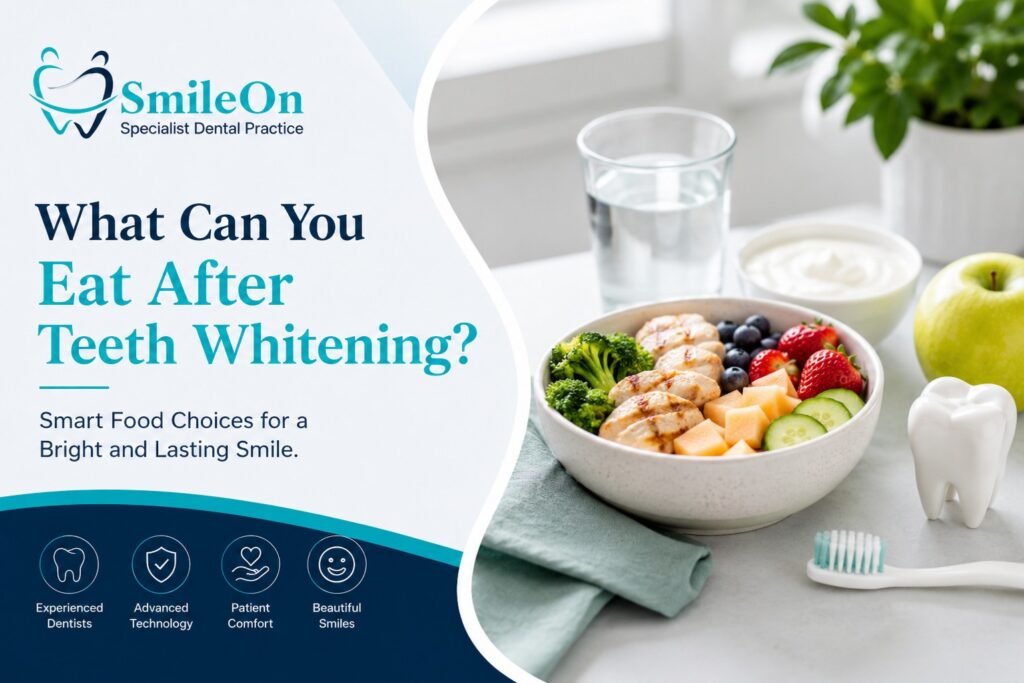
So, what can you eat after teeth whitening? The best choices are mild, lightly coloured foods that are gentle on sensitive teeth. During the first 24 to 48 hours, dentists generally recommend limiting strongly coloured, acidic and very hot or cold foods and drinks.
At SmileOn Dental Clinic in Lahore, patients receive personalized aftercare guidance based on their treatment and oral health. Knowing what to eat after teeth whitening can make the recovery period more comfortable and help you protect your brighter smile.
What to Eat and Avoid After Professional Teeth Whitening
After professional teeth whitening, choose mild, lightly coloured foods that are gentle on your teeth. Plain rice, eggs, grilled chicken, baked fish, yogurt, mashed potatoes, plain pasta, bread and mild vegetables are good options. If you experience sensitivity, choose foods at a comfortable temperature and avoid very hot or cold meals.
For the first 24 to 48 hours, try to avoid strongly coloured or acidic foods and drinks. Tea, coffee, turmeric, biryani, dark curries, tomato sauces, cola, coloured sweets and citrus drinks may contribute to staining or discomfort. Drinking water and following your dentist’s aftercare advice can help you stay comfortable and protect your brighter smile.
What Can You Eat After Teeth Whitening?
Choosing simple foods can make eating more comfortable after your whitening appointment. Here are some suitable options to consider.
Plain Rice
Plain white rice is an easy option after teeth whitening. It has a light colour and can be paired with mild foods such as lightly seasoned chicken. Avoid adding turmeric, dark spices or strongly coloured sauces.
Chicken and Fish
Grilled, boiled or baked chicken can provide a good source of protein without adding strong colours to your meal. You can also choose grilled or baked fish with mild seasoning. Avoid dark marinades and heavily spiced sauces.
Eggs
Boiled, poached or scrambled eggs are soft and easy to eat. They can also be useful if your teeth feel sensitive after treatment. Allow hot foods to cool to a comfortable temperature before eating.
Plain Yogurt
Plain yogurt is a mild option that may be comfortable when your teeth feel sensitive. Choose plain varieties rather than brightly coloured or fruit-filled products. Avoid very cold yogurt if cold temperatures trigger sensitivity.
Potatoes
Mashed or boiled potatoes are another simple choice. Keep the seasoning light and avoid coloured sauces.
Plain Pasta
Plain pasta can work well after whitening. Choose a light-coloured sauce instead of tomato-based or dark sauces.
Bread, Naan and Roti
Plain bread, naan or roti can be included in your meals. Avoid adding strongly coloured chutneys, pickles or dark sauces.
Mild Fruits
Some lighter fruits can be suitable after whitening. Bananas, pears and peeled apples are generally less pigmented than darker fruits. If acidic foods cause sensitivity, wait until your teeth feel more comfortable before eating them.
Mild Vegetables
Cauliflower, cabbage and peeled cucumber are examples of lighter-coloured vegetables. Keep your preparation simple and avoid turmeric-heavy seasoning or dark sauces.
What Foods Should You Avoid After Teeth Whitening?
For the first 24 to 48 hours, it is sensible to limit foods and drinks that are highly pigmented, acidic or likely to cause sensitivity.
Tea, Chai and Coffee
Tea, chai and coffee are common sources of tooth staining. Their pigments can gradually affect the appearance of natural teeth. If possible, avoid them during the initial aftercare period. When you start drinking them again, rinse your mouth with water afterwards.
Biryani and Dark Curries
Biryani, karahi, qorma and nihari often contain spices, sauces and ingredients that can have strong colours. Turmeric is particularly important to consider because it can contribute to surface staining.
Tomato-Based Foods
Tomato sauces, ketchup and other dark sauces are best limited during the first day or two. Choose lighter sauces when possible.
Coloured Chutneys and Pickles
Achaar and brightly coloured chutneys can contain strong pigments and acidic ingredients. It is better to avoid them during the initial whitening aftercare period.
Cola and Energy Drinks
Cola and other dark soft drinks can contribute to staining. Many soft drinks are also acidic, which may make sensitive teeth feel uncomfortable. Water is a better choice after whitening.
Dark Fruits and Berries
Pomegranates, black grapes and dark berries contain natural pigments. Consider choosing lighter fruits during the first 24 to 48 hours.
Chocolate and Coloured Sweets
Dark chocolate and brightly coloured sweets may contribute to staining. Sugary foods can also increase the risk of dental problems when consumed frequently.
Citrus and Sour Foods
Lemons, oranges and other acidic foods may cause discomfort when your teeth are temporarily sensitive. If acidic foods cause pain, avoid them until your sensitivity improves.
Do You Need to Follow a Strict White Diet?
No. A strict white diet is not necessary for everyone after teeth whitening. The practical approach is to choose lighter-coloured foods, limit strongly pigmented items and avoid foods that trigger sensitivity.
Your dentist may provide different instructions depending on the whitening system used, the condition of your teeth and your individual sensitivity. Following personalised aftercare instructions is more important than following a generic food list.
How Can You Maintain Your Teeth Whitening Results?
Good oral hygiene and sensible food choices can help you maintain a brighter smile.
Brush Your Teeth Twice a Day
Brush twice daily with fluoride toothpaste. Use gentle pressure, particularly if your teeth feel sensitive after whitening.
Floss Every Day
Flossing helps remove plaque and food particles from between your teeth. This supports your overall oral health and keeps your smile looking cleaner.
Drink Plenty of Water
Water helps rinse away food and drink residue. It is also a better choice than dark or acidic beverages immediately after whitening.
Rinse After Coloured Foods
If you eat or drink something that may stain your teeth, rinse your mouth with water afterwards.
However, rinsing does not replace regular brushing and professional dental care.
Limit Smoking and Tobacco
Smoking and tobacco products can contribute to tooth discoloration and affect your overall oral health. Avoiding them can help protect your smile.
Schedule Professional Dental Cleaning
Professional cleaning can remove plaque, calculus and many external stains that normal brushing cannot remove effectively.
At SmileOn Dental Clinic, professional dental care can help you maintain good oral hygiene and support your long-term smile.
What If Your Teeth Feel Sensitive After Whitening?
Mild sensitivity is relatively common after teeth whitening and usually improves with time. If your teeth feel sensitive, choose foods and drinks at room temperature. Avoid extremely hot, cold, sweet or acidic items until the discomfort settles. Do not ignore severe or persistent pain. Contact your dentist if sensitivity becomes intense, continues to worsen, affects one particular tooth or makes eating and drinking difficult.
Your dentist can determine whether the discomfort is related to normal post-whitening sensitivity or another dental problem.
Frequently Asked Questions
How Soon Can I Eat After Teeth Whitening?
You can usually eat after your whitening appointment. Choose mild, lightly coloured foods at a comfortable temperature, especially if your teeth feel sensitive.
How Long Should I Avoid Coloured Foods After Whitening?
It is generally sensible to be particularly careful during the first 24 to 48 hours. However, always follow the specific aftercare instructions provided by your dentist.
Can I Eat Chicken and Rice After Teeth Whitening?
Yes. Plain rice with lightly seasoned chicken is a suitable meal after whitening. Avoid turmeric, tomato-based sauces and dark spices.
Can I Eat Eggs After Teeth Whitening?
Yes. Boiled or scrambled eggs are suitable options. Allow them to reach a comfortable temperature if your teeth are sensitive.
Can I Eat Roti After Teeth Whitening?
Yes. Plain roti can be included in your diet after whitening. Avoid pairing it with strongly coloured curries, chutneys or pickles during the initial aftercare period.
Can I Drink Milk After Teeth Whitening?
Milk is generally a suitable drink after whitening. If cold drinks cause sensitivity, allow the milk to reach room temperature before drinking it.
Can I Eat Fruit After Teeth Whitening?
You can choose lighter-coloured fruits such as bananas and pears. If acidic fruits cause sensitivity, avoid them until your teeth feel comfortable.
Does Teeth Whitening Make Crowns and Veneers Whiter?
No. Professional whitening works on natural tooth structure. It does not change the colour of crowns, veneers, fillings, bridges or dental implants.
Professional Teeth Whitening in Lahore
Professional teeth whitening can be an effective way to improve the appearance of naturally discoloured teeth. However, a dental examination should come before treatment. Cavities, gum problems, cracked teeth and existing sensitivity may require attention before whitening. Your dentist can assess your oral health and determine whether professional whitening is suitable for you.
At SmileOn Dental Clinic in Johar Town, Lahore, experienced dental professionals assess your smile, discuss your expectations and provide appropriate aftercare guidance.
If you are considering professional teeth whitening in Lahore, book a consultation with SmileOn Dental Clinic to discuss your options and find out which treatment may be suitable for your smile.